

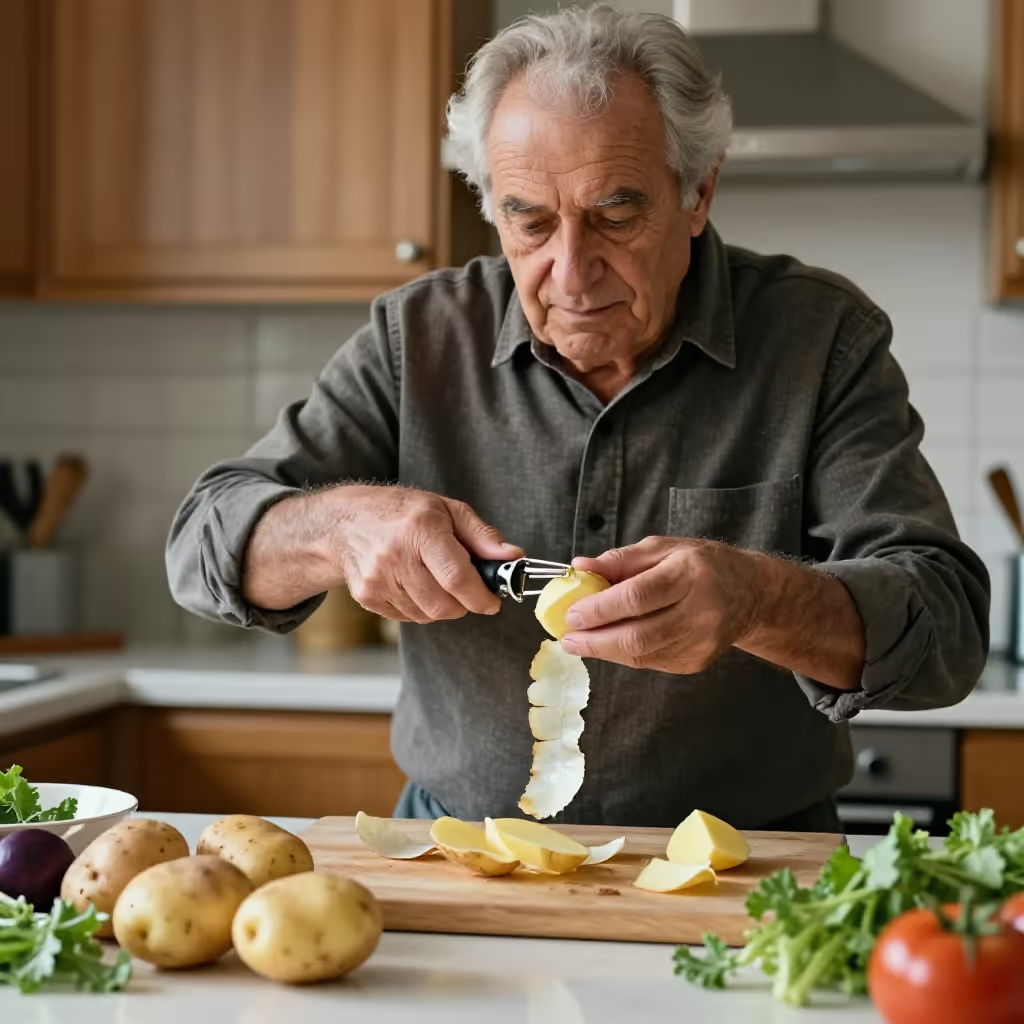
schälen
to peel
To remove the outer layer or skin from fruit, vegetables, or eggs.
EXAMPLE
Für das Kartoffelpüree muss man zuerst die Kartoffeln schälen.
For the mashed potatoes, you first have to peel the potatoes.
to peel
Loading your saved state.
to peel
To remove the outer layer or skin from fruit, vegetables, or eggs.
Für das Kartoffelpüree muss man zuerst die Kartoffeln schälen.
For the mashed potatoes, you first have to peel the potatoes.

to peel
The shedding of the top layer of skin, for example after a sunburn.
Meine Haut beginnt sich nach dem Urlaub am Meer zu schälen.
My skin is starting to peel after the vacation by the sea.

to shed skin
The shedding of old skin by certain animals, especially snakes. The verb 'sich häuten' (to shed skin) is more common in this context.
Im Terrarium kann man beobachten, wie die Schlange sich schält.
In the terrarium, you can watch the snake shed its skin.
The verb 'schälen' (to peel) is closely related to the noun 'die Schale' (the peel/shell). 'Schälen' literally means to remove the peel or shell from something.
Die Schale dieser Orange ist sehr dick.
The peel of this orange is very thick.
This verb has two important grammatical patterns. When a person peels something, it is transitive (someone peels something). When skin comes off, it is reflexive (something peels).
Ich schäle gerade die Äpfel für den Kuchen.
I'm peeling the apples for the cake right now.
In the meaning of 'removing the outer layer', 'schälen' (to peel) is almost always used with fruit, vegetables, or eggs. Typical objects are 'Kartoffeln' (potatoes), 'Äpfel' (apples), 'Gurken' (cucumbers), 'Spargel' (asparagus), or 'gekochte Eier' (boiled eggs).
Kannst du mir helfen, den Spargel zu schälen?
Can you help me peel the asparagus?
The reflexive form 'sich schälen' (to peel) is used almost exclusively for human or animal skin. The most common context is skin peeling after a sunburn.
Creme dich gut ein, damit deine Haut sich nicht schält.
Put on plenty of cream so your skin doesn't peel.
to subtract / peel off
Both words can describe removing the outer skin of a tomato. “Abziehen” is especially suitable when the skin comes loose after heating or blanching, while “schälen” usually refers to removing it with a tool. The key distinction is therefore whether the skin comes off or is actively removed.

Für den Salat schälte ich die Tomaten vorsichtig mit einem kleinen Messer.
For the salad, I carefully peeled the tomatoes with a small knife.
Nach dem Blanchieren konnte ich die Haut der Tomaten leicht abziehen.
After blanching the tomatoes, I was able to peel their skins off easily.