

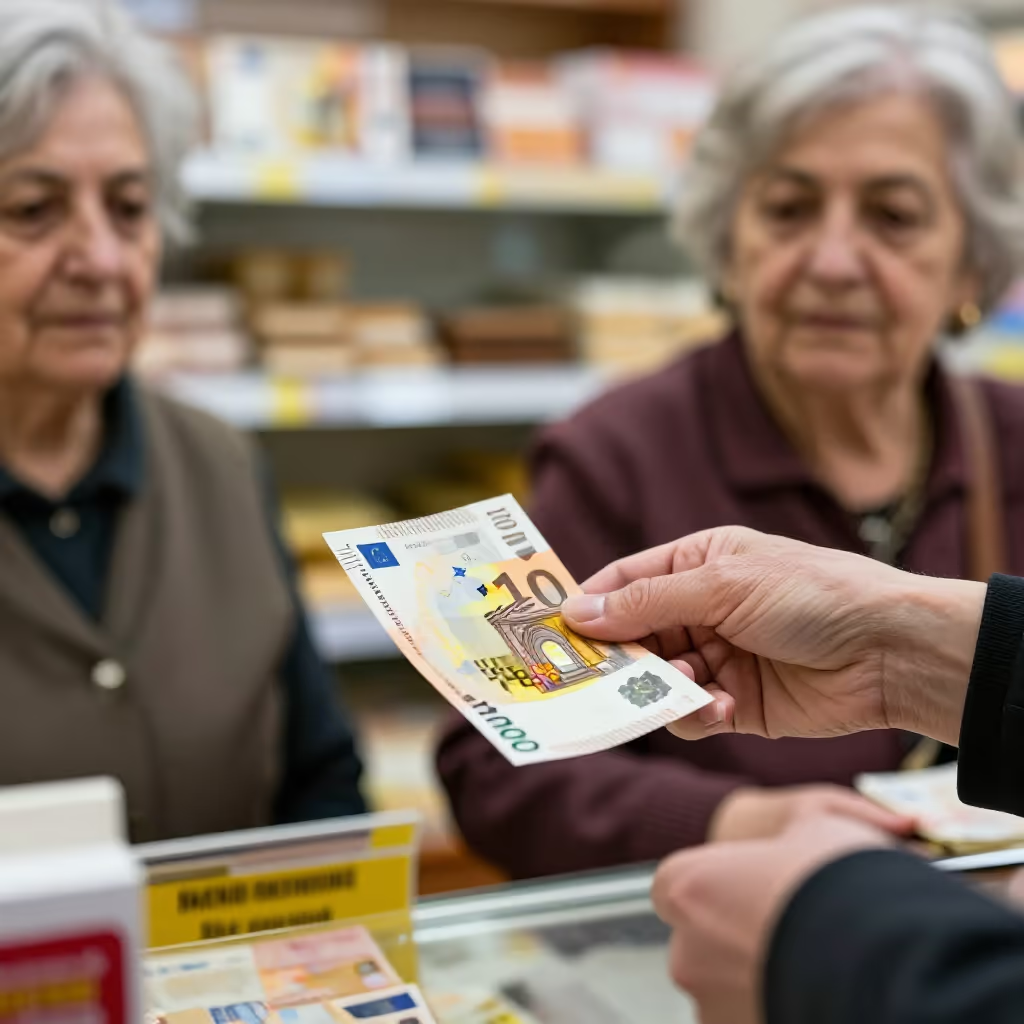
der Schein
bill
A banknote; a paper money bill.
EXAMPLE
Kannst du mir den Fünfzig-Euro-Schein in kleinere Scheine wechseln?
Can you change this fifty-euro bill into smaller bills for me?
bill / glow / appearance
Loading your saved state.
bill
A banknote; a paper money bill.
Kannst du mir den Fünfzig-Euro-Schein in kleinere Scheine wechseln?
Can you change this fifty-euro bill into smaller bills for me?

glow
The light that comes from a light source such as the sun, a lamp, or a fire.
Im hellen Schein des Mondes konnten wir den Weg erkennen.
In the bright glow of the moon, we could make out the path.

certificate
A document or certificate that confirms participation in a course, exam, or qualification.
Für dieses Seminar muss ich noch einen Schein machen.
I still have to earn a certificate for this seminar.
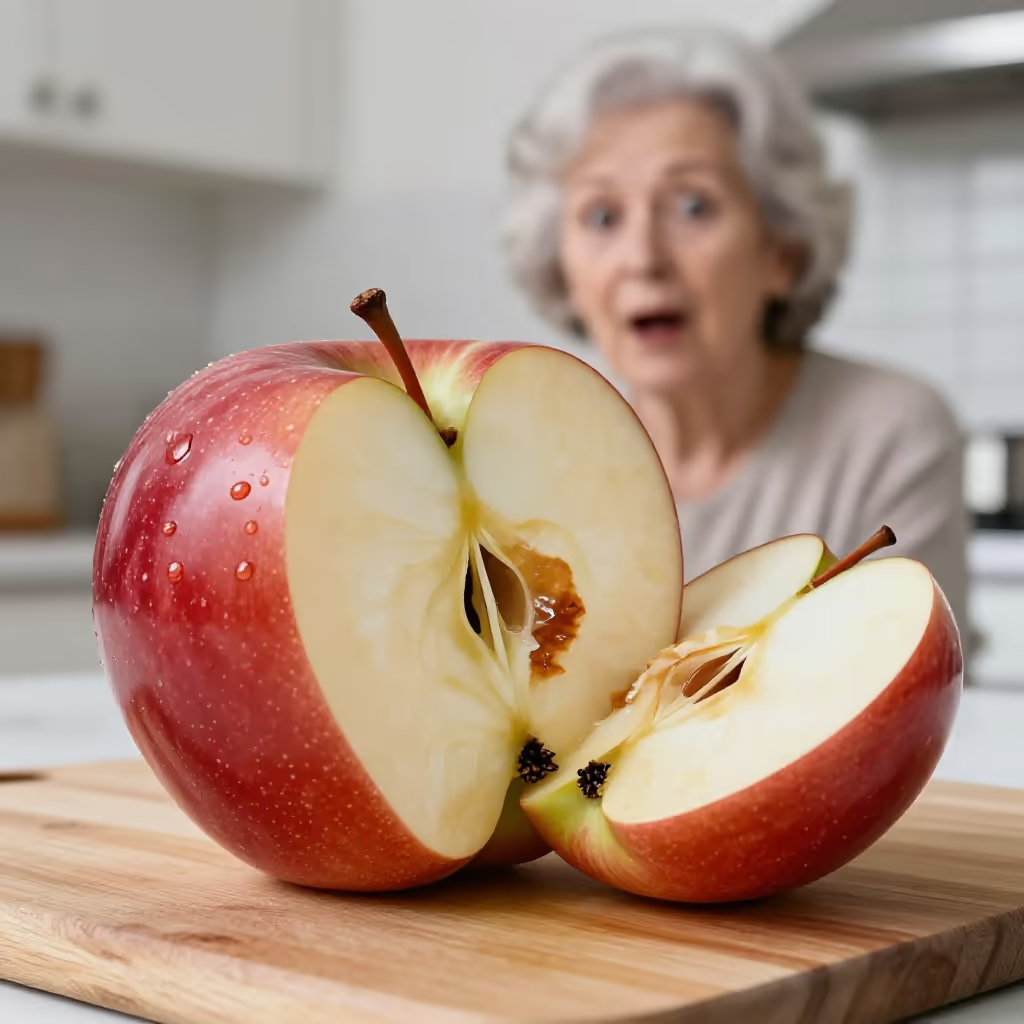
appearance
An outward appearance that often does not correspond to reality and can be deceptive. Common in the expression 'Der Schein trügt' (appearances are deceiving).
Ihr Reichtum war nur Schein, in Wahrheit hatten sie hohe Schulden.
Their wealth was only an appearance; in reality, they had large debts.

for show
To merely pretend to do something; to do something that is not meant seriously.
Er hat nur zum Schein zugestimmt, um die Diskussion schnell zu beenden.
He only agreed for show in order to end the discussion quickly.
'Der Schein' (bill/glow/appearance) is closely related to the verb 'scheinen' (to shine/to seem). 'Scheinen' means 'to emit light' (hence 'Schein' as light) and 'to appear/seem' (hence 'Schein' as an outward impression).
Die Sonne scheint.
The sun is shining.
The idiom 'Der Schein trügt' (appearances are deceiving) is very common. It means that reality is different from how it looks at first glance.
Sie lächelt immer, aber ich glaube, sie ist unglücklich. Der Schein trügt oft.
She always smiles, but I think she is unhappy. Appearances are often deceiving.
The expression 'zum Schein' (for show) means that an action is only pretended and not real. It functions like an adverb in the sentence.
Sie weinte nur zum Schein, um Mitleid zu bekommen.
She only cried for show in order to get sympathy.
When 'Schein' (bill) means a banknote, the value is often stated, e.g. 'ein Zehn-Euro-Schein' (a ten-euro bill). Common verbs are 'wechseln' (to change), 'herausgeben' (to give out as change), or 'bezahlen mit' (to pay with).
Haben Sie auch einen kleineren Schein? Ich kann den Hunderter nicht wechseln.
Do you also have a smaller bill? I can't change the hundred.
In the meaning 'Licht' (light), 'Schein' (glow) is often combined with a light source in the genitive: 'der Schein der Sonne' (the glow of the sun), 'der Schein des Mondes' (the glow of the moon), or 'der Schein einer Kerze' (the glow of a candle).
Wir saßen im romantischen Schein des Feuers.
We sat in the romantic glow of the fire.
In a university setting, a 'Schein' (certificate) is proof of credit for a successfully completed course. A typical phrase is 'einen Schein machen' (to earn a certificate/credit).
Ich muss dieses Semester noch zwei Scheine in Germanistik machen.
I still have to earn two certificates in German studies this semester.
light
Licht generally refers to the brightness that makes seeing possible. Schein emphasizes more the visible glow coming from a particular source. With a candle, Licht fits the practical brightness, while Schein describes its visible effect.

Der warme Schein der Kerze liegt auf dem Buch.
The candle's warm glow falls across the book.
Das Licht der Kerze reicht gerade noch zum Lesen.
The candlelight is just bright enough to read by.