

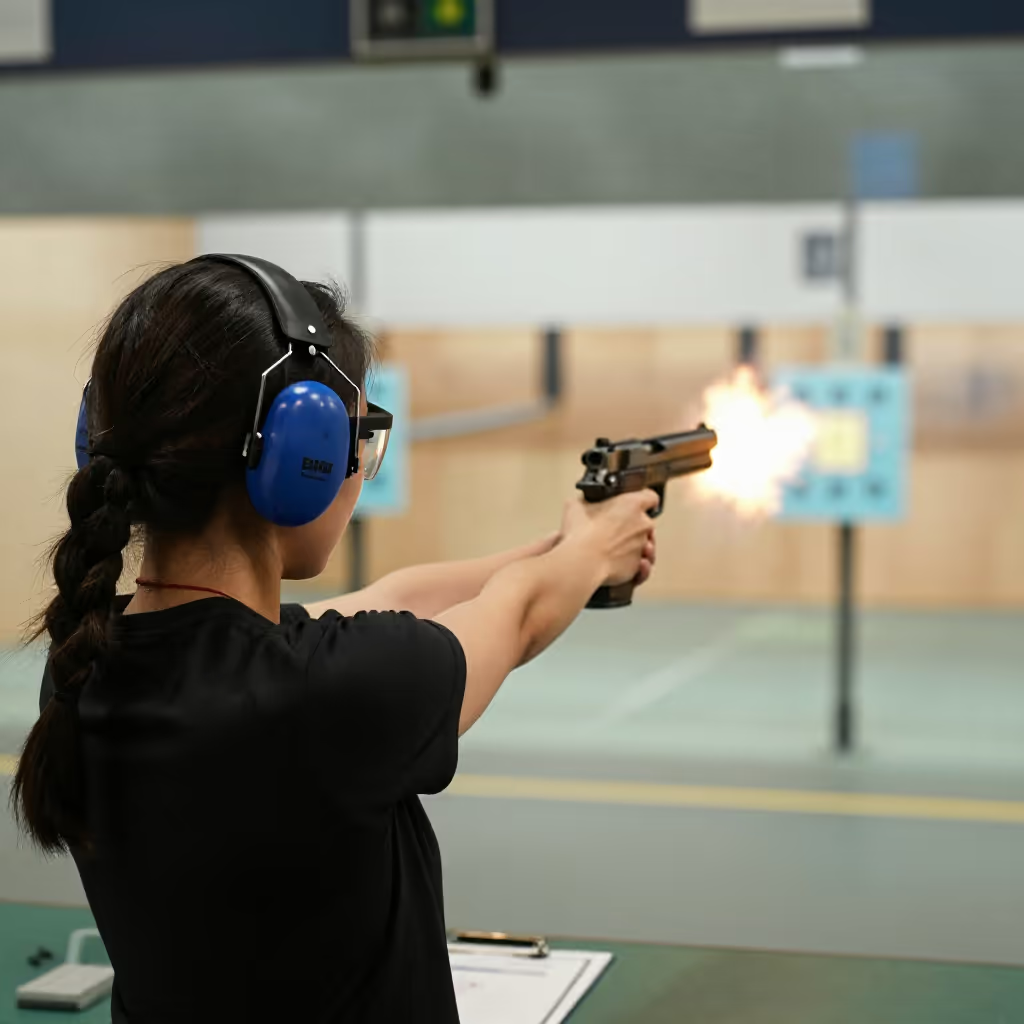
schießen
to shoot
To fire a projectile from a firearm (e.g., pistol, rifle) or a bow.
EXAMPLE
Die Polizei schoss dem flüchtenden Täter ins Bein.
The police shot the fleeing offender in the leg.
to shoot
Loading your saved state.
to shoot
To fire a projectile from a firearm (e.g., pistol, rifle) or a bow.
Die Polizei schoss dem flüchtenden Täter ins Bein.
The police shot the fleeing offender in the leg.
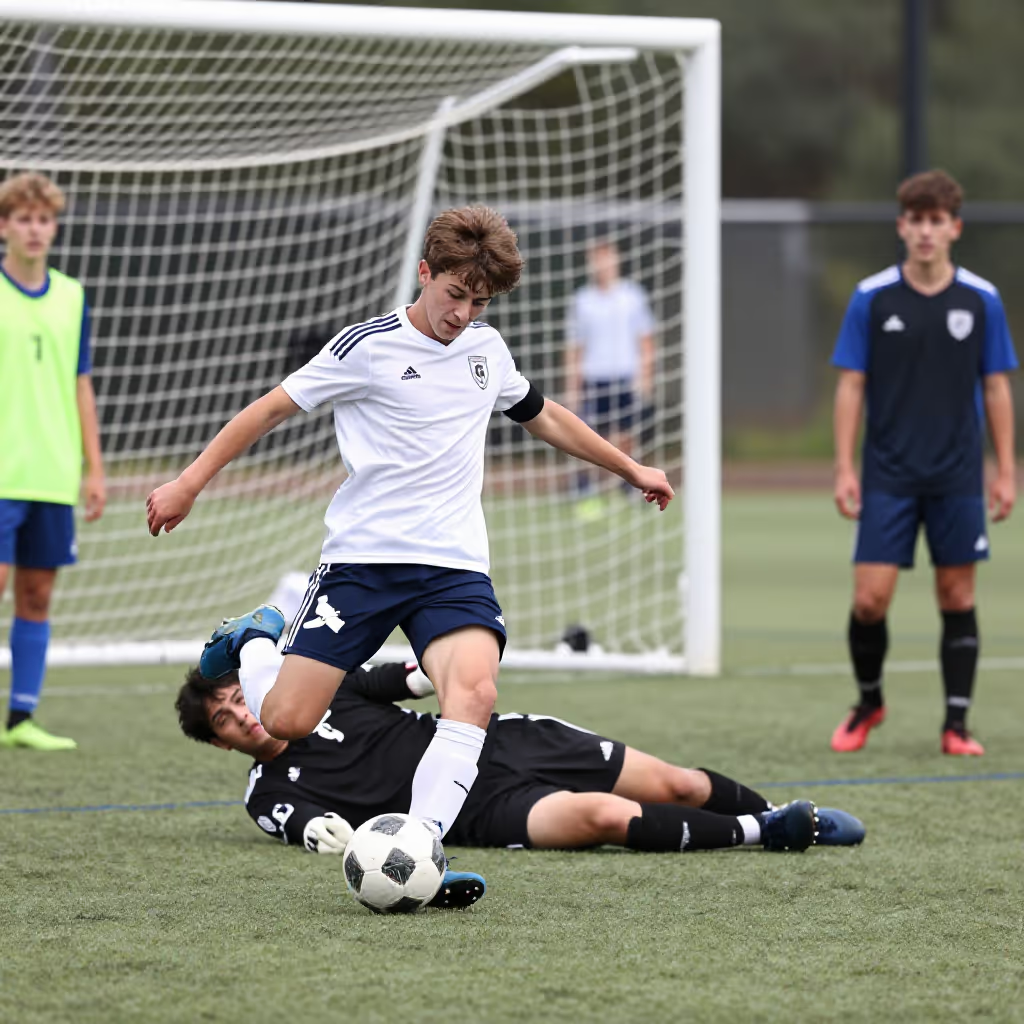
to shoot
In sports, to move a ball toward the goal by shooting, striking, or hitting it.
Er schoss den Ball aus zwanzig Metern Entfernung ins Tor.
He shot the ball into the goal from twenty meters away.

to shoot
To move very quickly in a particular direction.
Das Wasser schoss aus dem geplatzten Rohr auf die Straße.
The water shot out of the burst pipe onto the street.

to shoot
Colloquial for taking a photograph.
Könntest du schnell ein Foto von uns schießen?
Could you quickly shoot a photo of us?

to shoot up
For plants: to grow very quickly, especially upward.
Der Salat ist bei dem warmen Wetter richtig in die Höhe geschossen.
The lettuce really shot up in the warm weather.
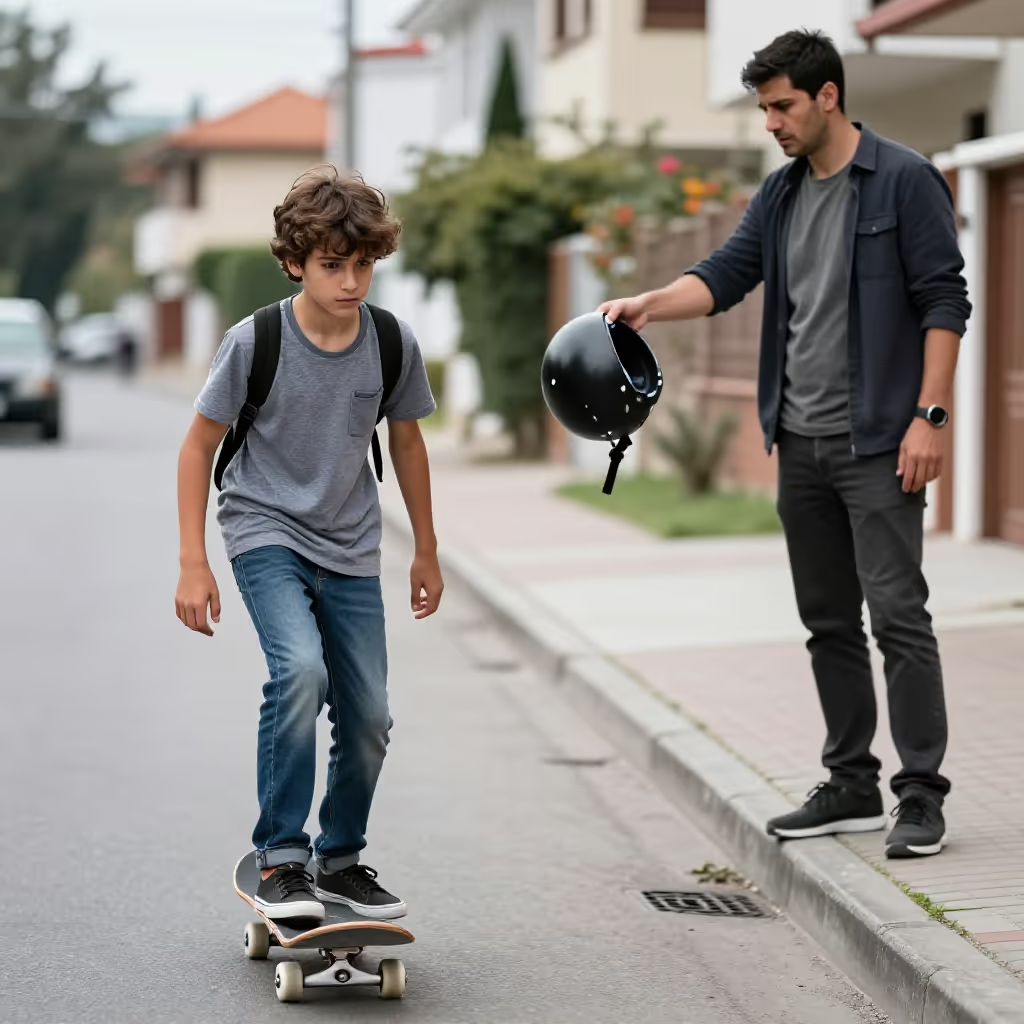
to throw to the wind
To ignore and disregard advice, a warning, or a request.
Er hat alle gut gemeinten Ratschläge seiner Freunde in den Wind geschossen.
He threw all his friends' well-meant advice to the wind.
The perfect tense of 'schießen' (to shoot) is formed with two different auxiliary verbs. When it describes an active action (e.g., with a weapon or a ball), you use 'haben' (to have). When it describes fast movement, you use 'sein' (to be).
Der Jäger hat auf ein Wildschwein geschossen.
The hunter shot at a wild boar.
When you shoot at a target, the preposition 'auf' is used with the accusative.
Er hat mit dem Bogen auf die Zielscheibe geschossen.
He shot at the target with the bow.
In a sports context, the most common and important collocation is 'ein Tor schießen' (to score a goal). 'den Ball schießen' (to shoot the ball) and 'aufs Tor schießen' (to shoot at the goal) are also very common.
In der letzten Minute des Spiels hat sie das entscheidende Tor geschossen.
In the last minute of the game, she scored the decisive goal.
In this meaning, 'schießen' (to shoot) is often combined with prepositions of direction to describe sudden, fast movement. The auxiliary verb here is always 'sein' (to be).
Die Katze ist unter das Sofa geschossen.
The cat shot under the sofa.
The use of 'schießen' (to shoot) for 'fotografieren' (to photograph) is very widespread, but it belongs to colloquial speech. In more formal contexts, you would use 'ein Foto machen' (to take a photo) or 'fotografieren' (to photograph).
Wir haben im Urlaub viele schöne Fotos geschossen.
We shot a lot of beautiful photos on vacation.
The idiom 'etwas in den Wind schießen' means to ignore advice or a warning. The thing being ignored is in the accusative.
Sie hat meine Warnung einfach in den Wind geschossen und ist trotzdem gegangen.
She simply threw my warning to the wind and went anyway.
to grow / to wax
Wachsen generally describes a plant becoming larger or taller. Schießen is also possible here, but emphasizes unusually rapid growth, especially upward. When speaking neutrally about development, use wachsen; for noticeably rapid growth in height, you can use schießen.

Nach dem warmen Regen schießt das Gras ungewöhnlich schnell in die Höhe.
After the warm rain, the grass shoots up unusually quickly.
Die junge Tanne wächst jedes Jahr ein gutes Stück.
The young fir tree grows quite a bit every year.