A state of excited expectation about how something will turn out, especially in a story, film, or competition.
example
Die Spannung vor der Verkündung des Gewinners war kaum auszuhalten.
The suspense before the announcement of the winner was almost unbearable.
Usage tips
Word family
'Die Spannung' (tension/suspense/voltage) is the noun related to the verb 'spannen'. 'Spannen' means to pull something tight or to make someone curious. Both of these meanings appear again in the noun 'Spannung'.
EXAMPLE
Der Autor spannt die Leser bis zur letzten Seite auf die Folter.
The author keeps the readers in suspense until the last page.
Context clue
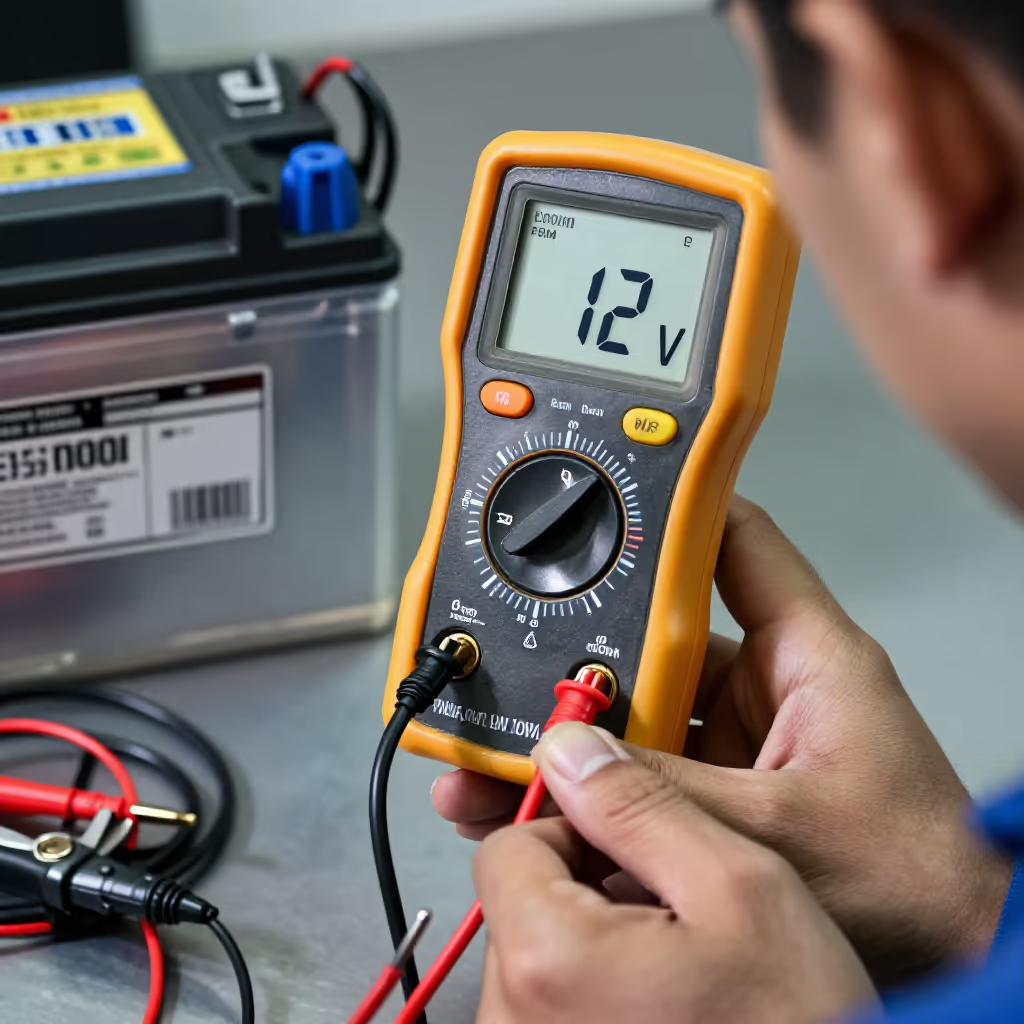
The meaning of 'Spannung' becomes clear from context. If it is about a film or a book, it means suspense or excitement. In a political context, it refers to conflicts. In a technical field, it means electrical voltage.
EXAMPLE
Der Film erzeugt von Anfang an eine große Spannung.
The film creates great suspense right from the beginning.
Typical collocations
When referring to suspense or excitement, 'Spannung' is often combined with verbs like 'erzeugen' (to create), 'aufbauen' (to build up), or 'steigern' (to increase). You can also be 'voller Spannung' (full of suspense/excitement).
EXAMPLE
Die Musik im Film hat die Spannung noch weiter gesteigert.
The music in the film increased the suspense even more.
Typical collocations
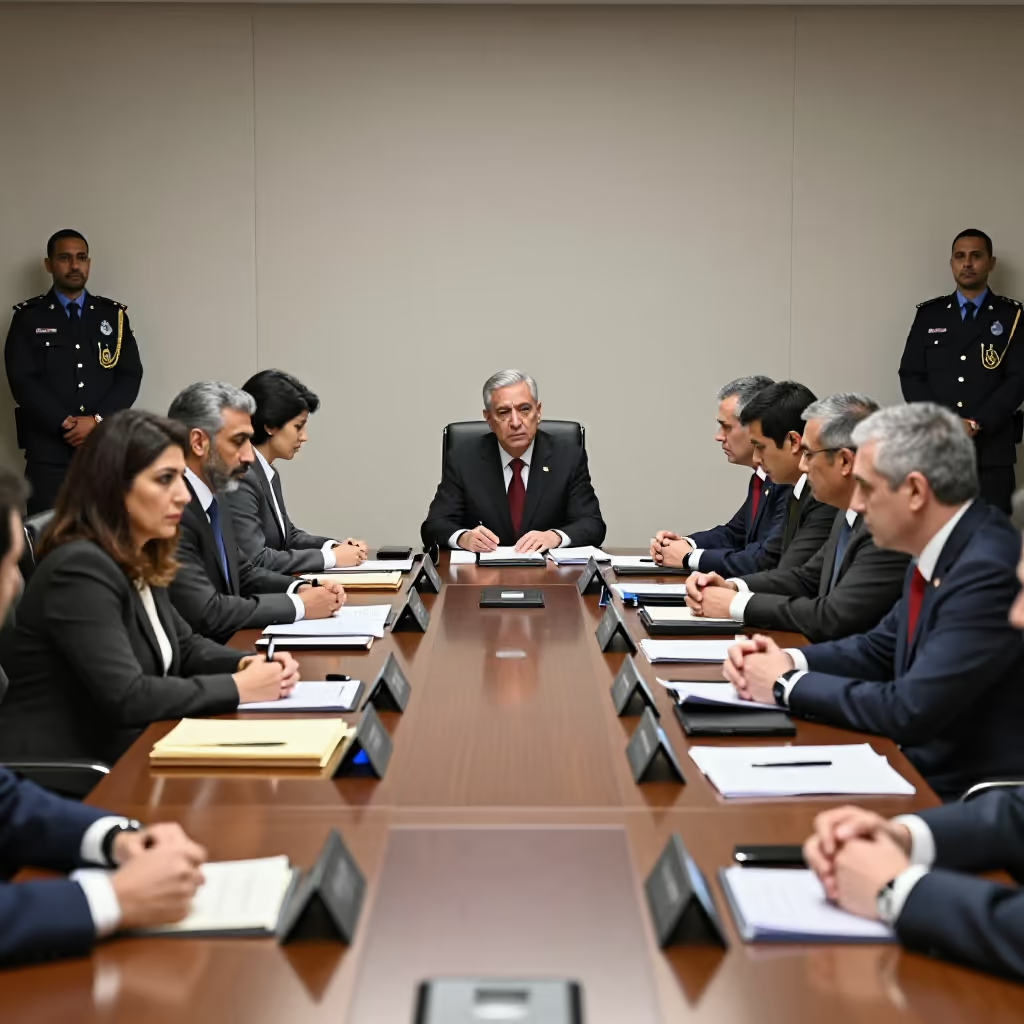
In the context of conflicts, people often speak of 'politischen' (political) or 'sozialen Spannungen' (social tensions). Common verbs here are 'zunehmen' (to increase), 'sich verschärfen' (to intensify), or the opposite, 'abbauen' (to reduce).
EXAMPLE
Diplomaten versuchen, die Spannungen zwischen den Staaten abzubauen.
Diplomats are trying to reduce the tensions between the countries.
Fixed expression
The phrase 'unter Spannung stehen' can refer both to electricity (meaning m03) and to mechanical forces (meaning m04). The context makes clear what is meant: a cable or a rope.
EXAMPLE
Vorsicht, dieses Kabel steht unter Spannung!
Careful, this cable is live!
Compare with
near_synonym · confusable
Spannung vs Druck
pressure / printing
'der Druck' and 'die Spannung' can both describe a strained or tense state. 'Druck' often comes from outside: there are expectations, deadlines, or a force acting on something. 'Spannung' describes more of a state in which something is internally tense, for example between people or in a taut rope. It is easy to confuse the words because both can feel unpleasant or intense. With expectations and lack of time, 'Druck' is more natural; with conflicts or things pulled tight, 'Spannung' fits better.
Spannung
Nach dem Streit war die Spannung im Team deutlich zu merken.
After the argument, the tension in the team was clearly noticeable.
Druck
Vor dem wichtigen Termin spürt du viel Druck.
Before the important appointment, you feel a lot of pressure.