

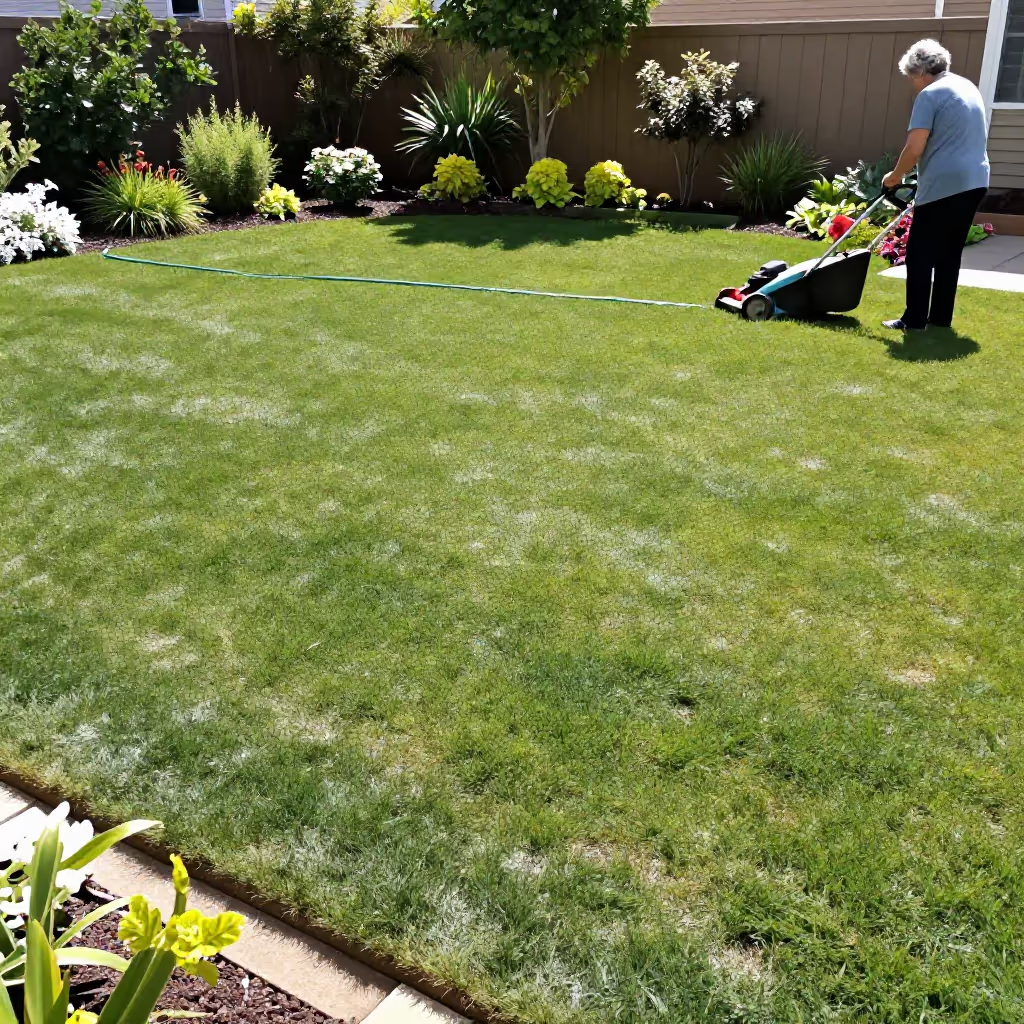
der Rasen
lawn
An area covered with short, dense grass, typically in gardens, parks, or on sports fields.
EXAMPLE
Am Wochenende muss ich unbedingt den Rasen mähen.
I absolutely have to mow the lawn this weekend.
lawn
Loading your saved state.
lawn
An area covered with short, dense grass, typically in gardens, parks, or on sports fields.
Am Wochenende muss ich unbedingt den Rasen mähen.
I absolutely have to mow the lawn this weekend.
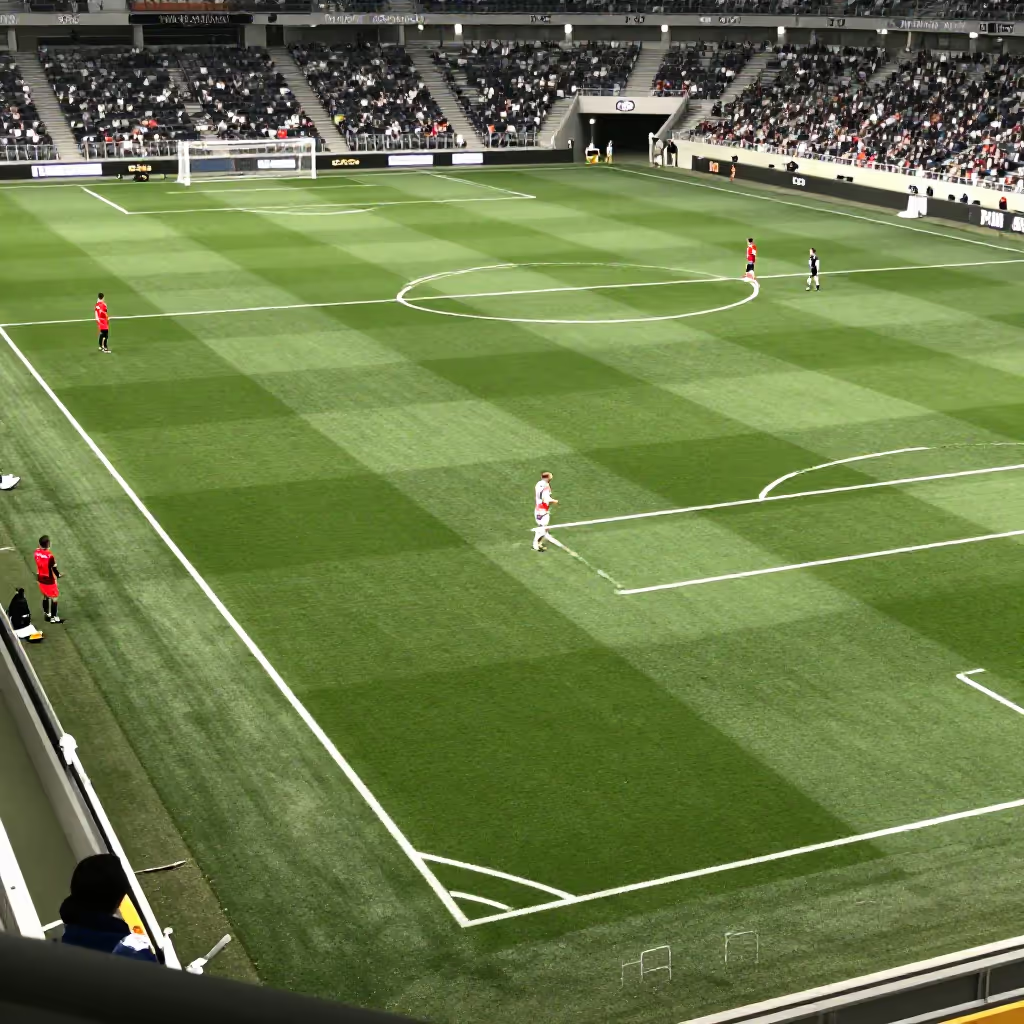
pitch / field
In sports jargon, the playing field of a soccer or hockey stadium.
Nach dem Abpfiff stürmten die Fans auf den heiligen Rasen.
After the final whistle, the fans stormed onto the sacred pitch.
In the context of the garden, 'Rasen' (lawn) is very often used with the verbs 'mähen' (to mow, cut the grass) and 'sprengen' or 'wässern' (to water).
Wegen der Trockenheit müssen wir den Rasen jeden Abend sprengen.
Because of the drought, we have to water the lawn every evening.
A very typical sign in Germany says: 'Betreten des Rasens verboten!' (Keep off the grass!). This formulation with the genitive is a formal way of saying that you are not allowed to walk on the grass.
Im Park stand ein Schild: „Betreten des Rasens verboten!“
There was a sign in the park: 'Keep off the grass!'
In the meaning of 'Spielfeld' (playing field), 'Rasen' is used almost exclusively in sports journalism, especially in soccer. You often hear the expressions 'auf den Rasen gehen' (to go onto the pitch) or 'auf dem Rasen stehen' (to be on the pitch).
Die Mannschaft betrat pünktlich den Rasen.
The team went onto the pitch right on time.
to run
Rennen refers to moving very quickly on foot, while der Rasen is an area covered with short grass. The words look similar, but they belong to completely different areas of meaning. Use rennen for movement and der Rasen for a grassy area.

Nach dem Regen ist der Rasen im Garten sehr nass.
The lawn in the garden is very wet after the rain.
Die Kinder rennen schnell über den Hof.
The children run quickly across the yard.