

schleifen
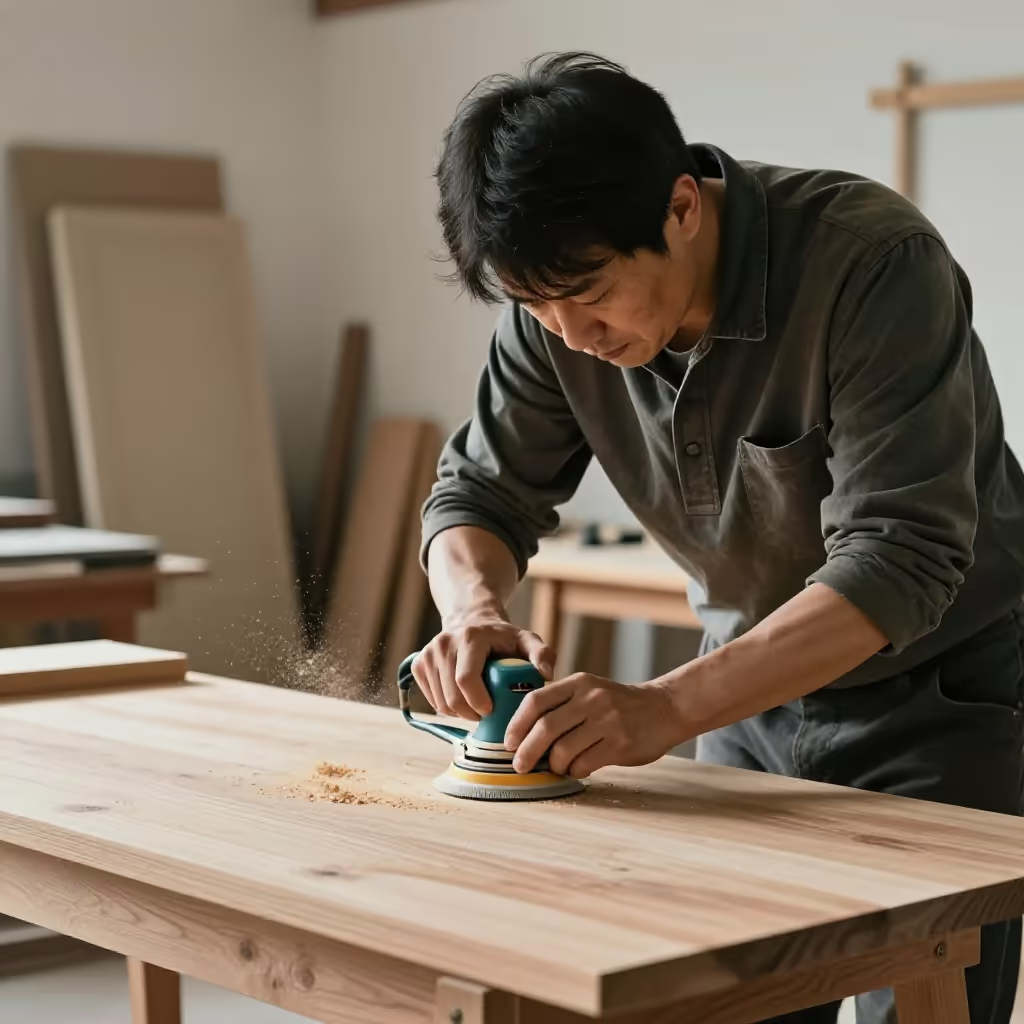
to grind / sharpen
To smooth a surface through friction or sharpen a blade.
EXAMPLE
Ich muss das Küchenmesser schleifen, es ist ganz stumpf.
I need to sharpen the kitchen knife; it's completely dull.
to grind / drag
Loading your saved state.
to grind / sharpen
To smooth a surface through friction or sharpen a blade.
Ich muss das Küchenmesser schleifen, es ist ganz stumpf.
I need to sharpen the kitchen knife; it's completely dull.
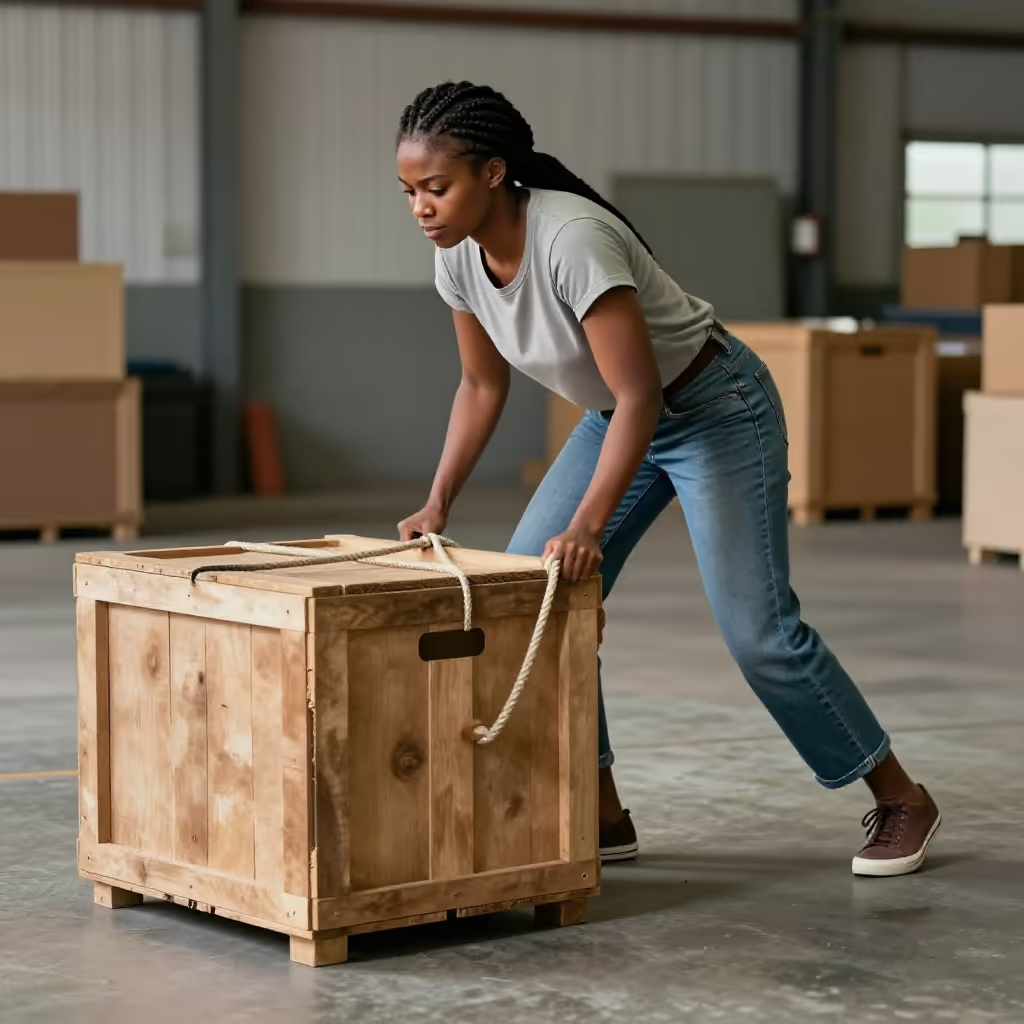
to drag
To pull something heavy across the ground with effort.
Er musste den schweren Sack Kartoffeln in den Keller schleifen.
He had to drag the heavy sack of potatoes into the cellar.
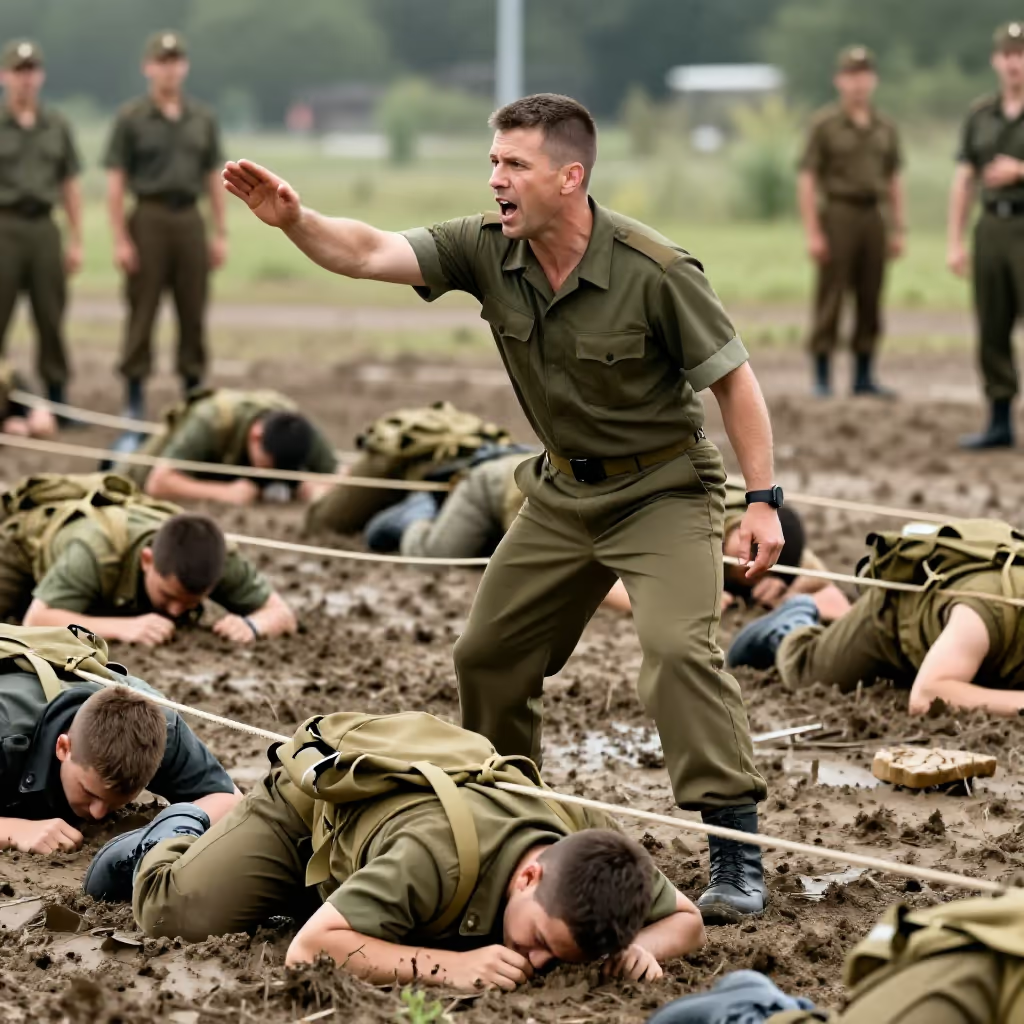
to drill
To subject someone to hard and strenuous training or drill, especially in a military context.
Der Ausbilder hat die Rekruten den ganzen Morgen über den Platz geschliffen.
The instructor drilled the recruits across the yard all morning.
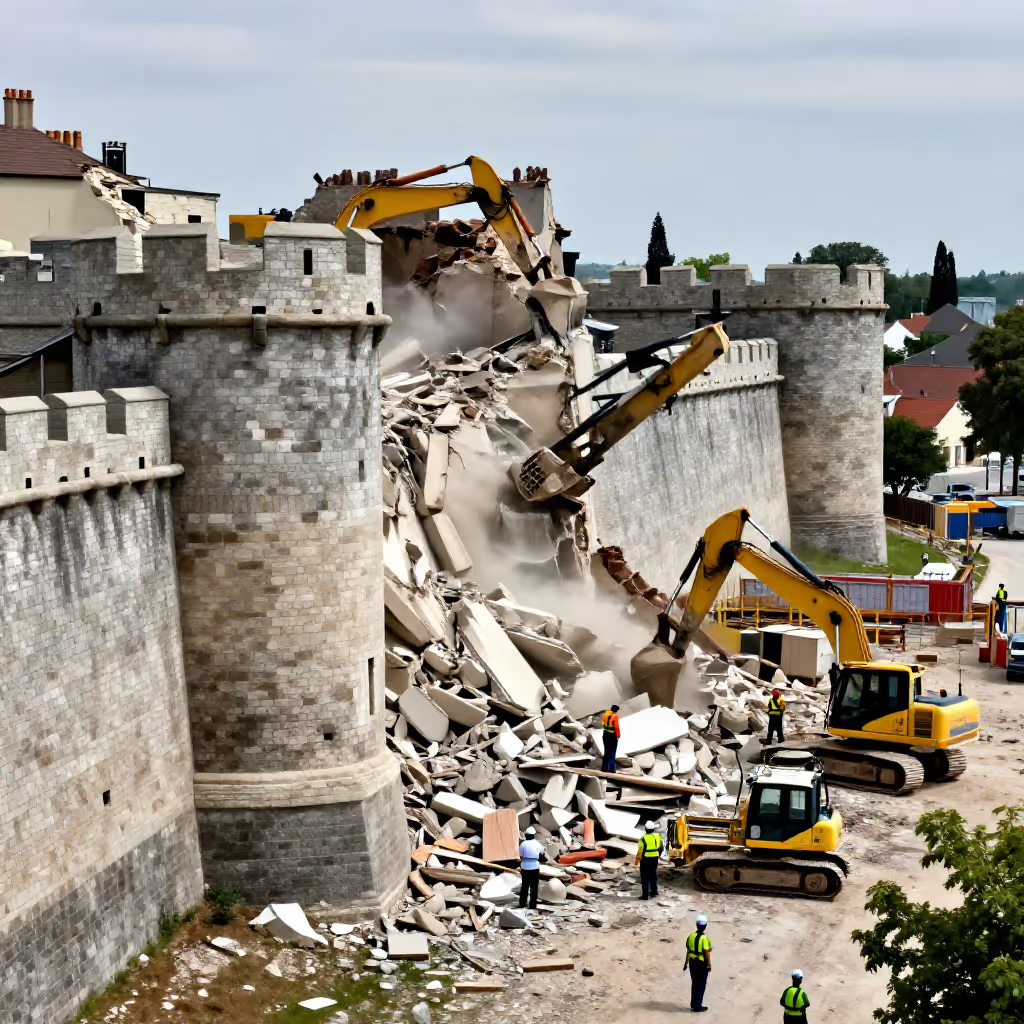
to raze
To systematically tear down a building, especially a fortress or castle, and level it to the ground.
Nach der Belagerung wurde die Festung geschleift, damit sie nie wieder genutzt werden konnte.
After the siege, the fortress was razed so that it could never be used again.
This verb has two conjugation patterns. In the meaning 'glätten, schärfen' (to smooth, to sharpen), it is strong: schleifen, schliff, hat geschliffen. In the meanings 'ziehen' (to pull/drag), 'drillen' (to drill), and 'abreißen' (to tear down), it is weak: schleifen, schleifte, hat geschleift.
Der Handwerker hat das Holz glatt geschliffen.
The craftsman sanded the wood smooth.
When the object is a blade or a surface that is being worked on, 'schleifen' (strongly conjugated) means 'schärfen' (to sharpen) or 'glätten' (to smooth). Typical objects are knives, scissors, parquet flooring, or gemstones.
Er schliff die Klinge seines Taschenmessers an einem Stein.
He sharpened the blade of his pocketknife on a stone.
When a heavy object is moved laboriously across a surface, 'schleifen' (weakly conjugated) means 'ziehen' (to pull/drag). A direction is often given.
Die Kinder schleiften den Schlitten den Hügel hinauf.
The children dragged the sled up the hill.
In the meaning 'drillen' (to drill), 'schleifen' (weakly conjugated) is used almost exclusively in military or sports contexts for hard training. It has a very negative connotation of excessive harshness.
Der Trainer schleifte die Mannschaft bis zur völligen Erschöpfung.
The coach drilled the team to the point of complete exhaustion.
The meaning 'abreißen' (to tear down) for buildings is rare today and mostly historical. You find it in texts about castles or fortresses that were destroyed as a punishment.
Der König befahl, die Burg des verräterischen Grafen zu schleifen.
The king ordered the treacherous count's castle to be razed.
to lug / to drag
Schleifen and schleppen can both refer to the laborious movement of a heavy object. Schleifen requires the object to be pulled along the ground, whereas schleppen can also mean carrying it or transporting it in another strenuous way. If something is pulled along the ground, use “schleifen”; otherwise, “schleppen” is usually more appropriate.
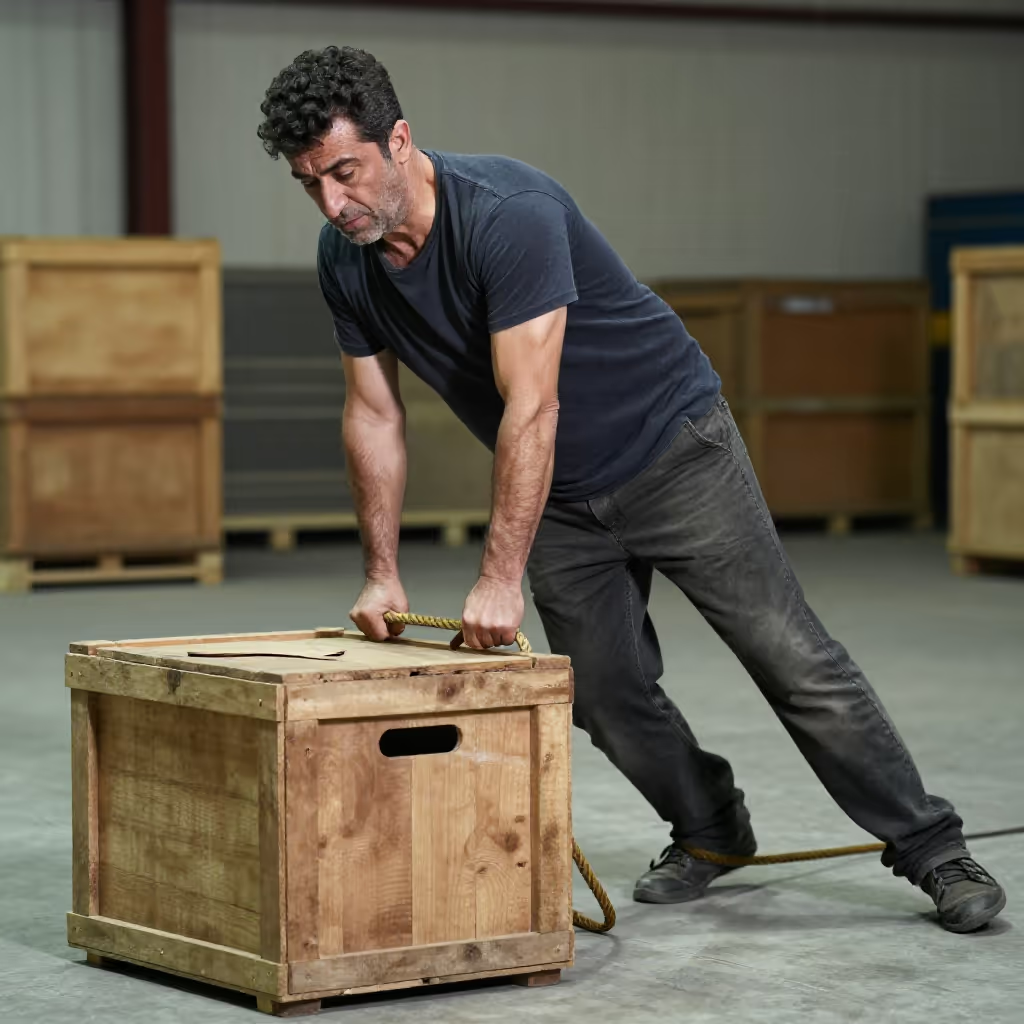
Wir mussten die schwere Kiste über den rauen Boden schleifen.
We had to drag the heavy crate across the rough floor.
Wir mussten die schwere Kiste die Treppe hinauf schleppen.
We had to lug the heavy crate up the stairs.