

polieren
to polish
To make a surface smooth and shiny by rubbing it, often using a special product.
EXAMPLE
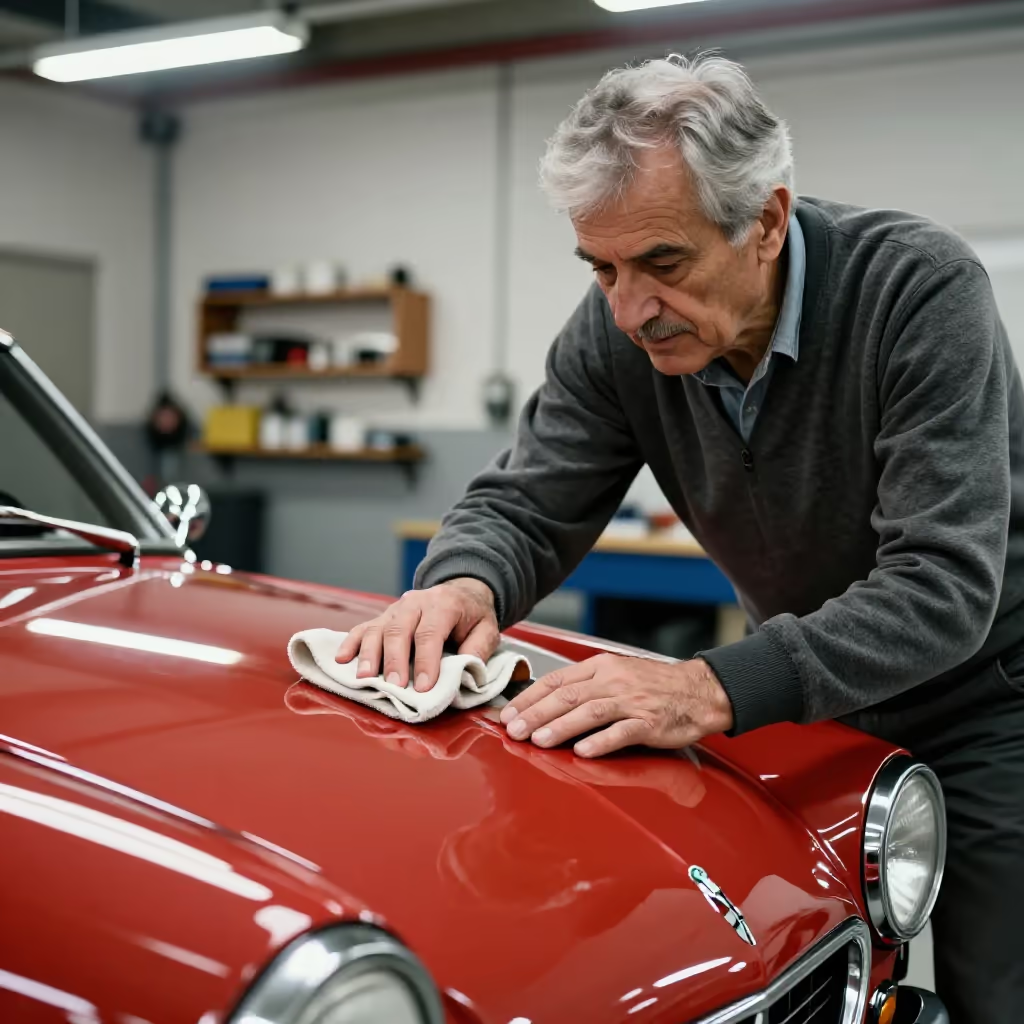
Er verbrachte den ganzen Nachmittag damit, sein altes Auto zu polieren.
He spent the whole afternoon polishing his old car.
to polish
Loading your saved state.
to polish
To make a surface smooth and shiny by rubbing it, often using a special product.
Er verbrachte den ganzen Nachmittag damit, sein altes Auto zu polieren.
He spent the whole afternoon polishing his old car.

to polish up
In a figurative sense: to improve or refine something, for example skills or one's own reputation.
Der Politiker versuchte mit der Rede, sein ramponiertes Image wieder aufzupolieren.
With the speech, the politician tried to polish up his battered image.

to smash someone's face in
Colloquial and vulgar for: to beat someone up in the face.
Er wurde wütend und drohte, dem anderen die Fresse zu polieren.
He got angry and threatened to smash the other guy's face in.
You can recognize the meaning of 'polieren' (to polish) from the object: if you polish a physical thing like furniture or silver, it is meant literally. If you polish something abstract like an image, it should be understood figuratively.
Zuerst poliere ich die alten Schuhe, dann kümmere ich mich um mein schlechtes Image.
First I'll polish the old shoes, then I'll take care of my bad image.
In its literal meaning, 'polieren' (to polish) is often used for surfaces that are supposed to shine. Typical phrases are: 'Schuhe polieren' (to polish shoes), 'das Auto polieren' (to polish the car), 'Silber polieren' (to polish silver), or 'Möbel polieren' (to polish furniture).
Jeden Samstag poliert er sein Besteck aus Silber.
Every Saturday he polishes his silver cutlery.
In the figurative sense, 'polieren' (to polish) is used for improving something abstract. Common expressions are 'sein Image polieren' (to polish one's image), 'seinen Ruf polieren' (to polish one's reputation), or 'seine Fähigkeiten polieren' (to polish one's skills).
Mit ehrenamtlicher Arbeit versucht der Konzern, seinen Ruf zu polieren.
Through volunteer work, the corporation is trying to polish its reputation.
The expression 'jemandem die Fresse polieren' (to smash someone's face in) is very vulgar colloquial speech. It expresses an aggressive threat and should only be used or interpreted with caution.
Im Streit drohte er: „Pass auf, sonst poliere ich dir die Fresse!“
During the argument he threatened: 'Watch it, or I'll smash your face in!'
In the idiom 'jemandem die Fresse polieren' (to smash someone's face in), the person who is to be hit is always in the dative.
Er hat ihm gedroht, ihm die Fresse zu polieren.
He threatened him that he would smash his face in.
to clean
With shoes or metal, putzen can refer both to cleaning and to making something shiny afterward. Polieren, by contrast, specifically emphasizes smoothing the surface and making it shine. If the main goal is to remove dirt, putzen is the better choice; if the main goal is shine, polieren is more appropriate.
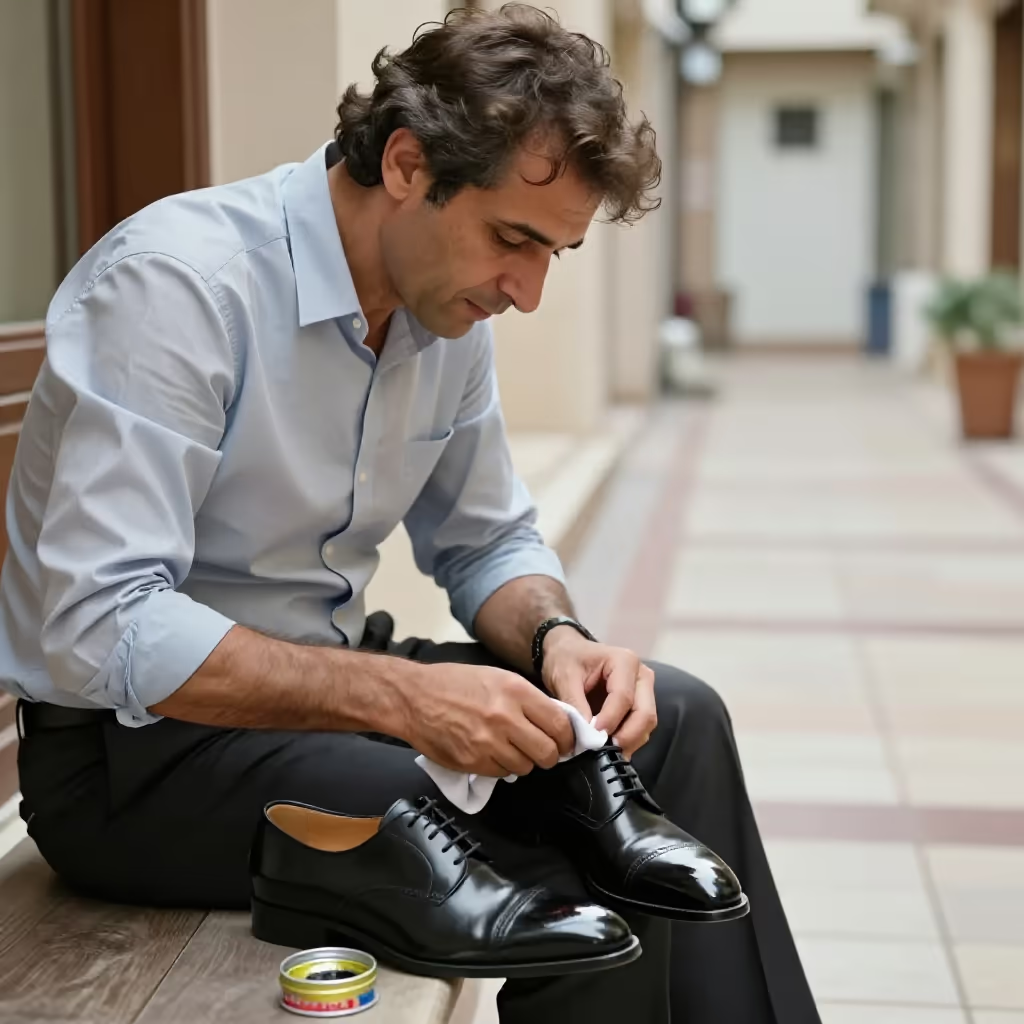
Nach der Reinigung poliert Mia ihre Lederschuhe, bis sie glänzen.
After cleaning them, Mia polishes her leather shoes until they shine.
Vor dem Fest putzt Mia ihre schmutzigen Lederschuhe gründlich.
Before the party, Mia thoroughly cleans her dirty leather shoes.