

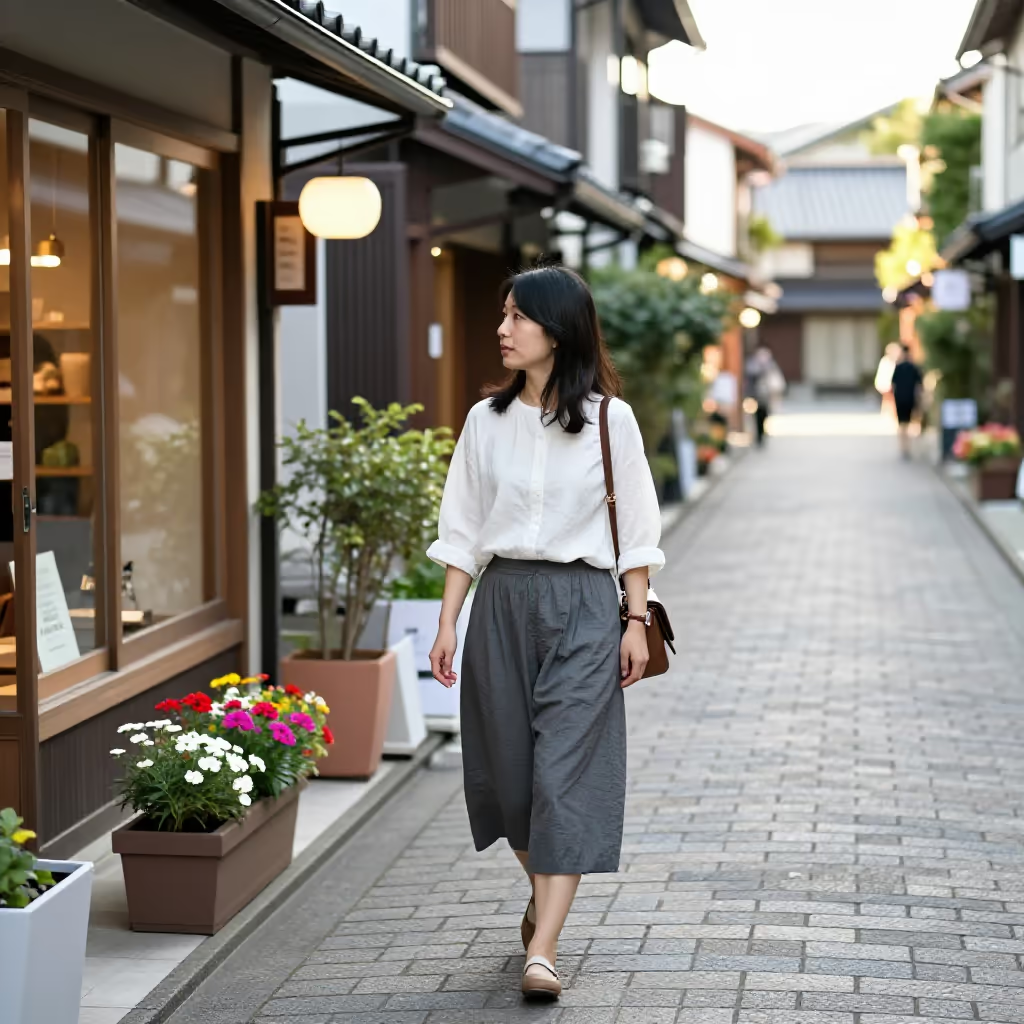
schlendern
to stroll
To walk slowly, leisurely, and without a specific destination.
EXAMPLE
Am Sonntag schlendern wir gerne durch den Park.
On Sundays, we like to stroll through the park.
to stroll
Loading your saved state.
to stroll
To walk slowly, leisurely, and without a specific destination.
Am Sonntag schlendern wir gerne durch den Park.
On Sundays, we like to stroll through the park.
Since 'schlendern' (to stroll) describes movement, the perfect tense is formed with the auxiliary verb 'sein' (to be). So you say 'ich bin geschlendert' (I strolled), not 'ich habe geschlendert'.
Wir sind gestern Abend gemütlich am Strand entlang geschlendert.
We strolled leisurely along the beach yesterday evening.
'Schlendern' (to stroll) does not just mean 'langsam gehen' (to walk slowly). The word has a positive, relaxed, and leisurely connotation. It describes walking without hurry and often without a fixed destination, purely for pleasure.
Die Touristen schlenderten entspannt durch die Altstadt.
The tourists strolled relaxedly through the old town.
'Schlendern' (to stroll) is often combined with prepositions that describe movement within a space, such as 'durch' (through) (the park), 'über' (across) (the square), or 'entlang' (along) (the promenade).
Am Wochenende schlendern wir gerne über den Flohmarkt.
On weekends, we like to stroll around the flea market.
to stroll
Spazieren gehen refers to a relaxing walk as a leisure activity. Schlendern describes more precisely the slow, leisurely, aimless way of walking. Spazieren gehen is appropriate for an ordinary recreational walk; if you want to emphasize the casual pace, Schlendern is more suitable.
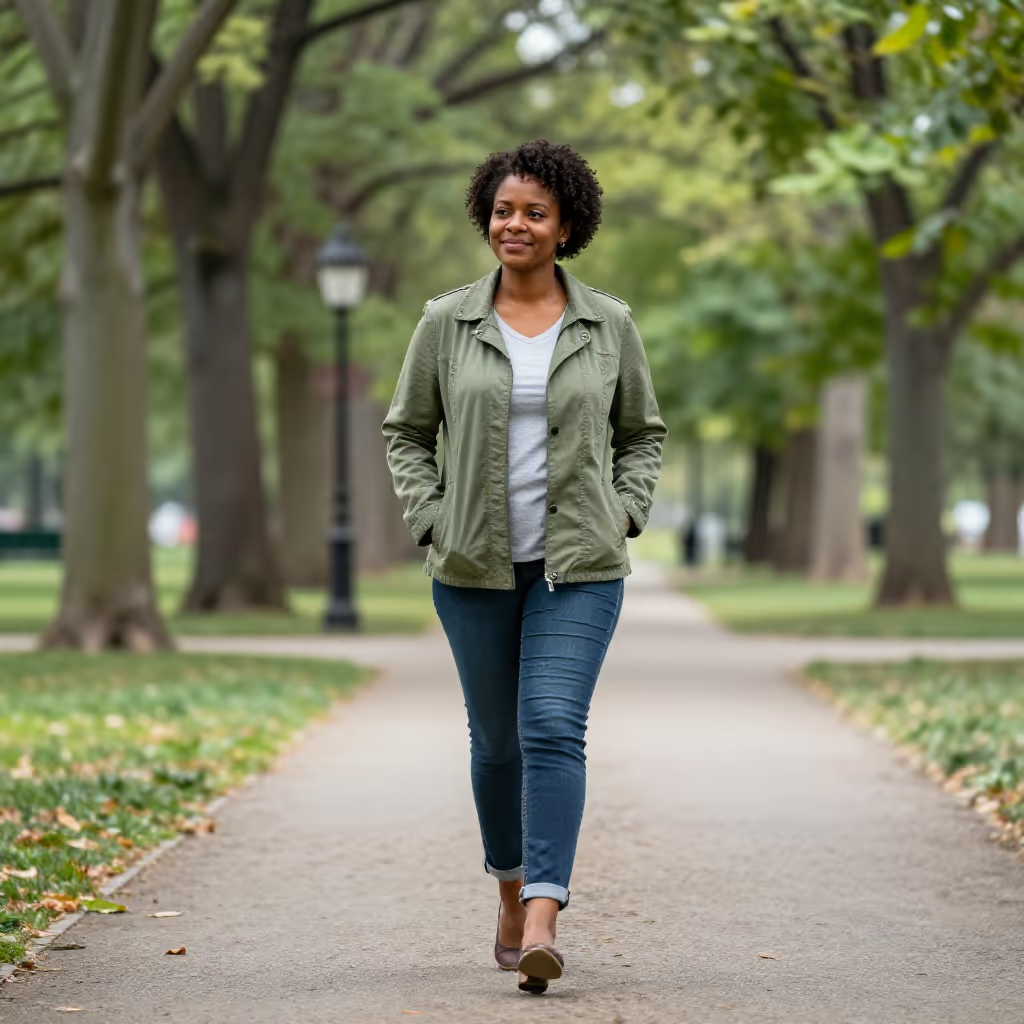
Am freien Nachmittag schlendern Nina und Paul ohne Eile durch den Park.
On their free afternoon, Nina and Paul stroll through the park without hurrying.
Am freien Nachmittag gehen Nina und Paul eine Stunde im Park spazieren.
On their free afternoon, Nina and Paul go for a walk in the park for an hour.