


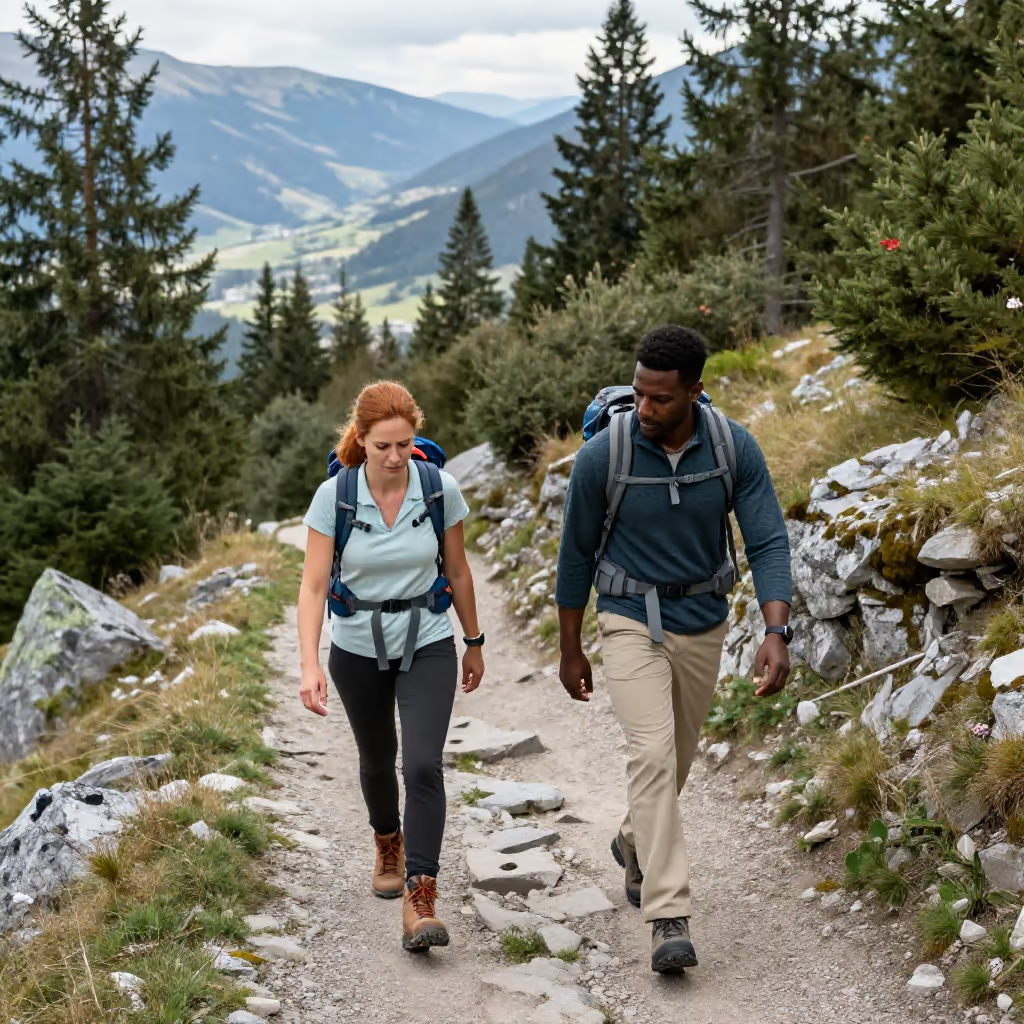
To walk leisurely and without a specific destination, usually outdoors, for pleasure, relaxation, or to pass the time.
example
Nach dem Abendessen gehen wir oft noch eine Runde im Park spazierengehen.
After dinner, we often go for a walk around the park.
Usage tips
Sentence structure
'Spazierengehen' (to go for a walk) behaves like a separable verb. The part 'gehen' (to go) is conjugated and stands in second position in a main clause, while 'spazieren' stands at the end of the sentence.
EXAMPLE
Wir gehen am Sonntag immer im Wald spazieren.
We always go for a walk in the forest on Sundays.
Perfect tense
The perfect tense is formed with the auxiliary verb 'sein' (to be). The form is 'spazieren gegangen' (went for a walk). 'Spazieren' remains as an infinitive, and only 'gehen' forms the past participle.
EXAMPLE
Gestern bin ich zwei Stunden am See spazieren gegangen.
Yesterday I went for a two-hour walk by the lake.
Typical collocations
'Spazierengehen' (to go for a walk) is often combined with prepositions that describe the place. Typical phrases are to go for a walk 'im Park' (in the park), 'am Strand' (on the beach), 'im Wald' (in the forest), or 'am Fluss' (by the river).
EXAMPLE
Lass uns heute Abend eine Runde am Fluss spazierengehen.
Let’s go for a walk by the river this evening.
Infinitive with 'zu'
When 'spazierengehen' (to go for a walk) is used as an infinitive with 'zu', 'zu' stands between the two parts: 'spazieren zu gehen' (to go for a walk). This construction is often used after verbs such as 'planen' (to plan), 'vergessen' (to forget), or 'Lust haben' (to feel like doing something).
EXAMPLE
Ich habe heute keine Lust, spazieren zu gehen.
I don’t feel like going for a walk today.
Compare with
confusable
spazierengehen vs gehen
to go
'gehen' and 'spazierengehen' both have to do with moving on foot. 'gehen' is general: you can go to work, go to the doctor, or simply leave a place. There is often a destination or a reason. 'spazierengehen' means that you are walking outdoors for pleasure, relaxation, or without an important destination. Learners may confuse the words because going for a walk is also a kind of walking. The practical difference is: when the destination is important, you usually say 'gehen'; when relaxation and leisurely walking are important, you say 'spazierengehen'.
spazierengehen
Am Sonntag gehen die Eltern im Park spazieren, weil das Wetter schön ist.
On Sunday, the parents go for a walk in the park because the weather is nice.