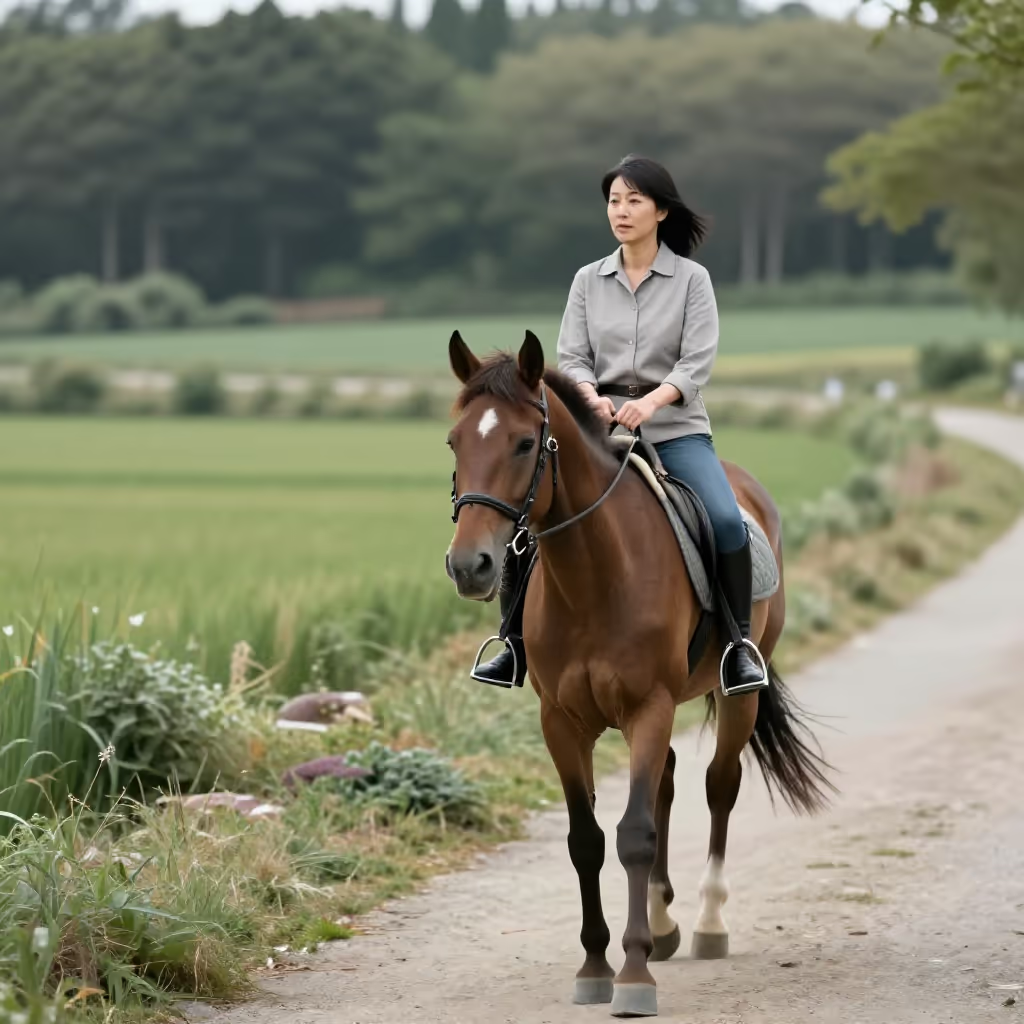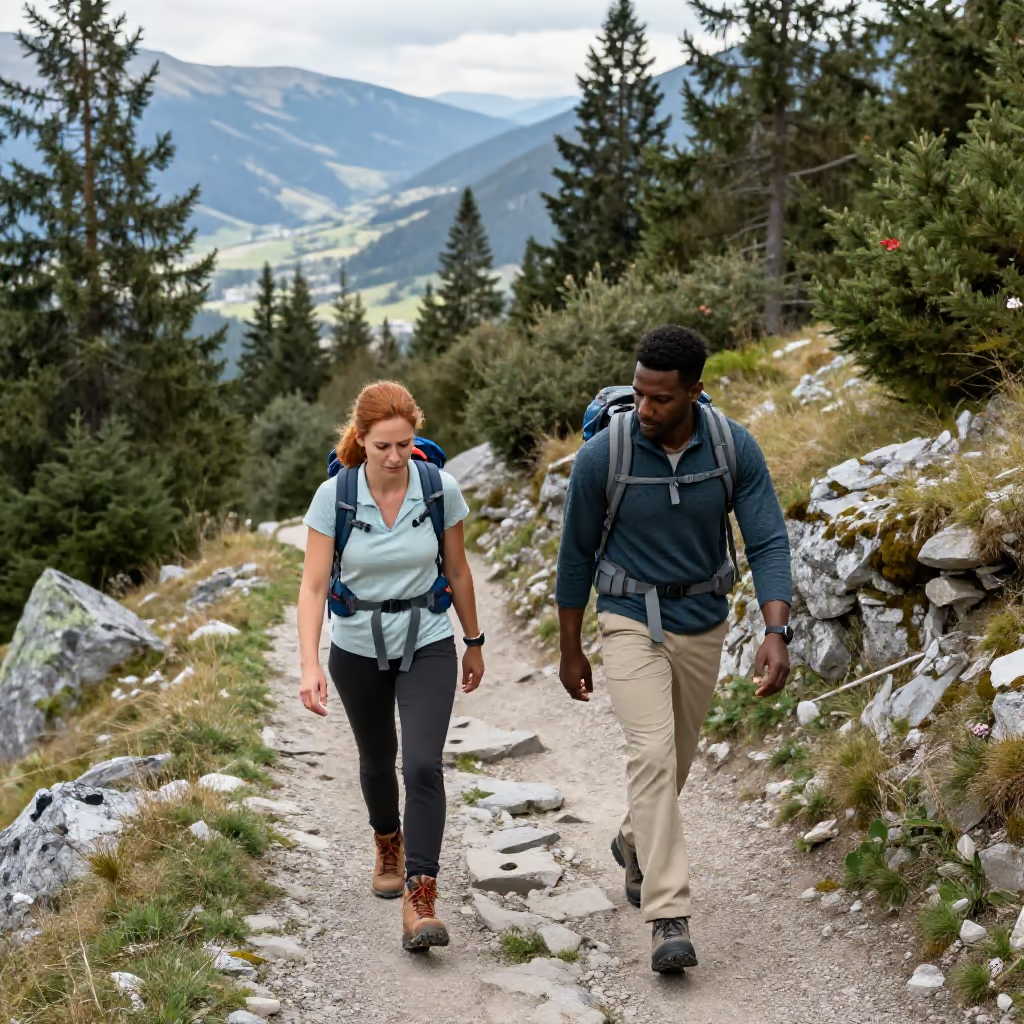
To move slowly on foot and without a specific destination in order to relax or enjoy the surroundings. This is by far the most common use.
example
Nach dem Abendessen gehen wir gerne eine Runde am Fluss spazieren.
After dinner, we like to go for a walk by the river.

Usage tips
Perfect tense with 'sein'
Since 'spazieren' (to stroll) describes a form of movement, the perfect tense is always formed with the auxiliary verb 'sein' (to be), not with 'haben' (to have).
EXAMPLE
Wir sind gestern zwei Stunden im Wald spazieren gegangen.
We went for a walk in the forest for two hours yesterday.
Sentence structure with 'spazieren gehen'
In the most common combination, 'spazieren gehen' (to go for a walk), only the verb 'gehen' (to go) is conjugated. The word 'spazieren' stays unchanged at the end of the sentence or clause.
EXAMPLE
Ich gehe am Abend gerne im Park spazieren.
I like to go for a walk in the park in the evening.
Typical collocations
The expression 'spazieren gehen' (to go for a walk) is often combined with prepositions that describe the place or company. Typical examples are 'im Park' (in the park), 'am See' (by the lake), 'durch die Stadt' (through the city), or 'mit dem Hund' (with the dog).
EXAMPLE
Lass uns am Strand spazieren gehen.
Let's go for a walk on the beach.
Expanded pattern
The pattern can also be formed with other verbs of movement such as 'fahren' (to drive/ride) or 'reiten' (to ride). Here too, 'spazieren' remains unchanged at the end of the sentence.
EXAMPLE
An ihrem Geburtstag sind sie mit der Kutsche spazieren gefahren.
On her birthday, they went for a ride in the carriage.
Compare with
near_synonym · confusable
spazieren vs gehen
to go
'gehen' and 'spazieren' both have to do with moving on foot. 'gehen' is the general word: you can go to work, to the bus, or through the city. 'spazieren gehen', on the other hand, means that you walk without hurry, usually to relax and often without an important destination. The form 'spazieren' on its own is possible, but it is less common and sounds a bit more elevated; in everyday language, people usually say 'spazieren gehen'. Learners may confuse the words because both involve walking on foot. The difference lies in the purpose: 'gehen' can be practical, while 'spazieren gehen' is usually leisure.
spazieren
Am Abend gehen die Nachbarn oft im Park spazieren.
In the evening, the neighbors often go for a walk in the park.