

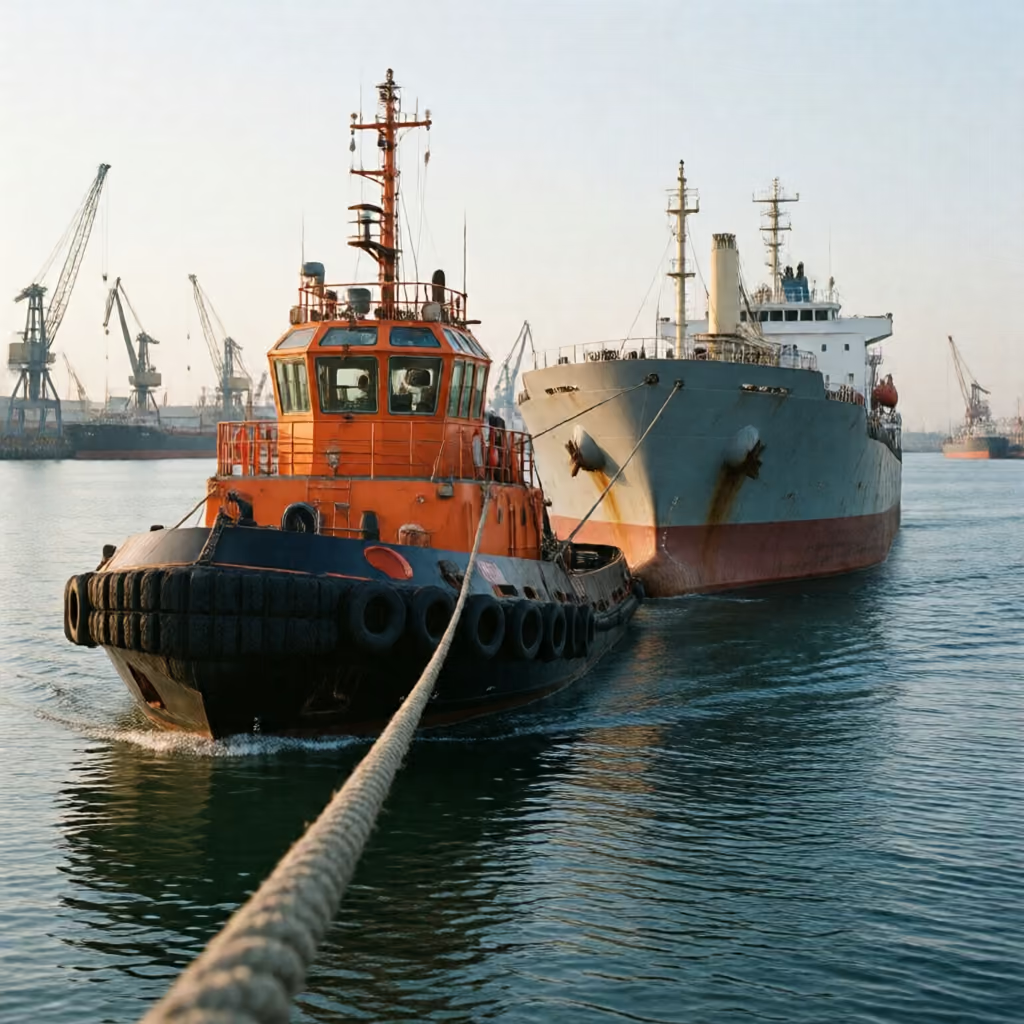
im Schlepptau haben
to have in tow
To pull another vehicle, especially a ship, behind you on a rope.
EXAMPLE
Der Schlepper hatte ein manövrierunfähiges Frachtschiff im Schlepptau.
The tug had a disabled freighter in tow.
towline
das Schlepptau, die Schlepptaue
Loading your saved state.
to have in tow
To pull another vehicle, especially a ship, behind you on a rope.
Der Schlepper hatte ein manövrierunfähiges Frachtschiff im Schlepptau.
The tug had a disabled freighter in tow.

in tow
Figuratively: accompanying or following a person or group. The accompanying person follows the other person or is taken along by them.
Sie kam mit ihren drei Kindern im Schlepptau zum Elternabend.
She came to the parents' evening with her three children in tow.
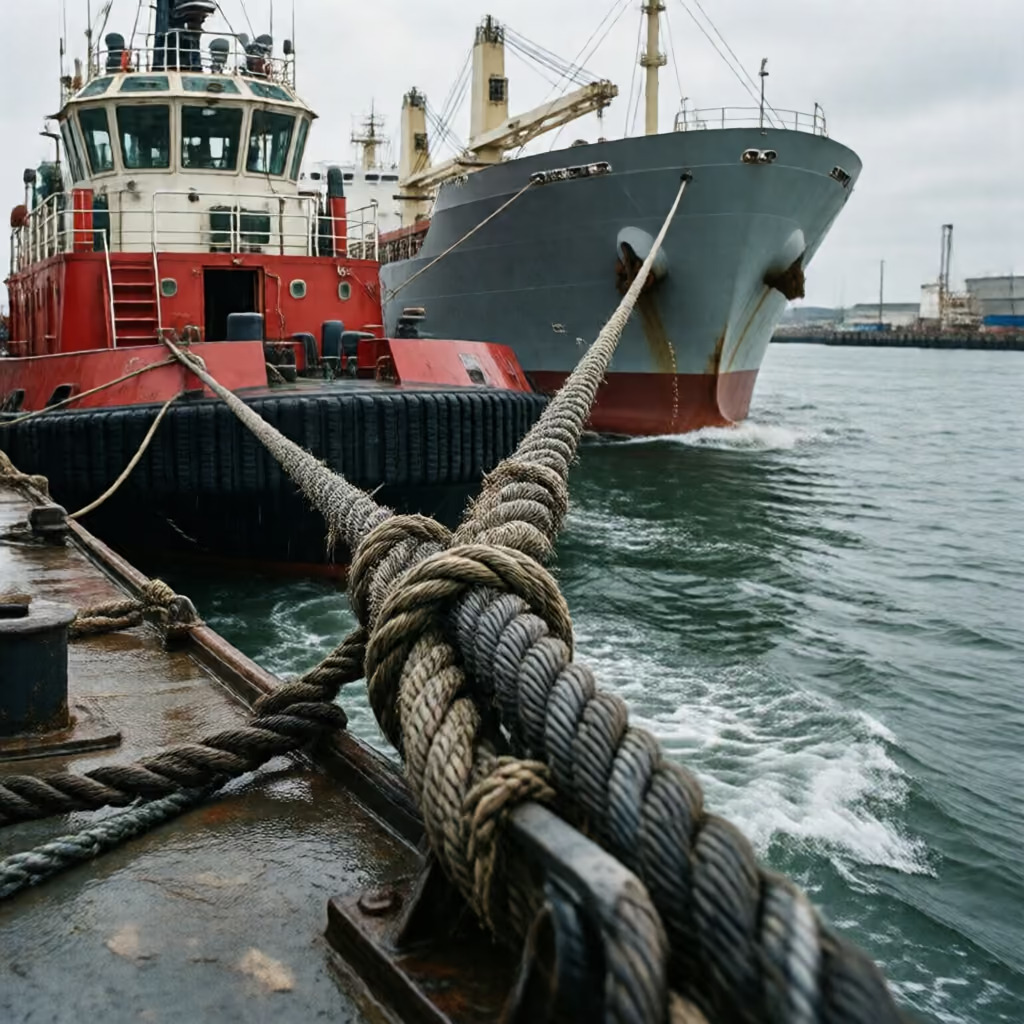
towline
A strong rope used to pull a vehicle, especially a ship, behind another one.
Unter der starken Belastung riss das Schlepptau zwischen den beiden Schiffen.
Under the heavy strain, the towline between the two ships snapped.
| gender | neuter das |
|---|---|
| plural | die Schlepptaue |
| genitive | des Schlepptaus |
| singular | plural | |
|---|---|---|
| nominative | das Schlepptau | die Schlepptaue |
| accusative | das Schlepptau | die Schlepptaue |
| dative | dem Schlepptau | den Schlepptauen |
| genitive | des Schlepptaus des Schlepptaues | der Schlepptaue |
The article changes with the case; it is shown in colour.
'Schlepptau' (towline) consists of 'Schlepp-' from the verb 'schleppen' (to tow / haul) and 'Tau' (rope), a word for a strong rope. This structure can help you understand the figurative uses as an image of pulling something along behind you.
Das Schlepptau verbindet das Fischerboot mit dem Rettungsschiff.
The towline connects the fishing boat to the rescue ship.
'ein Schiff ins Schlepptau nehmen' (to take a ship in tow) describes the beginning of the towing. 'Ein Schiff im Schlepptau haben' (to have a ship in tow), on the other hand, describes the existing connection while towing; learn the preposition together with the verb in each case.
Das Rettungsboot nahm die beschädigte Jacht ins Schlepptau.
The rescue boat took the damaged yacht in tow.
Auf dem Weg zum Hafen hatte der Schlepper zwei Boote im Schlepptau.
On the way to the harbor, the tug had two boats in tow.
A common pattern is 'mit jemandem im Schlepptau' (with someone in tow); after 'mit' (with), the accompanying person is in the dative. The expression is often vivid and slightly humorous and is especially suited to narrative everyday texts.
Mit ihrem kleinen Bruder im Schlepptau betrat Lea den Spielzeugladen.
With her little brother in tow, Lea entered the toy store.
When the rope itself is meant, typical expressions include 'das Schlepptau befestigen' (to attach the towline), 'das Schlepptau spannen' (to tighten the towline), and 'das Schlepptau lösen' (to release the towline). The attachment point is often specified with 'an' (to) and the dative.
Die Besatzung befestigte das Schlepptau an einem stabilen Haken.
The crew attached the towline to a sturdy hook.