

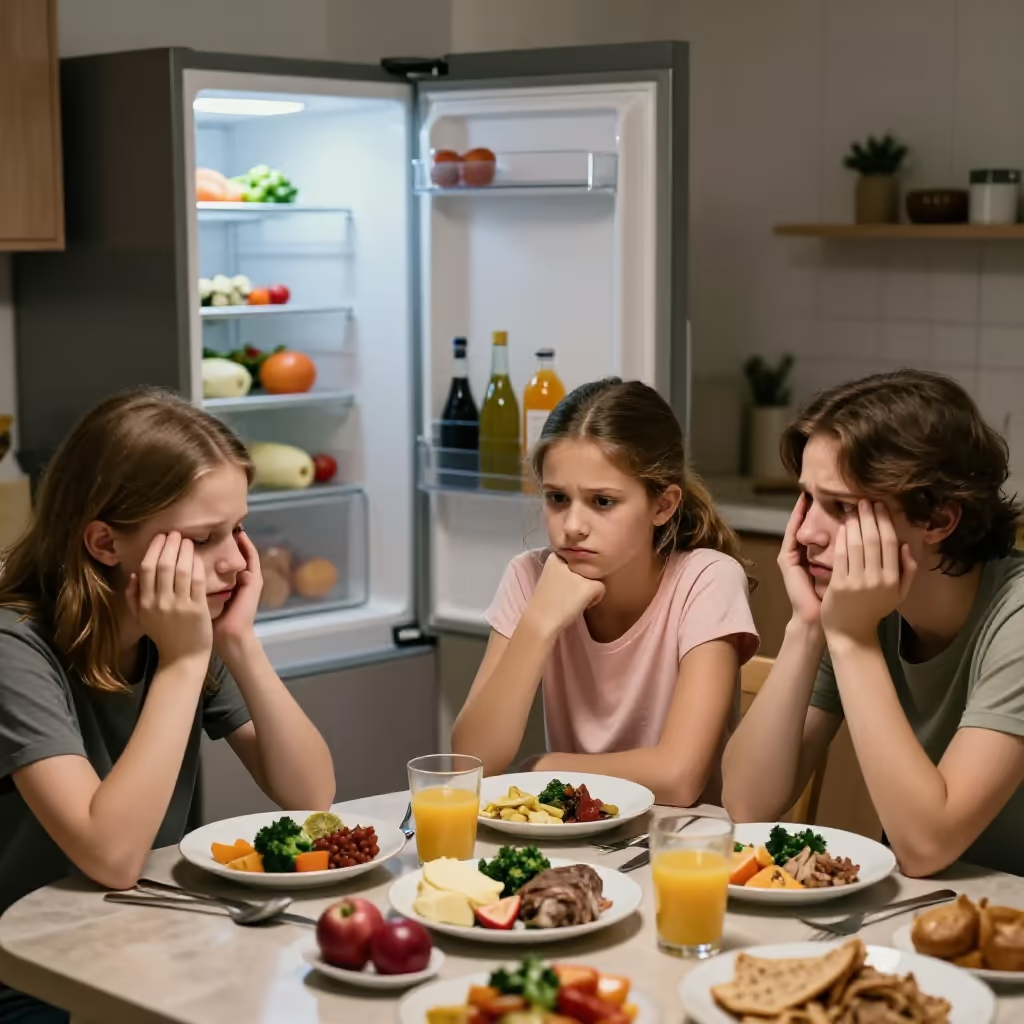
schlimm
bad
Describes a negative, unpleasant, or undesirable quality of a situation, event, or thing.
EXAMPLE
Es ist nicht so schlimm, wir versuchen es einfach nochmal.
It's not that bad; we'll just try again.
bad / serious
Loading your saved state.
bad
Describes a negative, unpleasant, or undesirable quality of a situation, event, or thing.
Es ist nicht so schlimm, wir versuchen es einfach nochmal.
It's not that bad; we'll just try again.
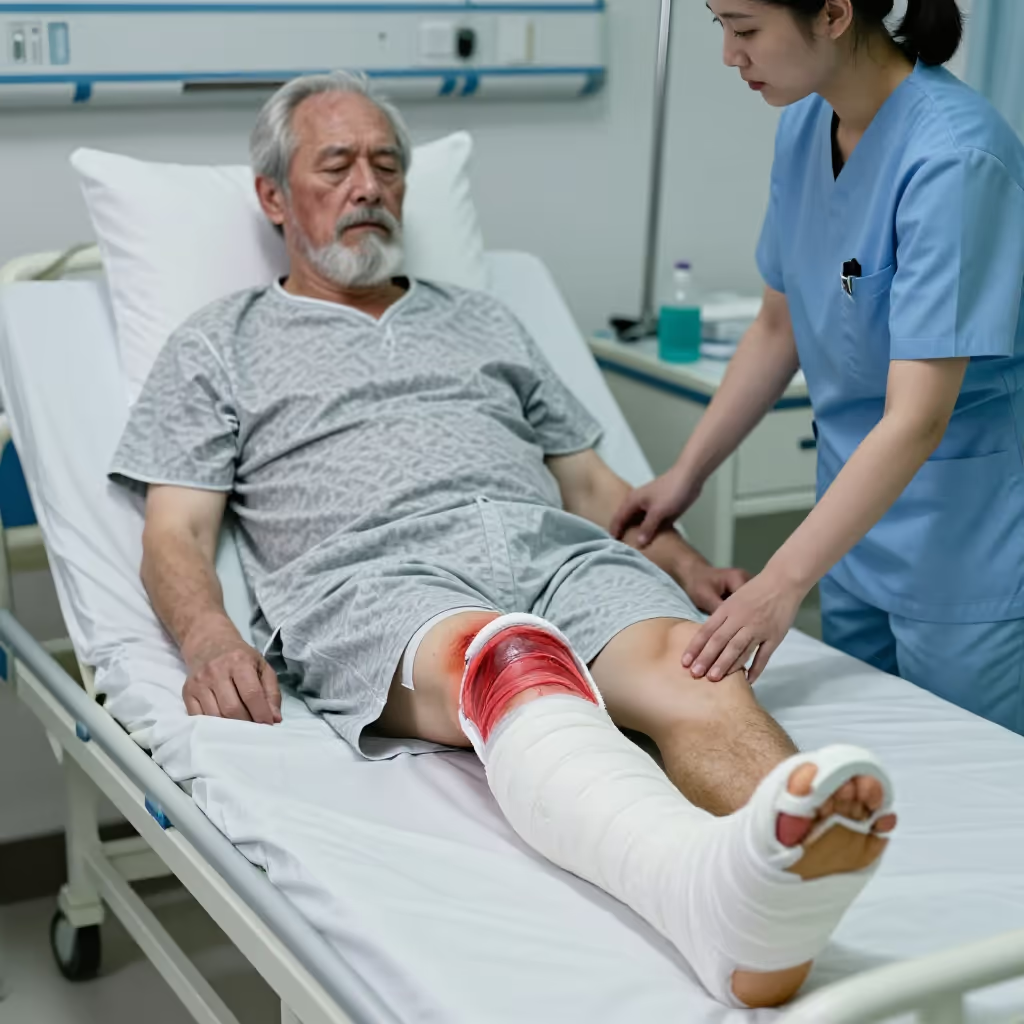
serious
Describes the serious or severe nature of an illness, injury, or damage.
Er hat eine schlimme Verletzung am Knie.
He has a serious injury to his knee.
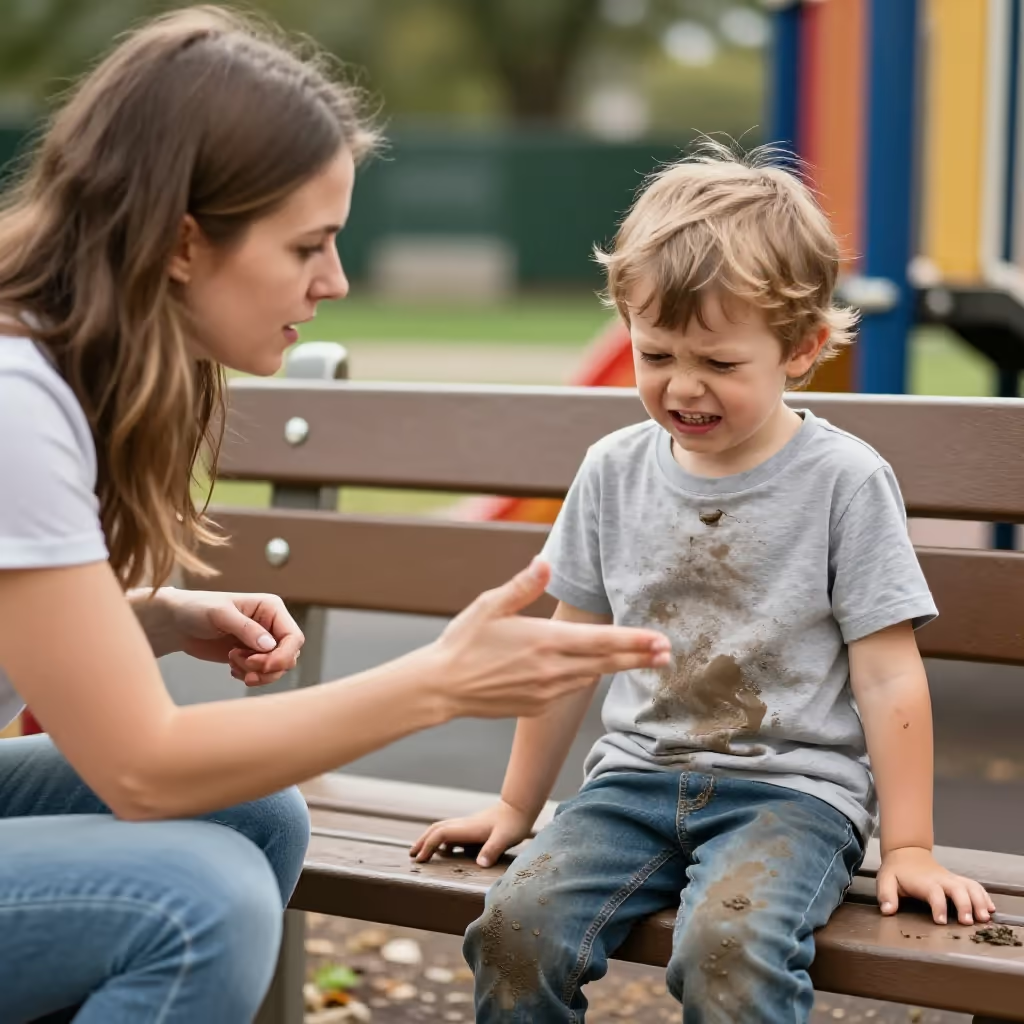
naughty
Colloquial for badly behaved or naughty, often used in connection with children's behavior.
Sei nicht immer so ein schlimmer Junge und hör auf deine Mutter!
Don't always be such a naughty boy, and listen to your mother!

bad / wrong
Refers to morally reprehensible, evil, or wrongful behavior.
Die Ausbeutung von Arbeitern unter diesen Bedingungen ist wirklich schlimm.
The exploitation of workers under these conditions is really bad.
The expression 'nicht so schlimm' (not so bad) is very common in everyday language. It is used to reassure someone or to present a situation as less negative.
Ich habe den Bus verpasst. – Ach, das ist nicht so schlimm, der nächste kommt in zehn Minuten.
I missed the bus. – Oh, that's not so bad; the next one comes in ten minutes.
A fixed and very common expression is 'im schlimmsten Fall' (in the worst case). It describes the worst possible scenario that could occur.
Im schlimmsten Fall müssen wir die ganze Reise absagen.
In the worst case, we'll have to cancel the whole trip.
In the meaning of 'ernst' (serious) or 'schwer' (severe), 'schlimm' (serious/severe) is often used in a medical context. Typical combinations are 'eine schlimme Krankheit' (a serious illness), 'ein schlimmer Husten' (a bad cough), or 'ein schlimmer Unfall' (a serious accident).
Nach dem Sturz hatte er eine schlimme Wunde am Kopf.
After the fall, he had a serious wound on his head.
This colloquial meaning almost always refers to the behavior of children, or sometimes pets. A fixed expression in this context is 'ein schlimmer Finger' for a person who plays tricks or gets into mischief.
Du hast die ganze Schokolade allein gegessen? Du bist aber ein schlimmer Finger!
You ate all the chocolate by yourself? You little rascal!
When it comes to moral judgments, 'schlimm' (bad/wrong) is often combined with abstract nouns. Look for words like 'Verbrechen' (crime), 'Lüge' (lie), 'Tat' (act/deed), or 'Ungerechtigkeit' (injustice) in the sentence.
Es ist schlimm, was auf der Welt passiert.
What is happening in the world is terrible.
heavy / difficult
When talking about injuries, schwer and schlimm can both express a high degree of seriousness. Schwer assesses the severity more objectively, while schlimm conveys a stronger negative judgment or personal reaction. Schwer often fits a medical assessment, while schlimm is more suitable for a shocked reaction.
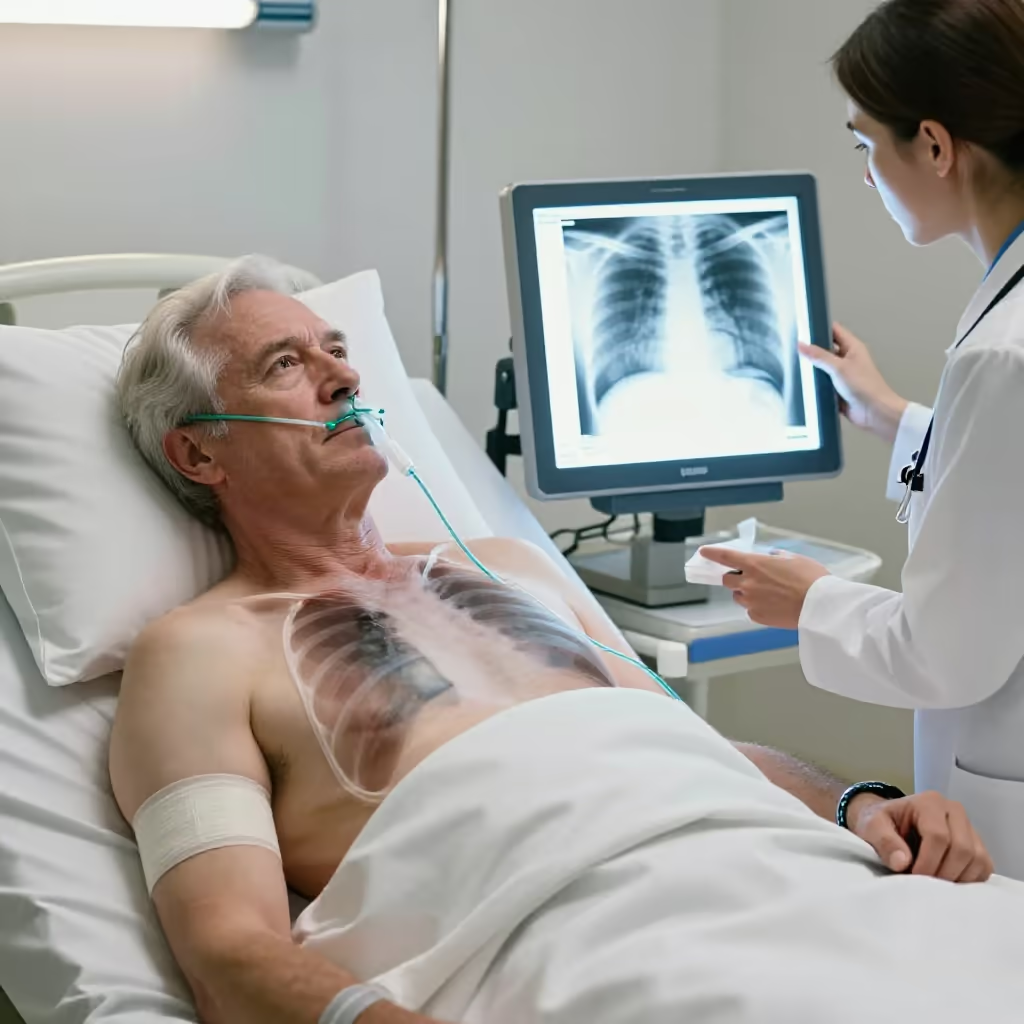
Die Verletzung am Knie sah schlimm aus und erschreckte die Familie.
The knee injury looked bad and frightened the family.
Der Arzt stellte eine schwere Verletzung am Knie fest.
The doctor diagnosed a serious knee injury.