


schwer
heavy
Having a high weight; the opposite of light.
EXAMPLE
Der Koffer ist zu schwer, ich kann ihn nicht alleine tragen.
The suitcase is too heavy; I can't carry it by myself.
heavy / difficult
Loading your saved state.
heavy
Having a high weight; the opposite of light.
Der Koffer ist zu schwer, ich kann ihn nicht alleine tragen.
The suitcase is too heavy; I can't carry it by myself.

difficult
Laborious, complicated, or demanding; the opposite of easy.
Die letzte Matheaufgabe war wirklich schwer.
The last math problem was really difficult.
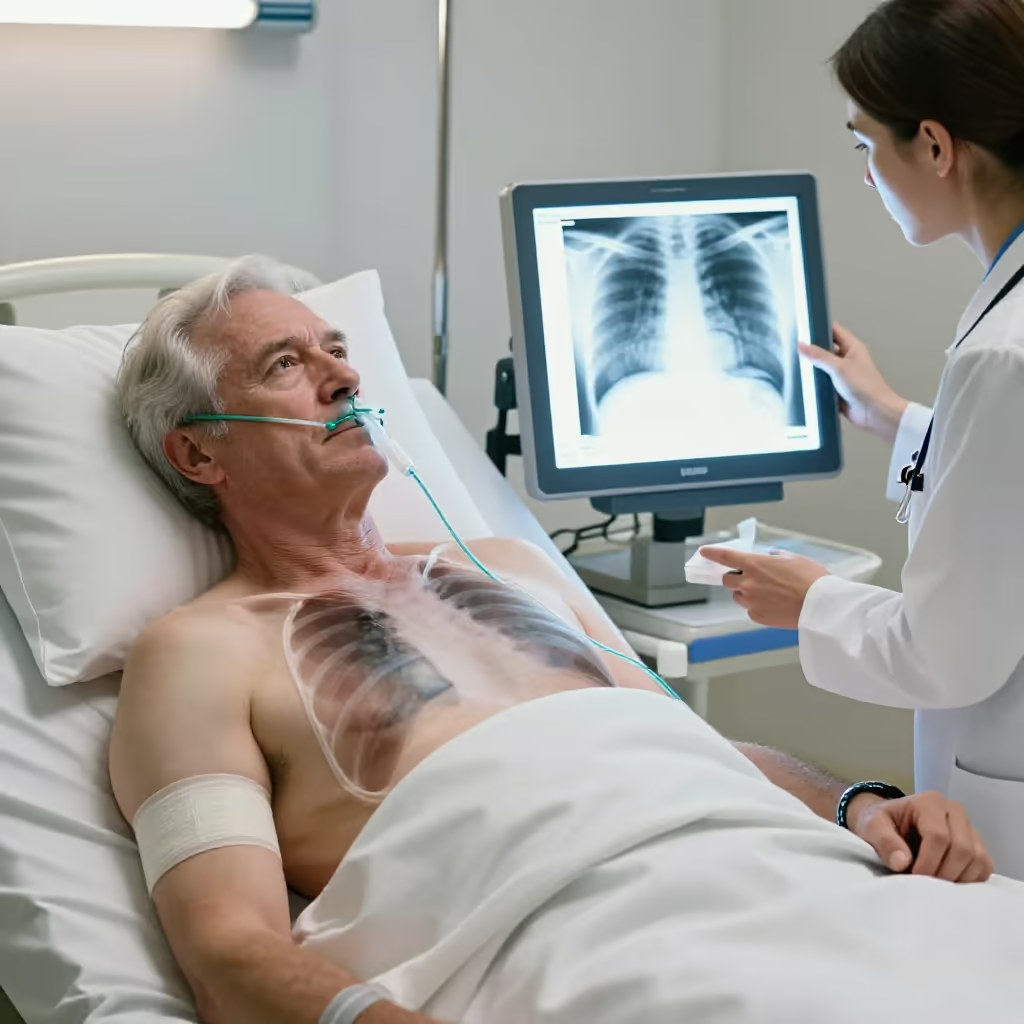
serious
Serious, bad, or severe. Often used for illnesses, injuries, mistakes, or crimes.
Er erholt sich langsam von seiner schweren Krankheit.
He is slowly recovering from his serious illness.

difficult
Emotionally burdensome, oppressive, or filled with worry.
Sie musste eine schwere Entscheidung treffen.
She had to make a difficult decision.

to struggle with
To have difficulties doing, understanding, or accepting something.
Ich tue mich schwer damit, früh aufzustehen.
I struggle with getting up early.

heavy
Refers to food that is very rich, fatty, and filling and may therefore feel burdensome for digestion.
Nach dem schweren Gänsebraten brauche ich einen Verdauungsschnaps.
After the heavy roast goose, I need a digestif.
The expression 'jemandem schwerfallen' means that something is difficult for a person. The person experiencing the difficulty is always in the dative.
Es fällt mir schwer, diese Entscheidung zu treffen.
It is difficult for me to make this decision.
Whether 'schwer' means 'high weight' or 'complicated' depends on the noun. If it refers to a physical object, it is about weight. If it refers to a task or topic, it is about difficulty.
Dieser Stein ist sehr schwer.
This stone is very heavy.
To express that an action is difficult, you can use the structure 'schwer zu + infinitive' (difficult to + infinitive).
Diese Frage ist schwer zu beantworten.
This question is difficult to answer.
In the meaning 'serious' or 'severe', 'schwer' is often combined with negative events. Typical examples are 'eine schwere Krankheit' (a serious illness), 'eine schwere Verletzung' (a serious injury), or 'ein schwerer Fehler' (a serious mistake).
Der Radfahrer hatte einen schweren Unfall.
The cyclist had a serious accident.
When 'schwer' describes an emotional burden, it often appears with nouns like 'Herz' (heart), 'Zeit' (time), or 'Entscheidung' (decision). The expression 'mit schwerem Herzen' means that you do something sadly or reluctantly.
Er verabschiedete sich mit schwerem Herzen von seiner Familie.
He said goodbye to his family with a heavy heart.
The reflexive expression 'sich schwertun mit' means 'to have difficulties with'. It is always used with the preposition 'mit' and the dative.
Viele Schüler tun sich mit der neuen Grammatik schwer.
Many students struggle with the new grammar.
In connection with food and drink, 'schwer' means that something is very filling, fatty, or rich and weighs on the stomach.
Nach dem schweren Abendessen fühlte ich mich sehr müde.
After the heavy dinner, I felt very tired.
serious
When talking about illnesses, both schwer and ernst can be appropriate. schwer mainly indicates a high degree of severity, whereas ernst places greater emphasis on the fact that the situation is worrying or may have dangerous consequences. schwer is often appropriate for a medical classification, while ernst is suitable when expressing concern about how the illness may develop.

Der Patient leidet an einer schweren Lungenentzündung.
The patient is suffering from severe pneumonia.
Die Lungenentzündung des Patienten ist ernst, weil gefährliche Folgen drohen.
The patient's pneumonia is serious because dangerous complications are possible.