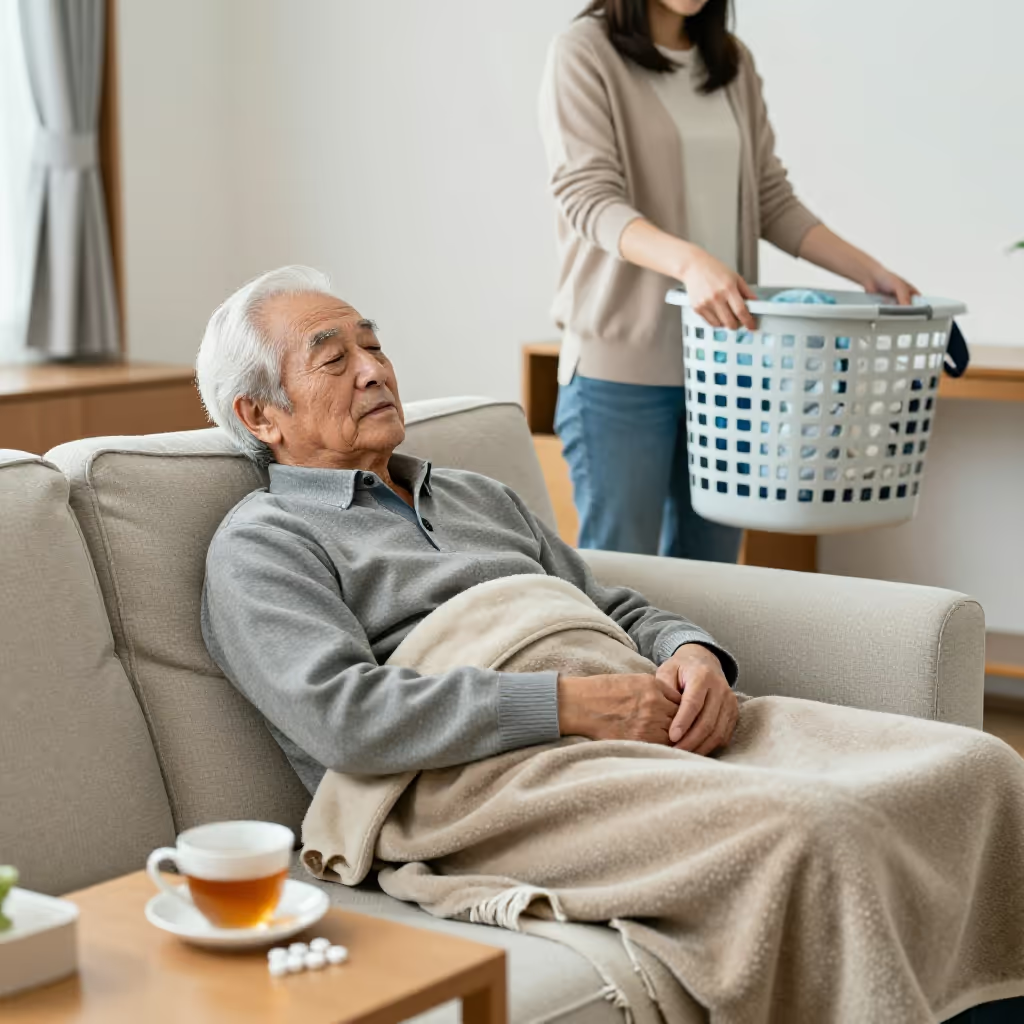
To treat something or someone carefully so as not to strain or damage it. This often refers to body parts, health, or also materials.
example
Nach der Knieoperation muss er sein Bein sechs Wochen lang schonen.
After the knee operation, he has to spare his leg for six weeks.
Usage tips
Accusative object
The verb 'schonen' (to spare) is always used with an accusative object. You ask: Wen oder was soll ich schonen? (Whom or what should I spare?)
EXAMPLE
Du solltest nach der Erkältung deine Stimme schonen.
You should rest your voice after the cold.
Typical collocations
'Schonen' (to spare) is often used in relation to the body or health. Typical combinations are 'den Rücken schonen' (to spare one's back), 'die Augen schonen' (to rest one's eyes), or 'die Nerven schonen' (to spare one's nerves).
EXAMPLE
Wenn du viel am Computer arbeitest, solltest du regelmäßig deine Augen schonen.
If you work a lot on the computer, you should rest your eyes regularly.
Reflexive use
The reflexive form 'sich schonen' (to take it easy) means that you rest and avoid exertion. The reflexive pronoun is in the accusative.
EXAMPLE
Ich fühle mich nicht gut, ich muss mich heute etwas schonen.
I don't feel well; I need to take it a little easy today.
Use with 'vor'
When you want to protect someone from something unpleasant, you use the structure 'jemanden (Akkusativ) vor etwas (Dativ) schonen' (to spare someone from something).
EXAMPLE
Er wollte seine Familie vor den schlechten Nachrichten schonen.
He wanted to spare his family the bad news.
Compare with
near_synonym · confusable
schonen vs schützen
to protect
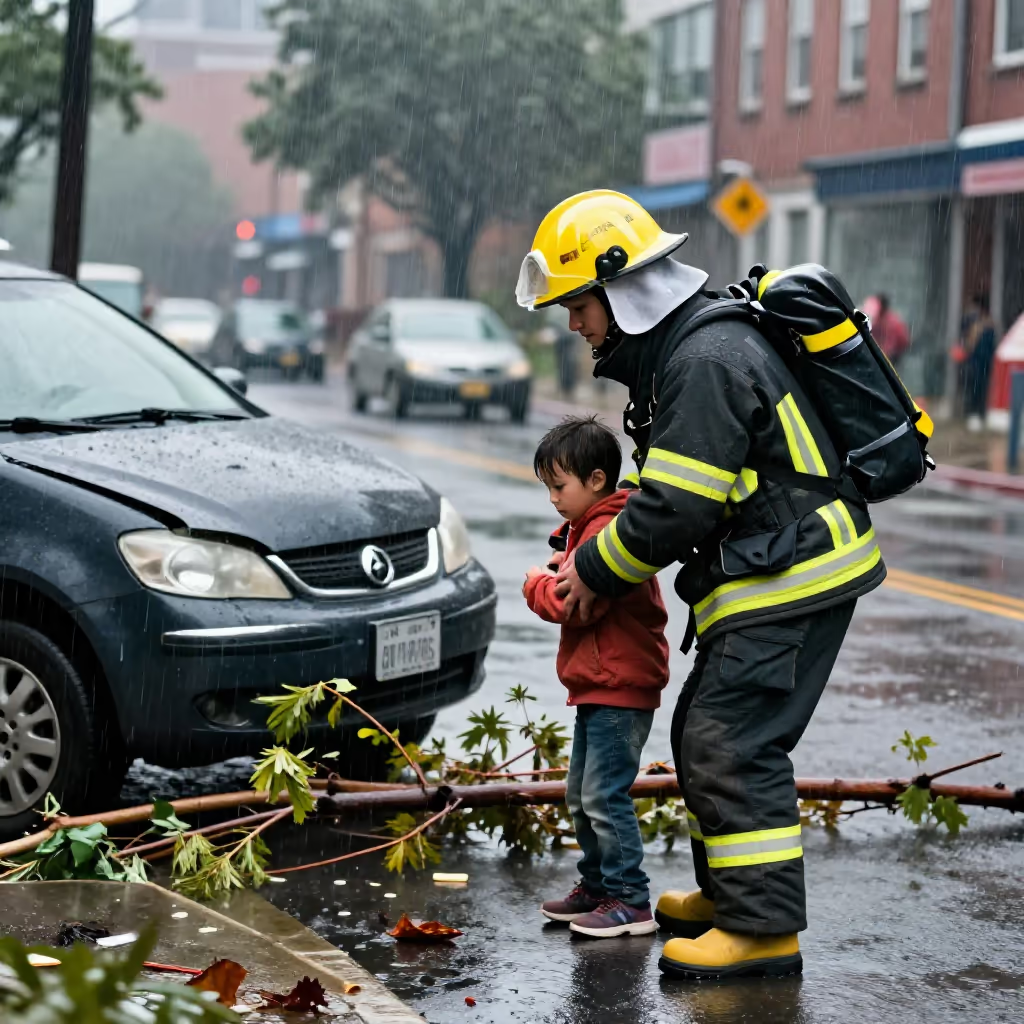
'schützen' and 'schonen' both have to do with avoiding harm. Use 'schützen' when a danger comes from outside and you want to create safety. 'schonen' more often means not putting too much strain on someone or something, or treating it carefully. This often fits health, body parts, strength, or materials. The words can be confused because both sound positive. But you protect yourself from something dangerous; you 'schont' yourself when you need rest or are supposed to do less.
schonen
Greta schont heute ihren Rücken und trägt keine schweren Kisten.
Greta is taking care of her back today and is not carrying any heavy boxes.
schützen
Er schützt die Kinder im Straßenverkehr besonders gut.
He protects the children especially well in traffic.