

schreiben
to write
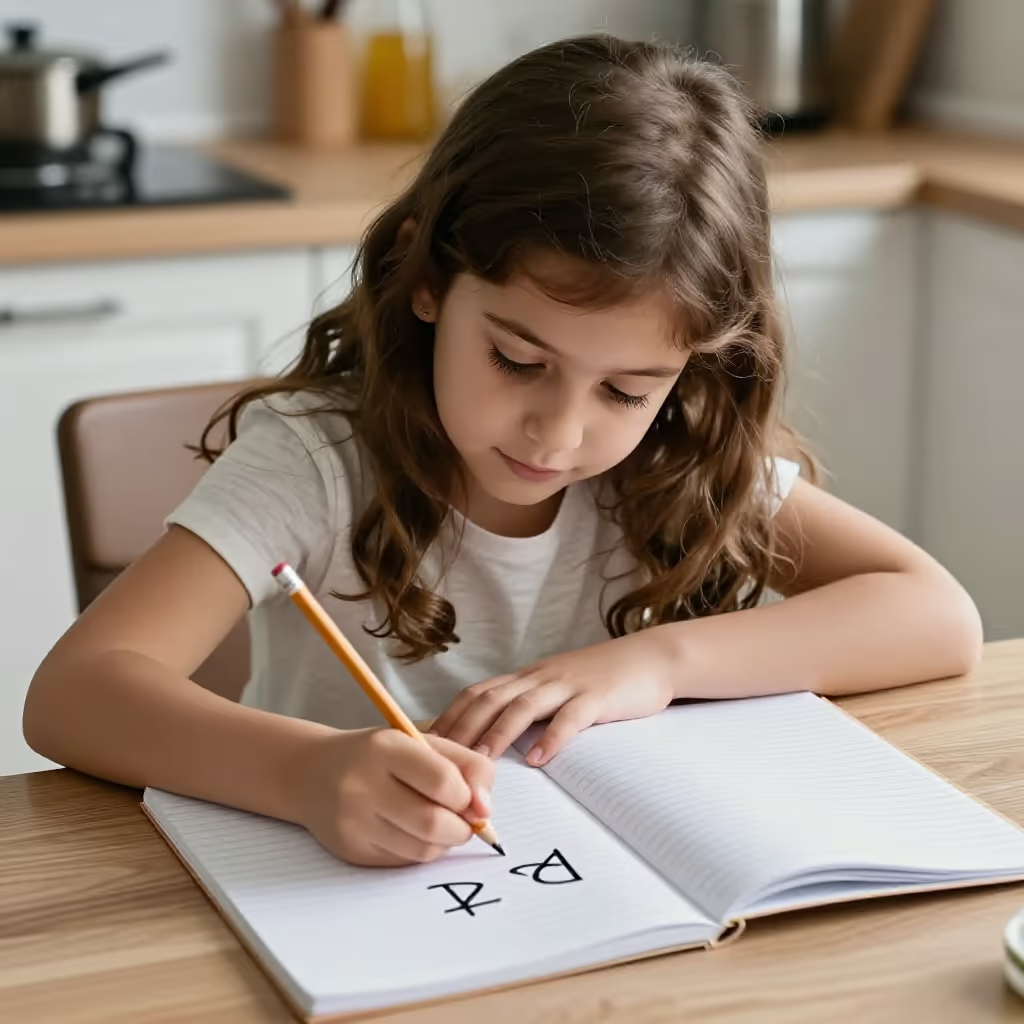
To produce letters, words, or symbols on a surface with a pen, keyboard, or another tool.
EXAMPLE
Kannst du bitte deinen Namen auf die Liste schreiben?
Could you please write your name on the list?
to write
Loading your saved state.
to write
To produce letters, words, or symbols on a surface with a pen, keyboard, or another tool.
Kannst du bitte deinen Namen auf die Liste schreiben?
Could you please write your name on the list?

to write
To compose a text such as a letter, a book, an email, or an article.
Sie schreibt gerade an ihrem zweiten Roman.
She is currently writing her second novel.

to message
To communicate with someone through written messages, for example by letter, email, or messenger.
Wir schreiben uns fast jeden Tag eine Nachricht.
We message each other almost every day.

to be spelled
To have a particular spelling or orthography.
Entschuldigung, wie schreibt sich Ihr Nachname?
Excuse me, how is your last name spelled?
to be
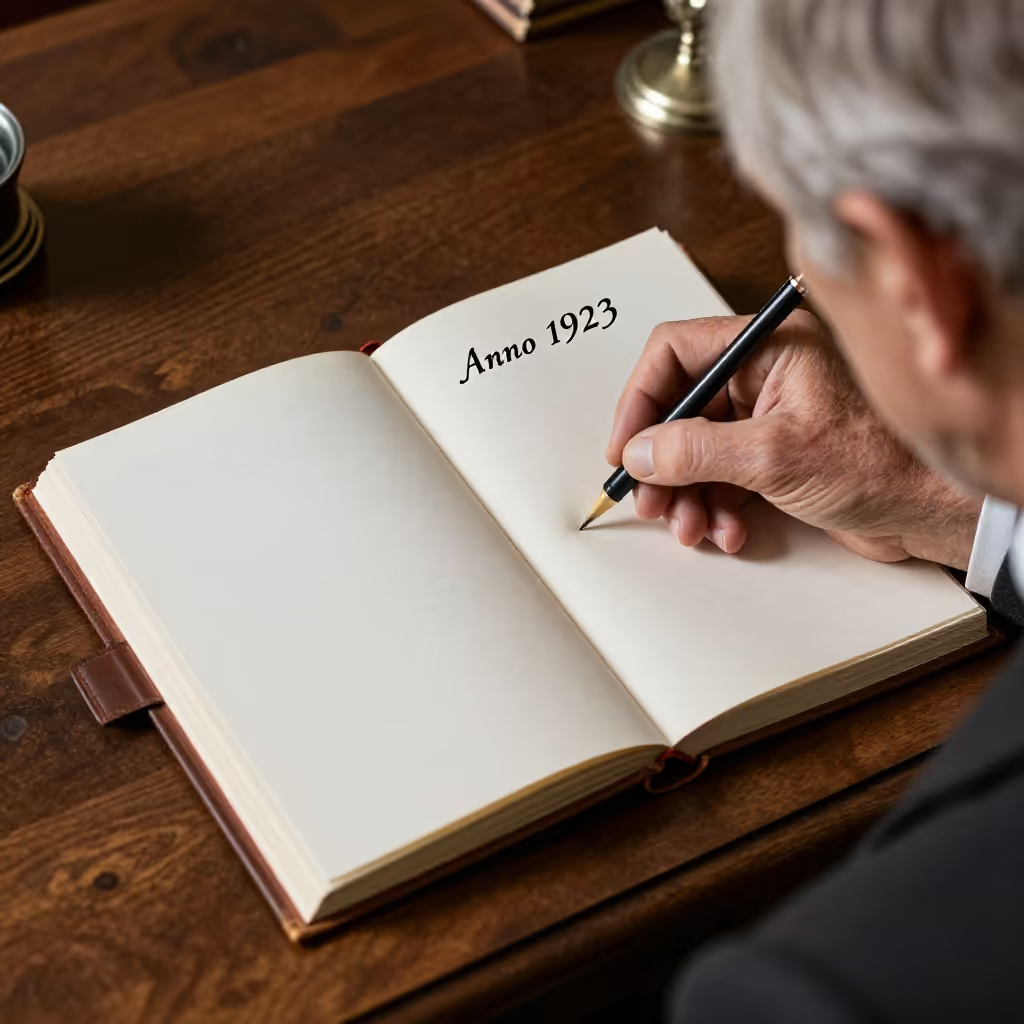
A formal or literary way of stating the current date or year.
Wir schreiben das Jahr 1990, als die Wiedervereinigung stattfand.
It was the year 1990 when reunification took place.
'Schreiben' (to write) is very often used with a person in the dative (to whom?) and a thing in the accusative (what?). The structure is: subject + schreibt + dative object + accusative object.
Ich schreibe meiner Freundin eine lange E-Mail.
I am writing my friend a long email.
Many important nouns are derived from the verb 'schreiben' (to write), for example 'der Schriftsteller' (person who writes books), 'die Schrift' (style of writing/script), or 'die Überschrift' (heading/title).
Seine Handschrift ist sehr schwer zu lesen.
His handwriting is very hard to read.
Common texts that one 'schreibt' (writes) are: a letter, an email, a message, a novel, a written exam, or a test.
Die Studenten müssen nächste Woche eine Klausur schreiben.
The students have to write an exam next week.
When referring to communication between people, the structure 'mit jemandem schreiben' (to write/message with someone) is often used. The reflexive form 'sich schreiben' (to write to each other) is also common.
Ich schreibe oft mit meiner Familie über das Internet.
I often message with my family online.
To ask about the correct spelling of a word, you use the reflexive phrase 'Wie schreibt sich ...?' (How is ... spelled?). This is a very useful question in everyday life.
Entschuldigung, wie schreibt sich dieser komplizierte Name?
Excuse me, how is this complicated name spelled?
The formulation 'Wir schreiben das Jahr ...' (We write the year ... / It is the year ...) is a formal or literary way to give a date. It is often found at the beginning of historical narratives.
Wir schreiben das Jahr 2024 und die Technologie entwickelt sich rasant.
It is the year 2024, and technology is developing rapidly.
letter
Schreiben refers here to the act of composing a text. Der Brief, on the other hand, is the written message that results and is usually sent by mail. When referring to the activity, use schreiben; when referring to the finished written document, use der Brief.
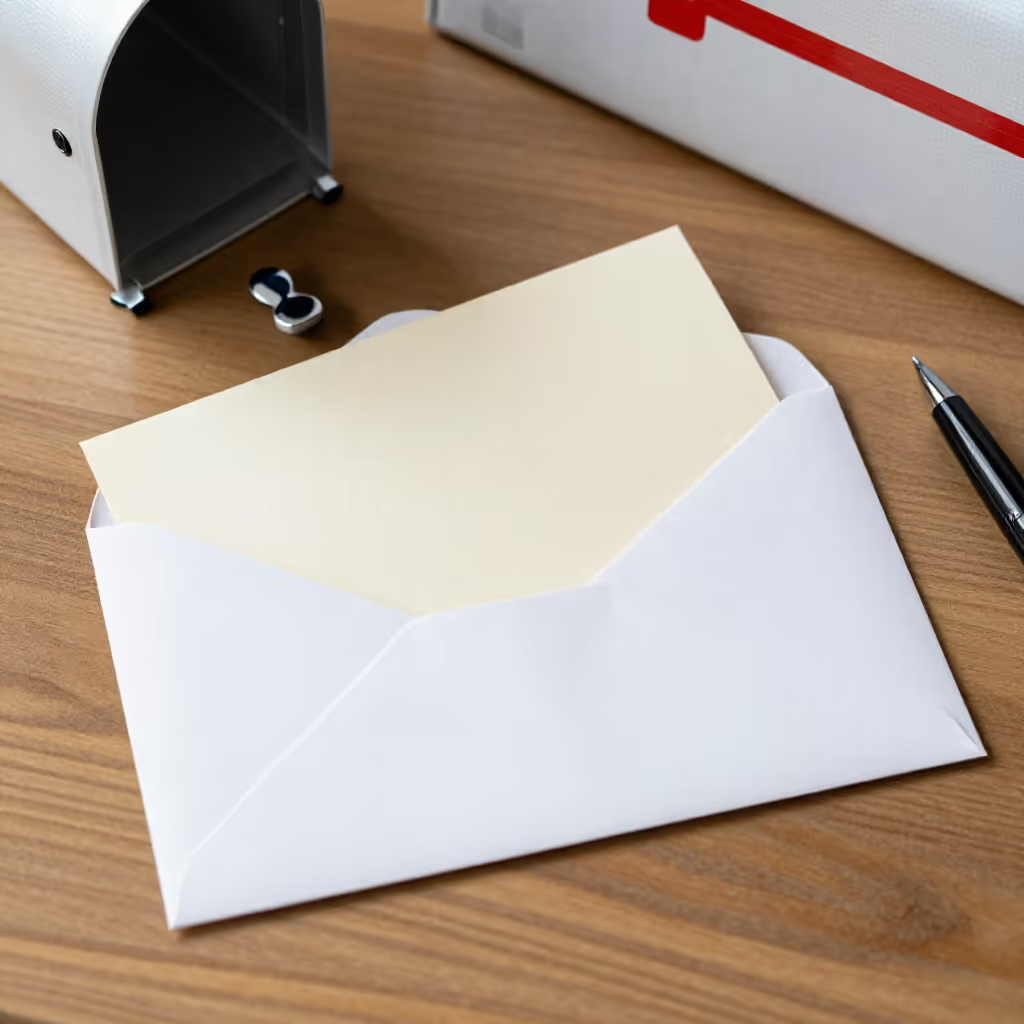
Ich schreibe meiner Tante heute eine persönliche Nachricht auf Papier.
I’m writing my aunt a personal message on paper today.
Der Brief an meine Tante liegt schon fertig auf dem Tisch.
The letter to my aunt is already finished and lying on the table.