

komponieren
to compose
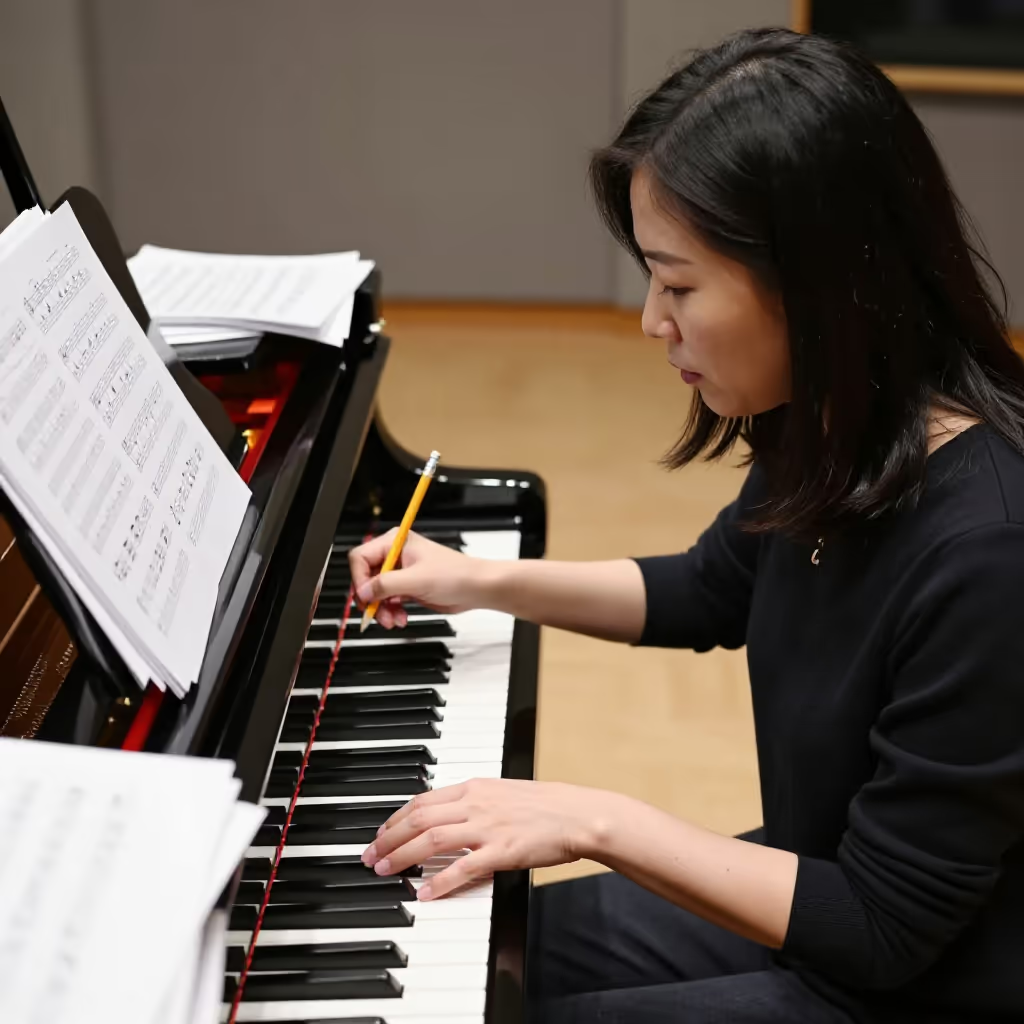
To create a musical work by combining notes, harmonies, and rhythms into a structure.
EXAMPLE
Mozart begann schon als Kind, seine ersten Stücke zu komponieren.
Mozart began composing his first pieces as a child.
to compose
Loading your saved state.
to compose
To create a musical work by combining notes, harmonies, and rhythms into a structure.
Mozart begann schon als Kind, seine ersten Stücke zu komponieren.
Mozart began composing his first pieces as a child.

to compose
To put together or arrange something from different parts in an artistic or careful way. This meaning is less common and should be understood more figuratively.
Der Chefkoch komponierte ein exquisites Menü aus regionalen Zutaten.
The head chef composed an exquisite menu from regional ingredients.
The verb comes from the Latin 'componere', which means 'to put together'. This basic idea of artful combining appears in all meanings.
Der Parfümeur komponiert aus verschiedenen Düften ein neues Parfüm.
The perfumer composes a new perfume from various scents.
The word family includes 'der Komponist' (the composer, the person who writes music) and 'die Komposition' (the composition, the written work). All the words refer to the creation of a work.
Beethoven ist einer der berühmtesten Komponisten der Welt.
Beethoven is one of the most famous composers in the world.
In its main meaning, 'komponieren' (to compose) is connected with musical works. You can compose 'ein Lied' (a song), 'eine Oper' (an opera), 'eine Sinfonie' (a symphony), or simply 'Musik' (music).
Er hat die Musik für den neuen Kinofilm komponiert.
He composed the music for the new feature film.
You can tell from the object whether the literal or figurative meaning is intended. If it is about music, the main meaning is intended. With objects like 'ein Menü' (a menu), 'ein Outfit' (an outfit), or 'ein Bild' (a picture), the transferred meaning of artful arrangement is meant.
Die Innenarchitektin hat die Farben im Raum perfekt komponiert.
The interior designer composed the colors in the room perfectly.
Using 'komponieren' (to compose) for non-musical things is figurative and belongs to an elevated, poetic style of language. It emphasizes the skill and care involved in putting something together.
Der Dichter komponierte seine Verse mit großer Sorgfalt.
The poet composed his verses with great care.
to write
Both words can be used when creating a song, but they emphasize different things. Schreiben can refer to the lyrics or, depending on the context, to the work in general, while komponieren explicitly refers to the musical arrangement of notes, harmonies, and rhythms. Use schreiben for the lyrics and komponieren for the music.

Der Musiker komponiert die Melodie für ihr neues Lied.
The musician is composing the melody for her new song.
Die Sängerin schreibt den Text für ihr neues Lied.
The singer is writing the lyrics for her new song.