


aufsetzen
to put on
To place something on the head or nose, for example glasses, a hat, or a helmet.
EXAMPLE
Er musste seine Lesebrille aufsetzen, um die Speisekarte zu entziffern.
He had to put on his reading glasses to decipher the menu.
to put on / to draft / to land
Loading your saved state.
to put on
To place something on the head or nose, for example glasses, a hat, or a helmet.
Er musste seine Lesebrille aufsetzen, um die Speisekarte zu entziffern.
He had to put on his reading glasses to decipher the menu.

to sit up
To move from a lying position into a sitting position.
Nach dem Aufwachen setzte er sich im Bett auf.
After waking up, he sat up in bed.

to draft
To write and formulate an official document, such as a contract, a letter, or a will.
Der Anwalt wird einen neuen Mietvertrag aufsetzen.
The lawyer will draft a new lease.

to touch down
To touch the ground and land. This is often used for airplanes, birds, or insects.
Das Flugzeug setzte sanft auf der Landebahn auf.
The airplane touched down gently on the runway.
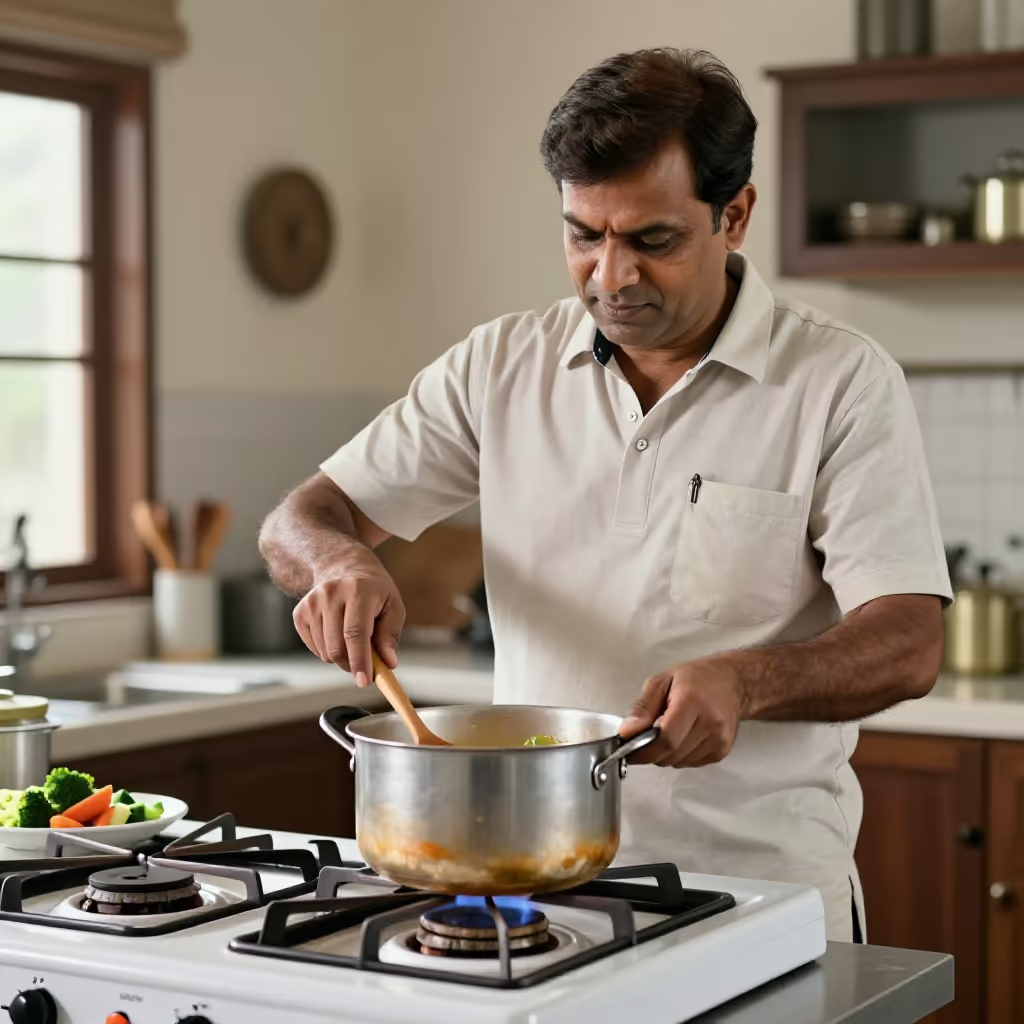
to put on
To place a pot or kettle on a stovetop in order to cook or heat something.
Ich setze schon mal Wasser für den Tee auf.
I'll put some water on for tea.
'Aufsetzen' is a separable verb. The prefix 'auf-' separates from the verb in a main clause and goes at the end.
Er setzt schnell seinen Hut auf und geht.
He quickly puts on his hat and leaves.
The many meanings of 'aufsetzen' become clear from context. Pay attention to the object (glasses, contract, water), the subject (airplane), or whether the verb is used reflexively ('sich aufsetzen').
Setz bitte deine Mütze auf, es ist kalt.
Please put on your hat; it's cold.
This meaning is almost always combined with things worn on the head or nose. Typical phrases are: 'eine Brille aufsetzen' (to put on glasses), 'einen Hut aufsetzen' (to put on a hat), 'eine Krone aufsetzen' (to put on a crown), or 'Kopfhörer aufsetzen' (to put on headphones).
Zum Schutz vor der Sonne setzte sie einen großen Hut auf.
To protect herself from the sun, she put on a large hat.
When a person moves from lying down to sitting, the reflexive form 'sich aufsetzen' is used. The subject is always the person performing the movement.
Der Kranke konnte sich ohne Hilfe im Bett aufsetzen.
The sick man was able to sit up in bed without help.
In the sense of 'verfassen' (to compose/write), 'aufsetzen' is used with official or formal texts. Common combinations are: 'einen Vertrag aufsetzen' (to draft a contract), 'ein Testament aufsetzen' (to draft a will), or 'ein offizielles Schreiben aufsetzen' (to draft an official letter).
Die Notarin hat gestern das Testament aufgesetzt.
The notary drafted the will yesterday.
In the meaning 'landen' (to land), 'aufsetzen' is often used without an object. The subject is typically an airplane, a bird, or an insect.
Der Pilot bereitete sich darauf vor, auf der kurzen Landebahn aufzusetzen.
The pilot prepared to touch down on the short runway.
This meaning is typical in a cooking context. It is used for containers or liquids that you place on the stove to heat. Typical phrases are: 'Wasser aufsetzen' (to put water on), 'einen Topf aufsetzen' (to put a pot on), or 'den Teekessel aufsetzen' (to put the kettle on).
Kannst du bitte schon mal das Nudelwasser aufsetzen?
Could you please put the pasta water on already?
to put / to set
Stellen and aufsetzen can both describe movement onto a surface. Stellen is the general verb for putting something in an upright position; aufsetzen is used for placing a pot or kettle on a stovetop and emphasizes the purpose of cooking or heating. In this kitchen context, aufsetzen is the more appropriate expression.
Ich setze den Topf auf die Herdplatte auf, damit das Wasser kocht.
I put the pot on the stovetop so the water would boil.
Ich stelle den Topf vorsichtig auf die Herdplatte.
I carefully put the pot on the stovetop.