
The correct way to write a word or phrase according to the rules of orthography.
example
Seit der Rechtschreibreform ist die Schreibweise für viele Wörter eine andere.
Since the spelling reform, the spelling of many words has changed.
Usage tips
Word composition
The word is made up of the verb 'schreiben' (to write) and the noun 'die Weise' (way or manner). So it literally means 'the way of writing'.
EXAMPLE
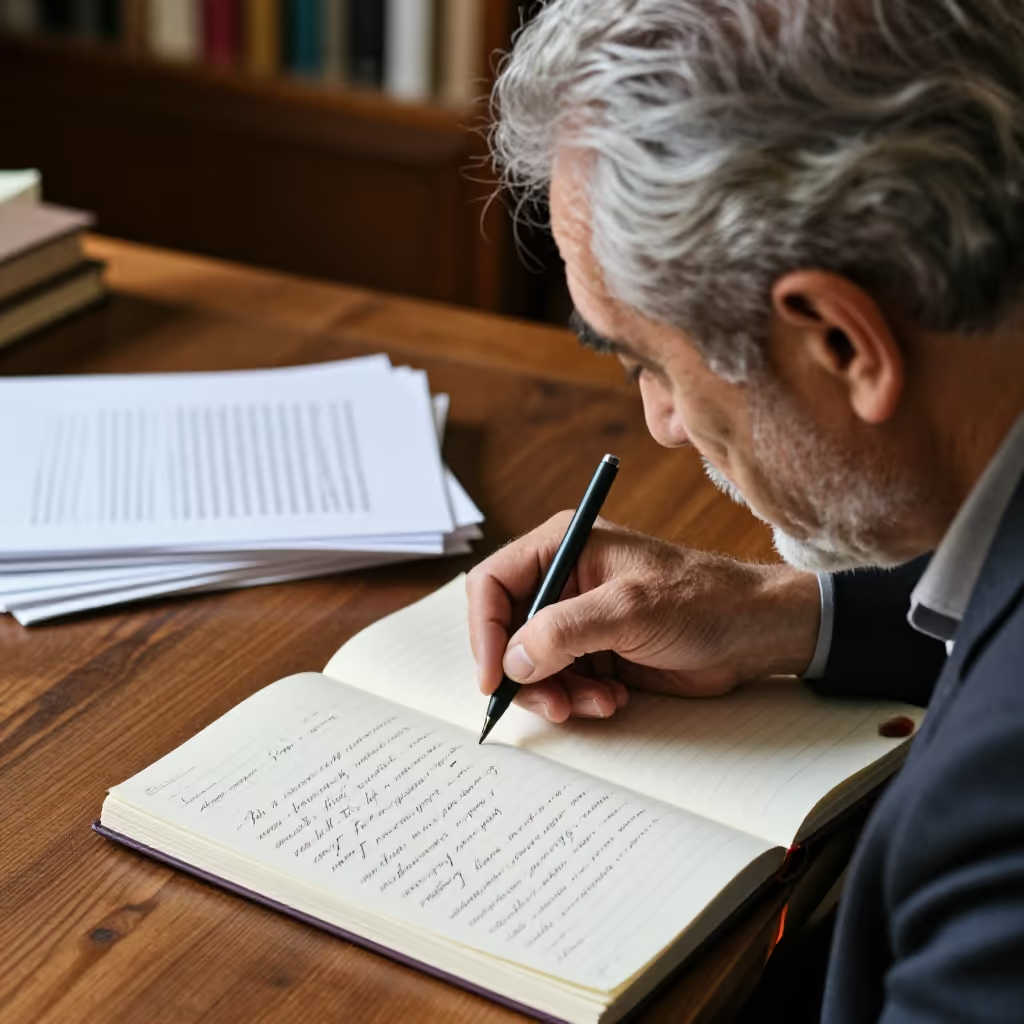
Jeder Autor hat seine eigene Schreibweise.
Every author has their own writing style.
Context clue
If the context is about rules and correctness, the orthographic meaning is intended. If it is about style, personality, or art, the individual, stylistic meaning is intended.
EXAMPLE
Die korrekte Schreibweise dieses Namens ist schwer zu merken.
The correct spelling of this name is hard to remember.
Typical collocations
In connection with spelling, typical combinations are 'die korrekte Schreibweise' (the correct spelling), 'die offizielle Schreibweise' (the official spelling), or 'eine Schreibweise im Wörterbuch nachschlagen' (to look up a spelling in the dictionary).
EXAMPLE
Bitte schlagen Sie die offizielle Schreibweise des Wortes nach.
Please look up the official spelling of the word.
Compare with
near_synonym · confusable
Schreibweise vs Stil
style
'Stil' and 'Schreibweise' can both describe how someone writes. In texts, 'Stil' means the effect and type of expression, for example factual, humorous, or poetic. 'Schreibweise' can also mean this personal way of writing, but very often it refers to the correct form of a word according to spelling rules. That is why learners may confuse the words. When you are talking about the effect of a whole text, 'Stil' usually fits. When you are asking how a word is written correctly, you need 'Schreibweise'.
Schreibweise
Vor dem Test üben wir die Schreibweise schwieriger Wörter.
Before the test, we practice the spelling of difficult words.
Stil
Annas Stil ist klarer als früher, aber immer noch sehr persönlich.
Anna's style is clearer than before, but still very personal.