


die Handschrift
handwriting
The personal and characteristic way a person writes by hand.
EXAMPLE
Ich kann seine Handschrift kaum entziffern, so unleserlich ist sie.
I can hardly decipher his handwriting; it's so illegible.
handwriting / manuscript
Loading your saved state.
handwriting
The personal and characteristic way a person writes by hand.
Ich kann seine Handschrift kaum entziffern, so unleserlich ist sie.
I can hardly decipher his handwriting; it's so illegible.

signature style
The unmistakable personal style of an artist, author, or director in their works.
Der Film trägt deutlich die Handschrift des berühmten Regisseurs.
The film clearly bears the signature style of the famous director.
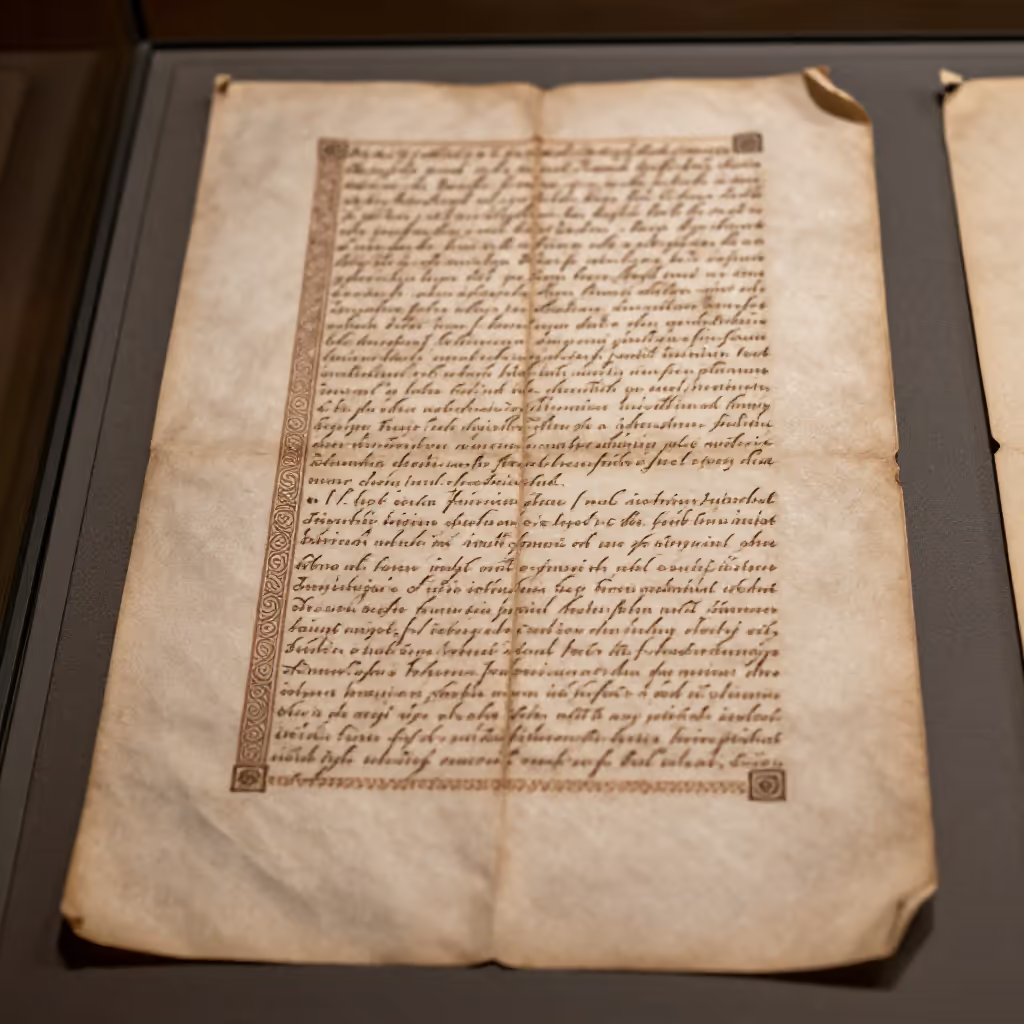
manuscript
A handwritten document, book, or score, especially from the time before the invention of printing.
Im Museum wird eine mittelalterliche Handschrift aus dem 12. Jahrhundert ausgestellt.
A medieval manuscript from the 12th century is on display in the museum.
The word is made up of 'Hand' (hand) and 'Schrift' (writing/script). So it literally means 'writing by hand.' This origin explains both the personal way of writing and old handwritten documents.
Seine Handschrift ist sehr elegant und gut zu lesen.
His handwriting is very elegant and easy to read.
Adjectives help distinguish the meanings: 'leserlich' (legible) or 'unordentlich' (messy) describes the way of writing. 'Persönlich' (personal) or 'unverkennbar' (unmistakable) points to an artist's style. 'Mittelalterlich' (medieval) or 'alt' (old) indicates a historical document.
Trotz seines Alters hat der Professor noch eine sehr saubere Handschrift.
Despite his age, the professor still has very neat handwriting.
When referring to the personal way of writing, 'Handschrift' (handwriting) is often combined with verbs such as 'haben' (to have), 'erkennen' (to recognize), or 'entziffern' (to decipher). Typical adjectives are 'schön' (beautiful), 'schlecht' (bad), 'leserlich' (legible), or 'unleserlich' (illegible).
Ich konnte die Notizen nicht lesen, weil ich seine Handschrift nicht entziffern kann.
I couldn't read the notes because I can't decipher his handwriting.
To describe the style of an artist or author, the fixed expression 'die Handschrift von jemandem tragen' (to bear someone's signature style) is often used. This emphasizes the unique and recognizable character of a work.
Dieses Gebäude trägt klar die Handschrift des berühmten Architekten.
This building clearly bears the signature style of the famous architect.
style
Stil and Handschrift (signature style) can describe the design of a work of art. Stil refers generally to its recognizable stylistic features, while Handschrift emphasizes the creator’s personal and unmistakable authorship. Use “Stil” when talking about the type of work, and “Handschrift” when referring to the artist’s individual imprint.

Das Gemälde trägt trotz des neuen Themas die unverkennbare Handschrift der Künstlerin.
Despite the new subject, the painting bears the artist’s unmistakable signature style.
Der Stil des Gemäldes ist durch klare Linien und ruhige Farben geprägt.
The painting’s style is defined by clear lines and calm colors.