

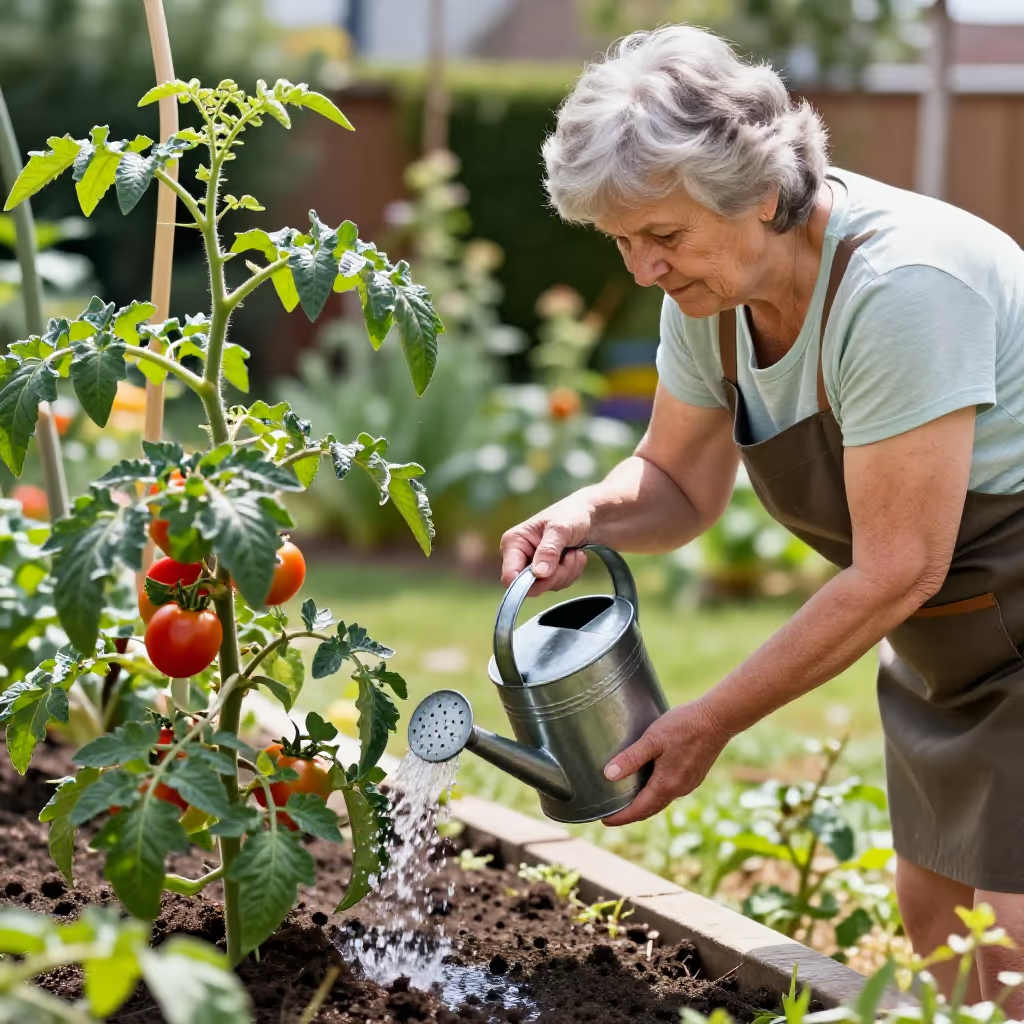
gießen
to water
To give liquid, especially water, to plants in order to irrigate them.
EXAMPLE
Ich muss heute Abend noch die Blumen auf dem Balkon gießen.
I still have to water the flowers on the balcony this evening.
to pour / water / cast
Loading your saved state.
to water
To give liquid, especially water, to plants in order to irrigate them.
Ich muss heute Abend noch die Blumen auf dem Balkon gießen.
I still have to water the flowers on the balcony this evening.

to pour
Colloquial for raining very heavily. It is usually used impersonally with 'es' (it).
Nimm einen Schirm mit, es gießt in Strömen!
Take an umbrella with you, it's pouring!

to pour
To deliberately pour a liquid from one container into another or onto a surface.
Er goss den Wein vorsichtig in das Glas.
He carefully poured the wine into the glass.
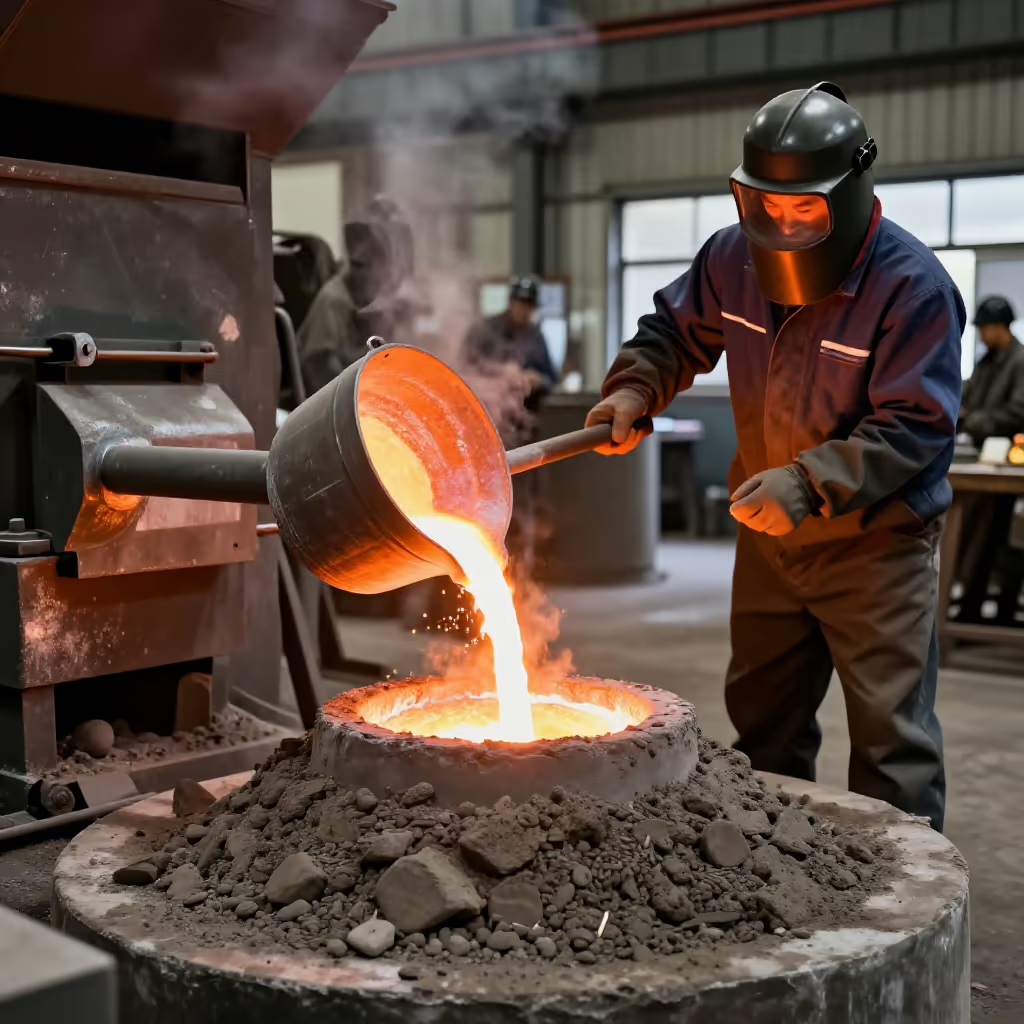
to cast
To make an object by filling a mold with molten material, such as metal, wax, or plastic, and letting it harden.
Die Glocke für die neue Kirche wurde aus Bronze gegossen.
The bell for the new church was cast in bronze.
In the meaning 'to rain heavily', 'gießen' (to pour) is almost always used impersonally with 'es' (it) as the subject. A person cannot 'gießen' in this sense.
Gestern hat es den ganzen Nachmittag gegossen.
Yesterday it poured all afternoon.
A very common and vivid idiom for extremely heavy rain is 'es gießt in Strömen' (it's pouring in streams / it's pouring down).
Ich bin komplett nass geworden, weil es draußen in Strömen gegossen hat.
I got completely wet because it was pouring outside.
When talking about plants, the typical objects are 'die Blumen' (the flowers), 'die Pflanzen' (the plants), 'den Garten' (the garden), or 'das Gemüsebeet' (the vegetable bed).
Kannst du bitte die Tomaten im Garten gießen?
Can you please water the tomatoes in the garden?
When pouring deliberately, a preposition such as 'in' (into), 'auf' (onto), or 'über' (over) often follows, with an accusative object that describes the target.
Die Mutter goss den heißen Tee vorsichtig in die Tassen.
The mother carefully poured the hot tea into the cups.
You can recognize this meaning from objects that are being made, such as 'Glocke' (bell), 'Figur' (figure), or 'Kerze' (candle), and often from the material being indicated with 'aus' (from/made of), such as 'aus Bronze' (in bronze/made of bronze) or 'aus Wachs' (from wax/made of wax).
Zu Weihnachten haben wir Kerzen aus Bienenwachs gegossen.
At Christmas, we cast candles from beeswax.
to fill
When liquid goes into a container, füllen and gießen can describe the same action. Gießen emphasizes that the liquid moves from one container into another, while füllen highlights the resulting or intended state of being full. Gießen is appropriate for transferring the liquid, while füllen is appropriate for filling the container.
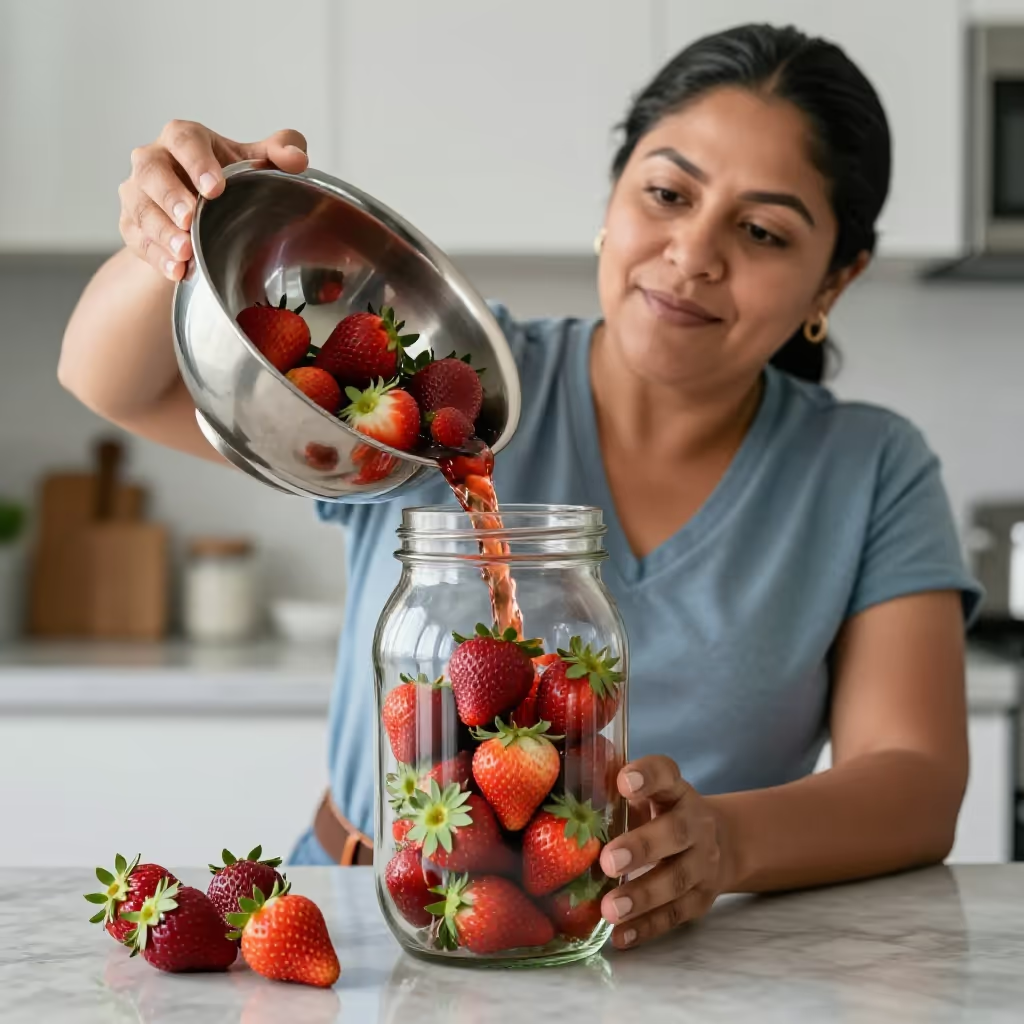
Wir gießen das Wasser aus dem Krug in die Flasche.
We pour the water from the pitcher into the bottle.
Wir füllen die Flasche bis zum Rand mit Wasser.
We fill the bottle to the brim with water.