


die Schule
school
An institution where children and young people are taught according to a plan.
EXAMPLE
In Deutschland beginnt die Schule für die meisten Kinder mit sechs Jahren.
In Germany, school begins for most children at the age of six.
school
Loading your saved state.
school
An institution where children and young people are taught according to a plan.
In Deutschland beginnt die Schule für die meisten Kinder mit sechs Jahren.
In Germany, school begins for most children at the age of six.
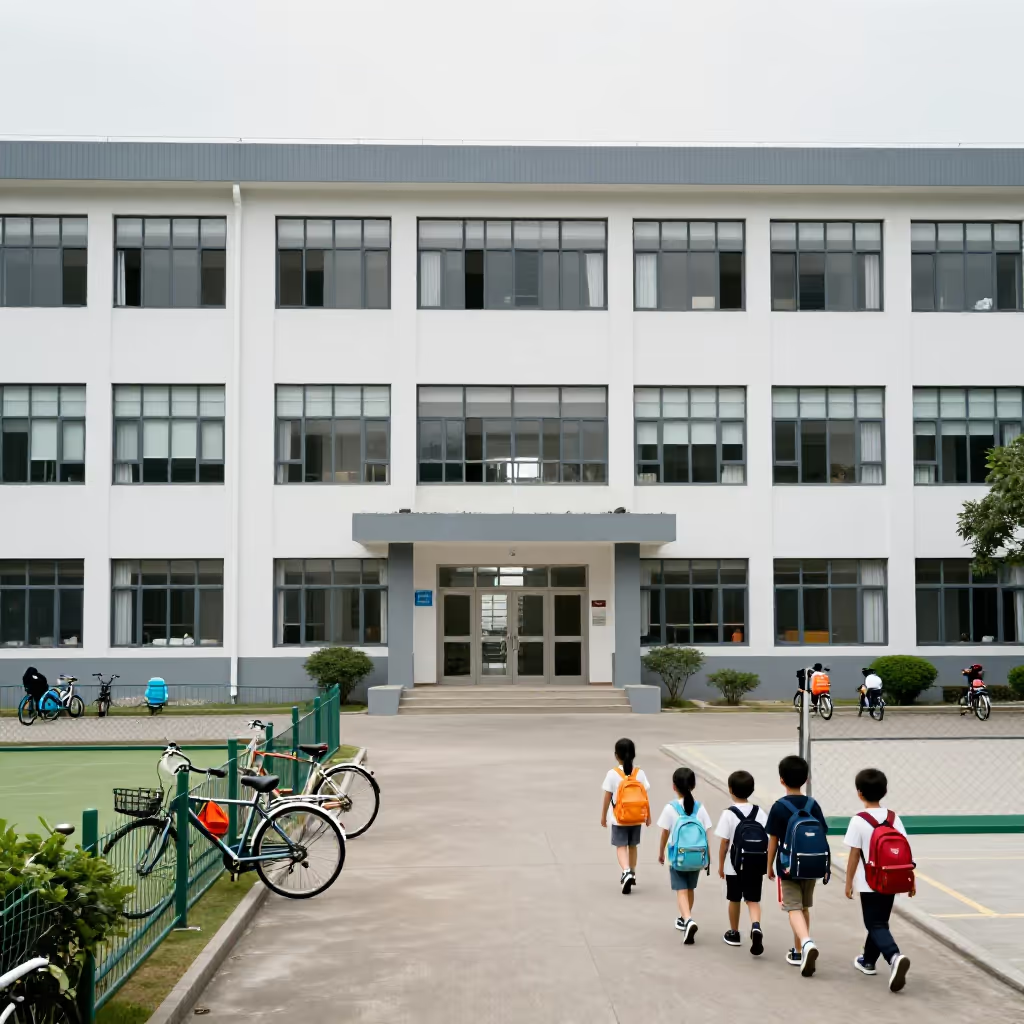
school building
The building where lessons take place.
Unsere Schule wurde renoviert und hat jetzt eine moderne Sporthalle.
Our school was renovated and now has a modern gymnasium.

school
The time spent in lessons on a given day.
Nach der Schule treffe ich mich mit meinen Freunden im Park.
After school, I meet up with my friends in the park.
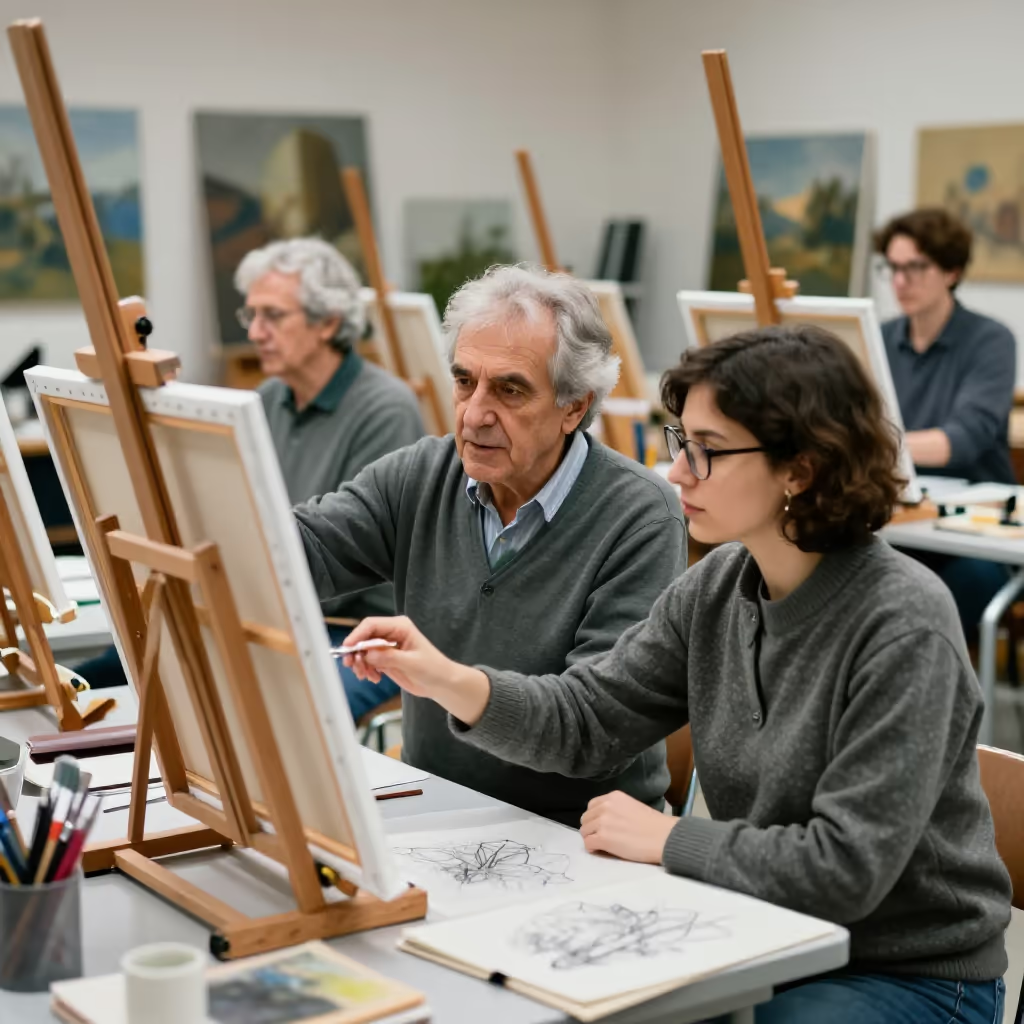
school
A group of artists, scientists, or philosophers with a shared style or way of thinking.
Der Maler wird der flämischen Schule des 17. Jahrhunderts zugeordnet.
The painter is assigned to the Flemish school of the 17th century.

to catch on
To serve as a model and be imitated by many.
Die Idee der autofreien Innenstadt hat in vielen anderen Städten Schule gemacht.
The idea of a car-free city center caught on in many other cities.
The word family of 'die Schule' includes important related words such as 'der Schüler' (male student/pupil), 'die Schülerin' (female student/pupil), and the adjective 'schulisch' (school-related).
Die schulischen Leistungen meines Sohnes haben sich verbessert.
My son's school performance has improved.
You use 'in die Schule gehen' (accusative) to describe movement toward the building. 'Zur Schule gehen' (dative) means more generally that someone is of school age and attends school.
Jeden Morgen gehe ich mit dem Fahrrad in die Schule.
Every morning I go to school by bike.
The preposition 'auf' is used to express attendance at a particular type of school. For example, you say 'auf die Realschule gehen' (to go to a Realschule) or 'auf dem Gymnasium sein' (to be at a Gymnasium).
Nach der Grundschule möchte sie auf das Gymnasium gehen.
After primary school, she wants to go to the Gymnasium.
To talk about the time after daily lessons, you use the phrase 'nach der Schule' (after school). Colloquially, people also often say 'Schule aus haben' (to be finished with school for the day).
Was machst du heute nach der Schule?
What are you doing today after school?
The meaning 'Denkrichtung' (school of thought) is limited to contexts from art, science, or philosophy. It is often connected with a name or place, e.g. 'die Frankfurter Schule' (Frankfurt School, philosophy) or 'die Wiener Schule' (Viennese School, art).
Dieser Komponist gehört zur Zweiten Wiener Schule.
This composer belongs to the Second Viennese School.
The idiom 'Schule machen' means that an idea or behavior is so successful that it is copied by many others. The thing being copied is the subject of the sentence.
Sein innovatives Geschäftsmodell hat schnell Schule gemacht.
His innovative business model quickly caught on.
movement
A group with shared artistic or intellectual goals can be called a Schule or a Bewegung. „Schule“ emphasizes a shared doctrine or tradition, while „Bewegung“ emphasizes joint active efforts and a possible impact beyond the group. Choose Schule for the school of thought or style, and Bewegung for the commitment and activism.

Die Bauhaus-Schule verband Künstler durch eine gemeinsame Lehre und Gestaltung.
The Bauhaus school brought artists together through a shared doctrine and approach to design.
Die Bauhaus-Bewegung setzte sich gemeinsam für eine neue Gestaltung des Alltags ein.
The Bauhaus movement worked together to promote a new approach to designing everyday life.