

die Bewegung
movement
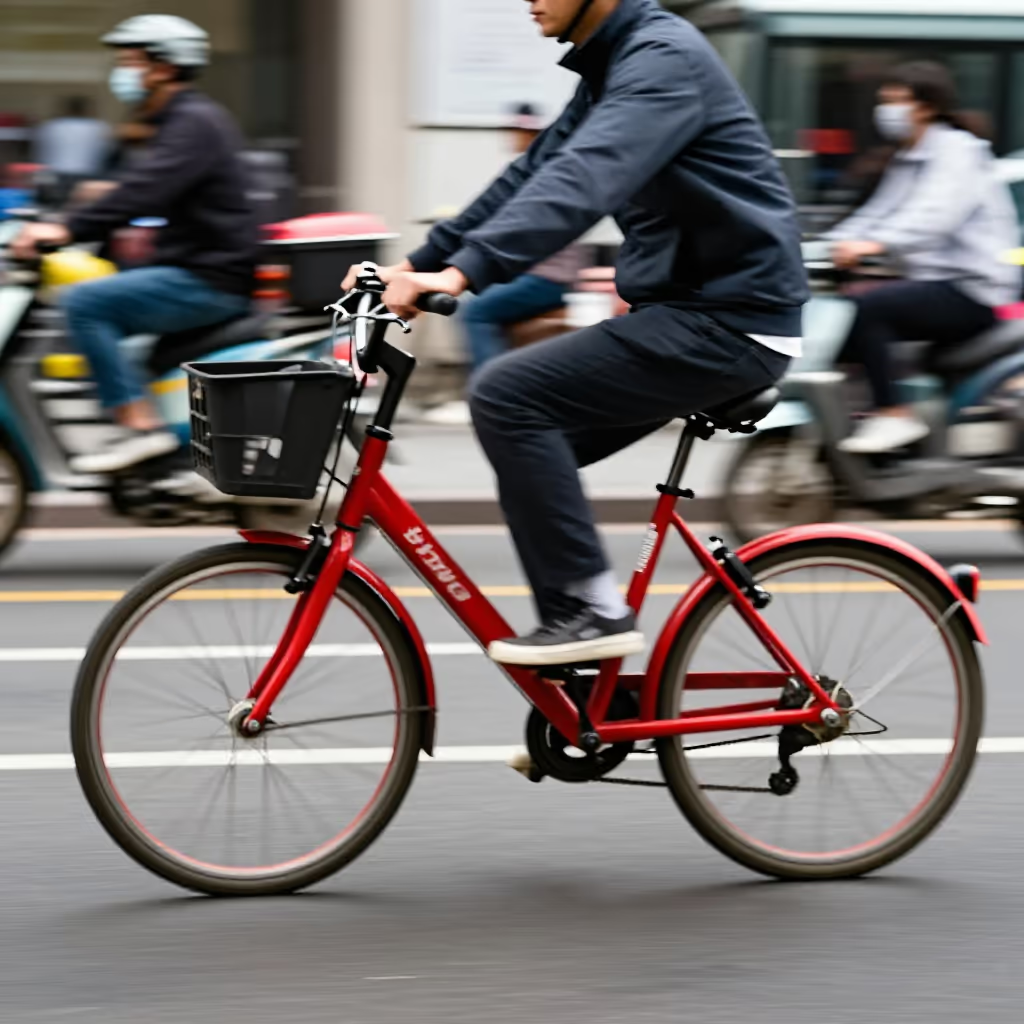
The change in the position or location of a body or object.
EXAMPLE
Die langsame Bewegung der Wolken war faszinierend.
The slow movement of the clouds was fascinating.
movement
Loading your saved state.
movement
The change in the position or location of a body or object.
Die langsame Bewegung der Wolken war faszinierend.
The slow movement of the clouds was fascinating.
movement
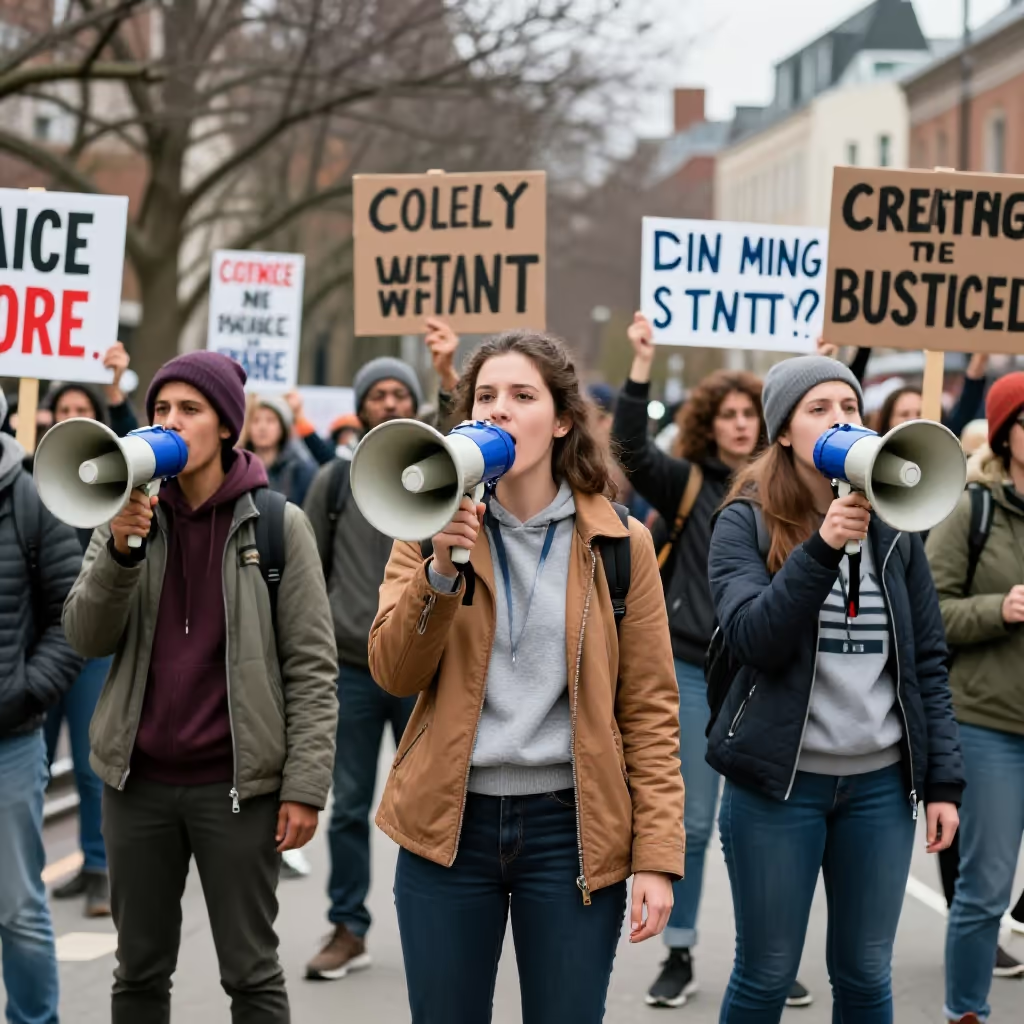
A group of people who work toward a shared social, political, or artistic goal.
Die Umweltbewegung fordert strengere Gesetze zum Klimaschutz.
The environmental movement is calling for stricter laws on climate protection.

exercise
Physical activity or sports that help maintain health.
Ärzte empfehlen mindestens 30 Minuten Bewegung pro Tag.
Doctors recommend at least 30 minutes of exercise per day.

movement / progress
A change or development in a situation or process, often after a period of stagnation.
Endlich kam wieder Bewegung in die festgefahrenen Verhandlungen.
At last, there was movement again in the deadlocked negotiations.
movement
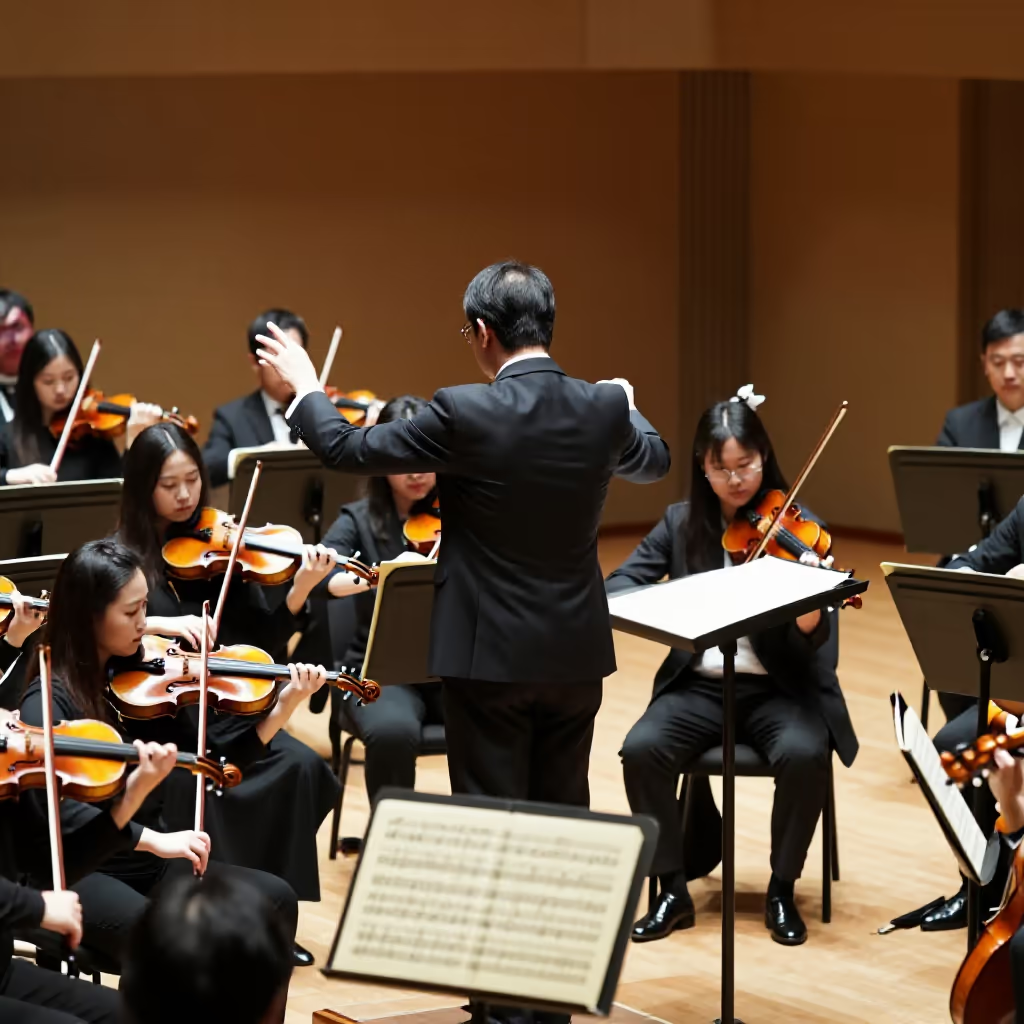
A self-contained part of a larger musical work, such as a symphony or sonata.
Der zweite Satz der Mondscheinsonate ist eine eher ruhige Bewegung.
The second movement of the Moonlight Sonata is rather calm.
The noun 'die Bewegung' (movement) is derived directly from the verb 'sich bewegen' (to move). It describes the process or result of the action of moving.
Jede kleine Bewegung des Patienten verursachte Schmerzen.
Every small movement by the patient caused pain.
There are fixed expressions with 'Bewegung' (movement). 'Etwas in Bewegung setzen' means to set something in motion or start something. 'In Bewegung bleiben' means to stay active and not stand still.
Der neue Chef hat viel in der Firma in Bewegung gesetzt.
The new boss set a lot in motion at the company.
When 'Bewegung' (movement) is used in the context of politics, society, or art, it usually means a group of people with a shared goal. Pay attention to adjectives such as 'politische Bewegung' (political movement), 'soziale Bewegung' (social movement), or 'Kunstbewegung' (art movement).
Die Frauenbewegung kämpfte für das Wahlrecht.
The women's movement fought for the right to vote.
In the sense of 'physical activity,' 'Bewegung' (exercise) is often used in the context of health. Typical combinations are 'genug Bewegung haben' (to get enough exercise), 'Bewegung an der frischen Luft' (exercise in the fresh air), or 'mangelnde Bewegung' (lack of exercise).
Bewegung an der frischen Luft ist gut für das Immunsystem.
Exercise in the fresh air is good for the immune system.
The expressions 'Bewegung in etwas bringen' or 'Bewegung in etwas kommen' mean that a process or situation starts moving forward again after a standstill. They are often used for negotiations or projects.
Ein neuer Vorschlag brachte endlich Bewegung in die Diskussion.
A new proposal finally brought movement into the discussion.
In a musical context, 'Bewegung' (movement) refers to a movement, that is, a part of a symphony or sonata. You can recognize this meaning when classical music, composers, or instruments are being discussed.
Die dritte Bewegung dieser Symphonie ist besonders schnell und dramatisch.
The third movement of this symphony is especially fast and dramatic.
school
A group with shared artistic or intellectual goals can be called a Schule or a Bewegung. „Schule“ emphasizes a shared doctrine or tradition, while „Bewegung“ emphasizes joint active efforts and a possible impact beyond the group. Choose Schule for the school of thought or style, and Bewegung for the commitment and activism.

Die Bauhaus-Bewegung setzte sich gemeinsam für eine neue Gestaltung des Alltags ein.
The Bauhaus movement worked together to promote a new approach to designing everyday life.
Die Bauhaus-Schule verband Künstler durch eine gemeinsame Lehre und Gestaltung.
The Bauhaus school brought artists together through a shared doctrine and approach to design.