

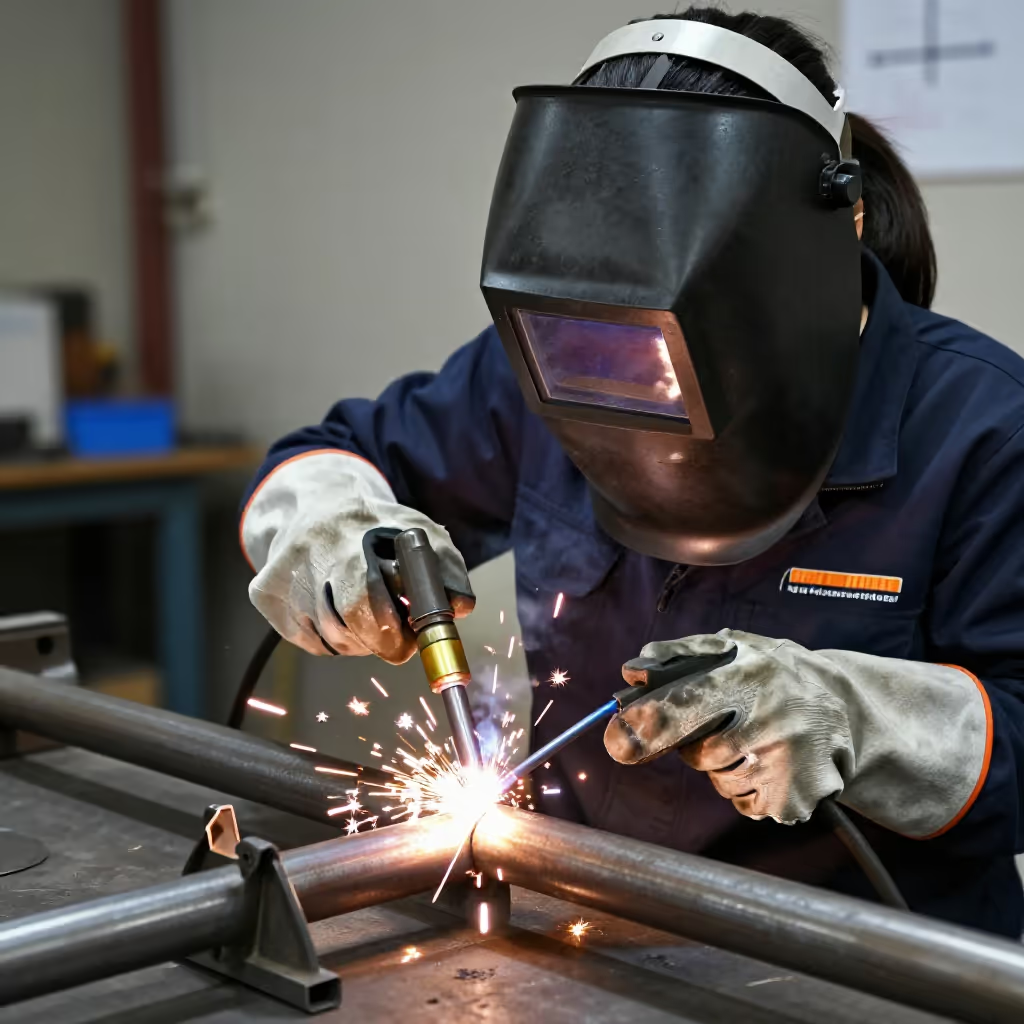
schweißen
to weld
To permanently join two or more parts, usually made of metal, using heat and/or pressure.
EXAMPLE
Der Mechaniker muss den gebrochenen Rahmen des Fahrrads schweißen.
The mechanic has to weld the broken frame of the bicycle.
to weld
Loading your saved state.
to weld
To permanently join two or more parts, usually made of metal, using heat and/or pressure.
Der Mechaniker muss den gebrochenen Rahmen des Fahrrads schweißen.
The mechanic has to weld the broken frame of the bicycle.
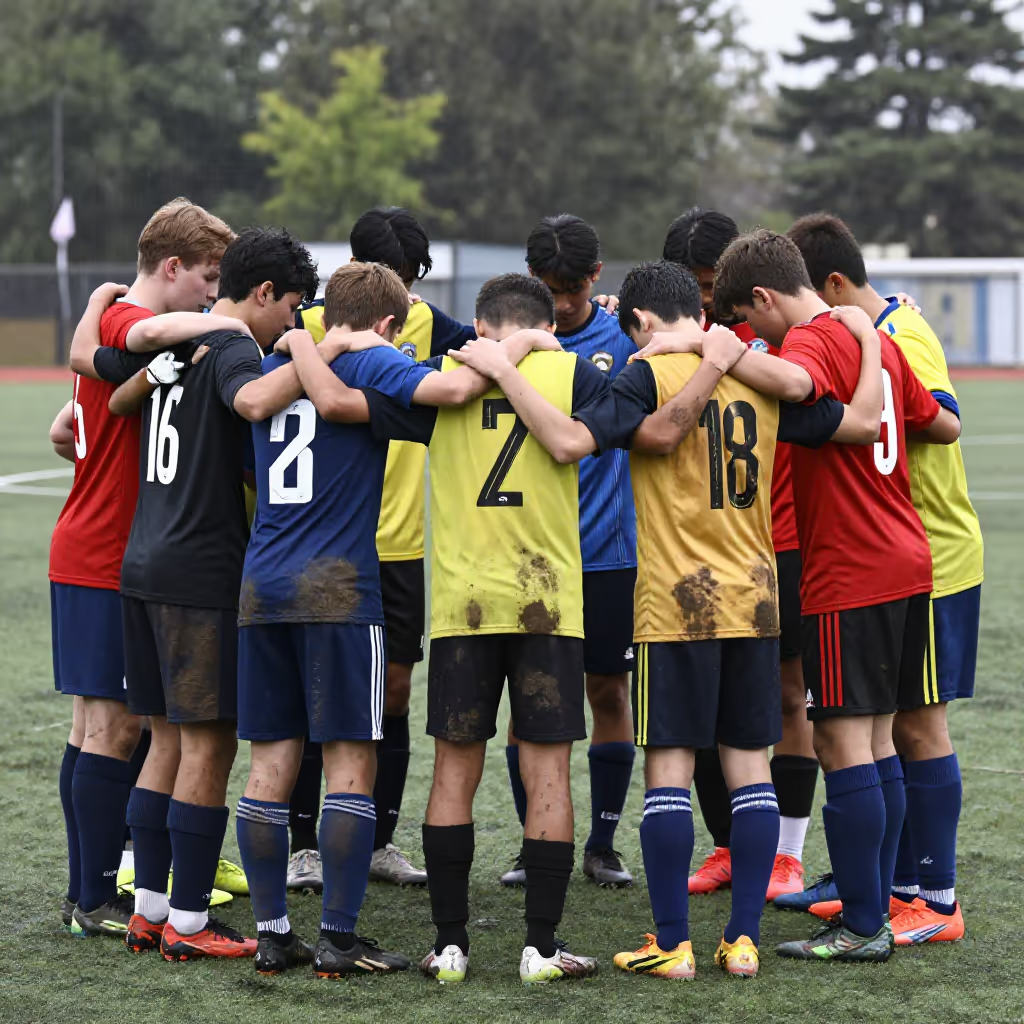
to weld together
In a figurative sense, to connect people or groups very closely and firmly.
Die gemeinsame Bewältigung der Krise hat das Team fest zusammengeschweißt.
Overcoming the crisis together welded the team firmly together.
In the figurative meaning, the separable verb 'zusammenschweißen' (to weld together) is almost always used. The prefix 'zusammen' (together) emphasizes that the people become one unit. In a main clause, the prefix stands at the end.
Die gemeinsame Reise hat die Freunde eng zusammengeschweißt.
The trip together welded the friends closely together.
You can tell whether the technical or figurative meaning is intended from the object. If the verb refers to metals or technical parts, it is about the craft. If it refers to people or groups (team, family), the figurative meaning is intended.
Der Handwerker schweißt die beiden Rohre zusammen.
The craftsman welds the two pipes together.
In a technical context, 'schweißen' (to weld) is often combined with materials such as 'Stahl' (steel), 'Metall' (metal), or 'Aluminium' (aluminum). You can also say that you weld something 'an' (onto) or 'auf' (onto) another part.
Er hat gelernt, wie man Stahlplatten professionell schweißt.
He learned how to weld steel plates professionally.