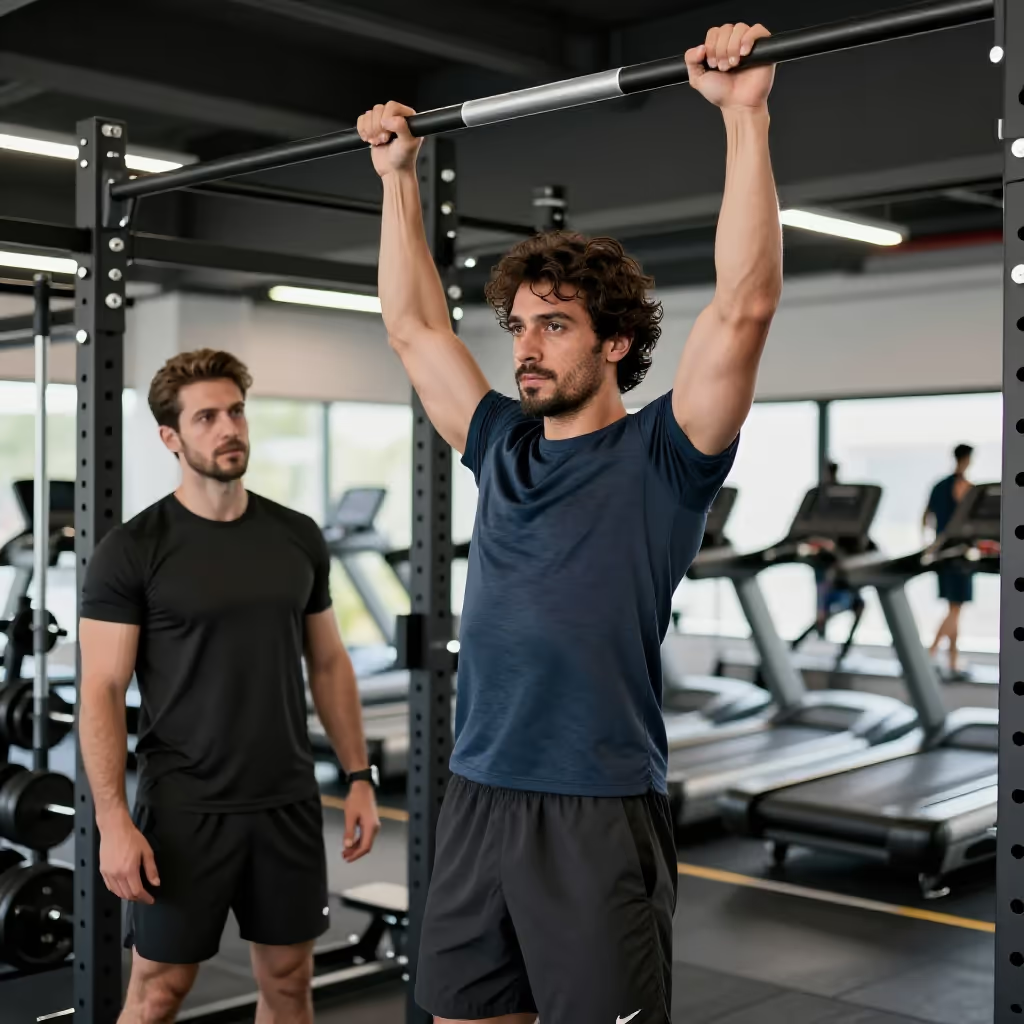
A colloquial Anglicism for a person's physical condition, shape, or fitness. Often used in the phrase 'in Shape sein' (to be in shape).
example
Nach monatelangem Training ist er endlich wieder in guter Shape.
After months of training, he is finally back in good shape.
Usage tips
Anglicism
'Shape' is a word from English that is used in colloquial German. It is especially common in the areas of sports, fitness, and lifestyle, and is pronounced as in English.
EXAMPLE
Er achtet sehr auf seine Ernährung, um in Shape zu bleiben.
He pays close attention to his diet in order to stay in shape.
Fixed expressions
'Shape' is most often used in fixed expressions with the preposition 'in'. Important expressions are 'in Shape sein' (to be fit), 'in Shape kommen' (to get fit), and 'jemanden in Shape bringen' (to get someone fit).
EXAMPLE
Ich möchte bis zum Sommer wieder in Shape kommen.
I want to get back in shape by summer.
Typical adjectives
When describing the degree of fitness, adjectives are often placed before 'Shape'. Typical phrases are 'in guter Shape' (in good shape), 'in schlechter Shape' (in bad shape), or 'in Top-Shape' (in top shape).
EXAMPLE
Trotz ihres Alters ist die Schauspielerin immer noch in Top-Shape.
Despite her age, the actress is still in top shape.
Compare with
near_synonym · confusable
Shape vs Form
form / shape
'die Form' and 'die Shape' can both mean shape or physical condition. 'die Form' is the normal German word and works for objects, bodies, and also fitness. 'die Shape' is a colloquial Anglicism. It especially often refers to fitness or physical condition, often in phrases like 'in Shape sein' (to be in shape). The words can be confused because they seem similar in this area. If you want to speak neutrally and safely, use 'Form'. 'Shape' sounds more modern and casual, but it is not natural in every context.