

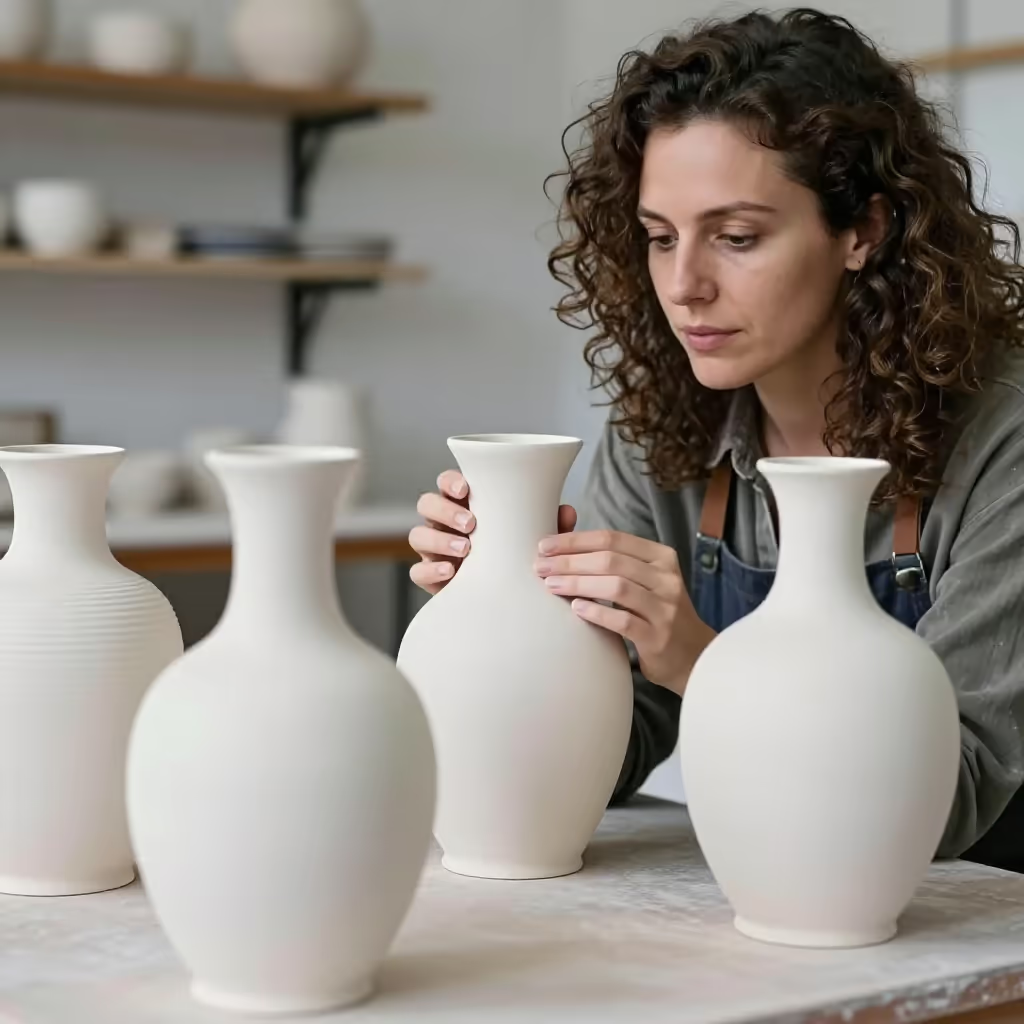
die Form
shape
The outer shape, structure, or outline of an object.
EXAMPLE
Die Vase hat eine sehr ungewöhnliche Form.
The vase has a very unusual shape.
form / shape
Loading your saved state.
shape
The outer shape, structure, or outline of an object.
Die Vase hat eine sehr ungewöhnliche Form.
The vase has a very unusual shape.
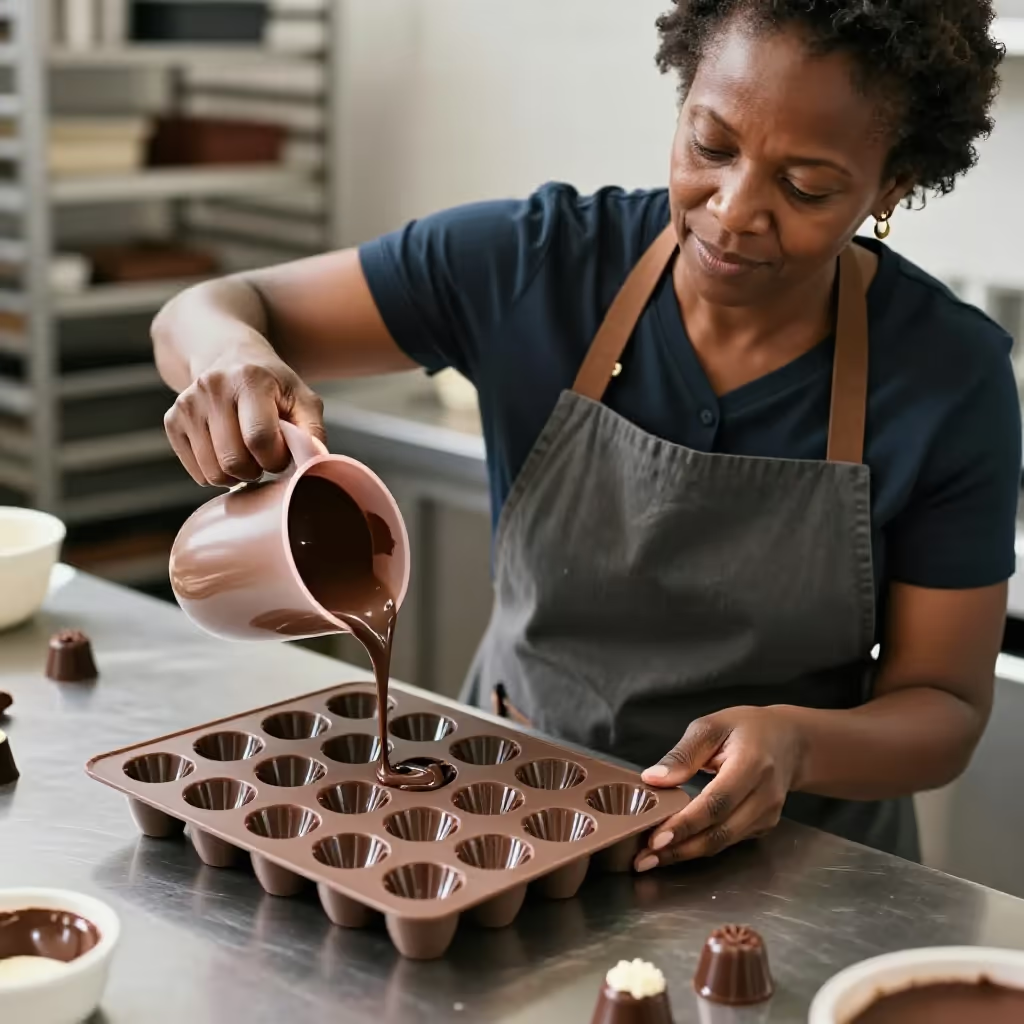
mold / pan
A hollow object or container into which a soft mass is poured so that it takes on a specific shape when it hardens.
Gib den Teig in die gefettete Form und backe den Kuchen für 40 Minuten.
Put the dough into the greased pan and bake the cake for 40 minutes.

condition
The physical or mental state; fitness or condition.
Nach einer Woche Training fühle ich mich schon wieder in besserer Form.
After a week of training, I already feel like I'm in better shape again.

form
The way something is expressed or designed; the external conventions.
Der Brief war in sehr formeller Form verfasst.
The letter was written in a very formal form.

in the form of
Describes the way something appears or is presented.
Die Unterstützung erfolgte in Form von finanziellen Zuschüssen.
The support was provided in the form of financial grants.

to be in shape
To be physically fit and capable of performing well.
Der Sportler muss zum Wettkampf top in Form sein.
The athlete has to be in top shape for the competition.
'Die Form' usually means 'shape' or 'condition'. A document that you have to fill out is called 'das Formular' in German, not 'die Form'.
Füllen Sie bitte dieses Formular aus.
Please fill out this form.
The word family around 'Form' is very useful. It includes the verb 'formen' (to shape), the adjective 'förmlich' (formal), and the noun 'die Uniform' (uniform clothing).
Ein Töpfer formt aus Ton eine Vase.
A potter shapes a vase out of clay.
In the context of cooking, baking, or also industry, 'die Form' means a container that gives a mass a shape. Typical examples are 'die Kuchenform' (cake pan) or 'die Gussform' (casting mold).
Hast du eine runde Backform für mich?
Do you have a round baking pan for me?
There are many fixed expressions for talking about physical condition: 'in Form sein' (to be in shape), 'in Form kommen' (to get in shape), or 'außer Form sein' (to be out of shape).
Nach seiner Krankheit ist er völlig außer Form.
After his illness, he is completely out of shape.
In social situations, 'Form' refers to proper behavior. An important expression is 'die Form wahren', which means to behave politely and correctly, even when you are annoyed.
Obwohl er wütend war, wahrte er nach außen hin die Form.
Although he was angry, he outwardly maintained proper form.
The fixed expression 'in Form von' (in the form of) is used to describe the way or appearance of something. It is combined with a noun in the dative.
Die Hilfe kam in Form einer großzügigen Spende.
The help came in the form of a generous donation.
kind / way
“Die Art” refers here generally to how something happens or is carried out. “Die Form” focuses more on the outward design or organized appearance of the same process. For a protest, “Art” is appropriate for how it is carried out, while “Form” highlights its specific design or mode of expression.

Die Form des Protests war eine öffentliche Demonstration vor dem Rathaus.
The form the protest took was a public demonstration in front of city hall.
Die Art des Protests blieb trotz der großen Wut friedlich.
The way the protest was conducted remained peaceful despite the great deal of anger.