


das Signal
signal
An agreed-upon sign given through light, sound, or a gesture in order to convey information or an instruction.
Der Lokführer wartete auf das grüne Signal zur Abfahrt.
The train driver waited for the green signal to depart.

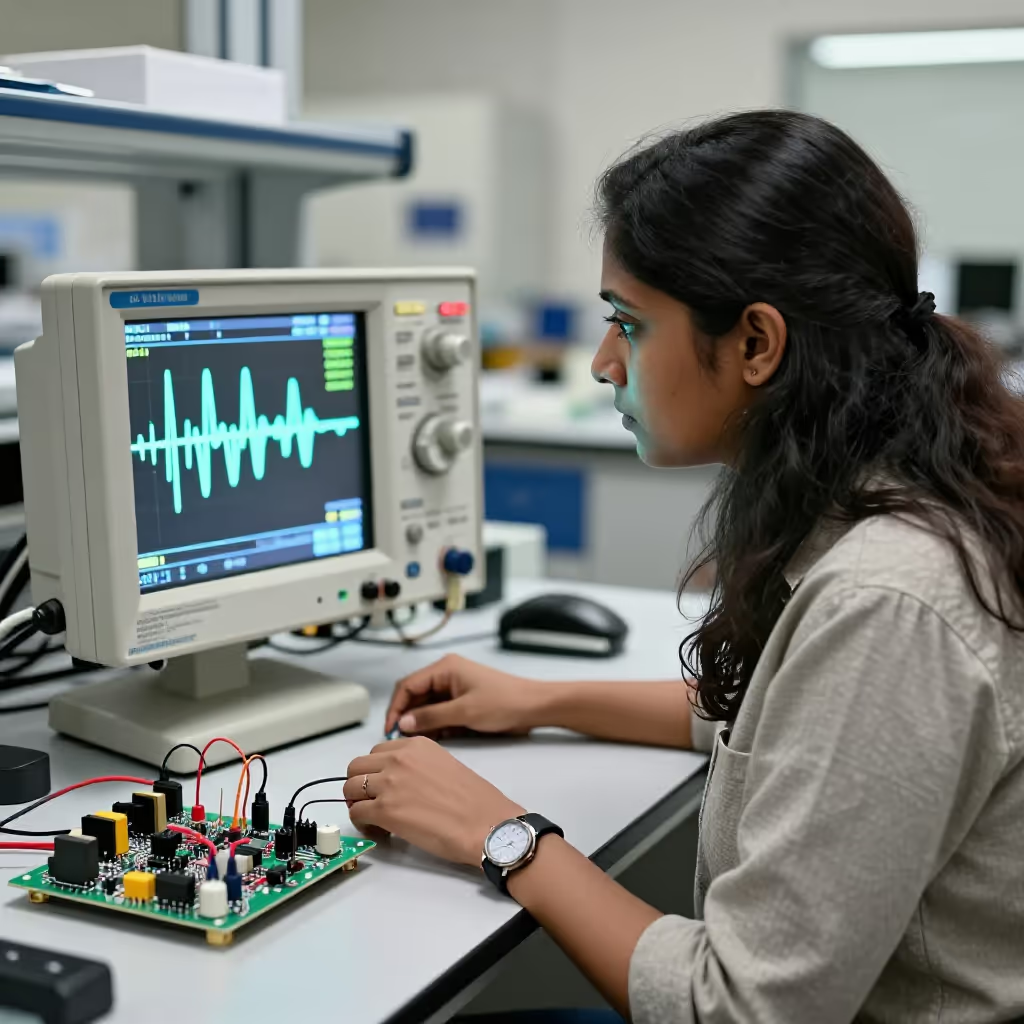
signal
Loading your saved state.
signal
An agreed-upon sign given through light, sound, or a gesture in order to convey information or an instruction.
Der Lokführer wartete auf das grüne Signal zur Abfahrt.
The train driver waited for the green signal to depart.

'Signal' belongs to the word family around the Latin word 'signum' (sign). Therefore, it is also related to the German verb 'signieren' (to sign).
Seine Unterschrift war ein Signal der Zustimmung.
His signature was a signal of agreement.
With a concrete sign, typical actions are expressed. Common verbs are 'ein Signal geben' (to give a signal), 'ein Signal empfangen' (to receive a signal), or 'auf ein Signal warten' (to wait for a signal).
Der Schiedsrichter gab das Signal zum Start des Spiels.
The referee gave the signal to start the game.
In the figurative meaning, 'Signal' is often combined with adjectives that describe its effect. Typical phrases are 'ein klares Signal' (a clear signal), 'ein starkes Signal' (a strong signal), or 'ein falsches Signal' (the wrong signal).
Die Regierung möchte mit dem neuen Gesetz ein klares Signal setzen.
With the new law, the government wants to send a clear signal.
In a technical context, people often describe the quality of the signal. Common combinations are 'ein starkes/schwaches Signal' (a strong/weak signal), 'ein stabiles Signal' (a stable signal), or 'das Signal verlieren' (to lose the signal).
Mein Handy hat hier auf dem Land nur ein schwaches Signal.
My phone only has a weak signal here in the countryside.
message / news
'die Nachricht' and 'das Signal' can both pass on information. However, a 'Nachricht' usually contains specific words or clear content, for example in a text message, email, or spoken message. A 'Signal' is more of a sign, often through light, sound, or a gesture. It can also just be an indication that something is happening or changing. Learners may confuse the words because both communicate something. As a practical rule: if someone says or writes something, 'Nachricht' usually fits. If a sign is meant to indicate or trigger something, 'Signal' is more likely to fit.

Das rote Licht ist ein Signal, dass niemand die Tür öffnen soll.
The red light is a signal that no one should open the door.
Elif schickt ihrer Mutter in der Pause eine kurze Nachricht.
During the break, Elif sends her mother a short message.