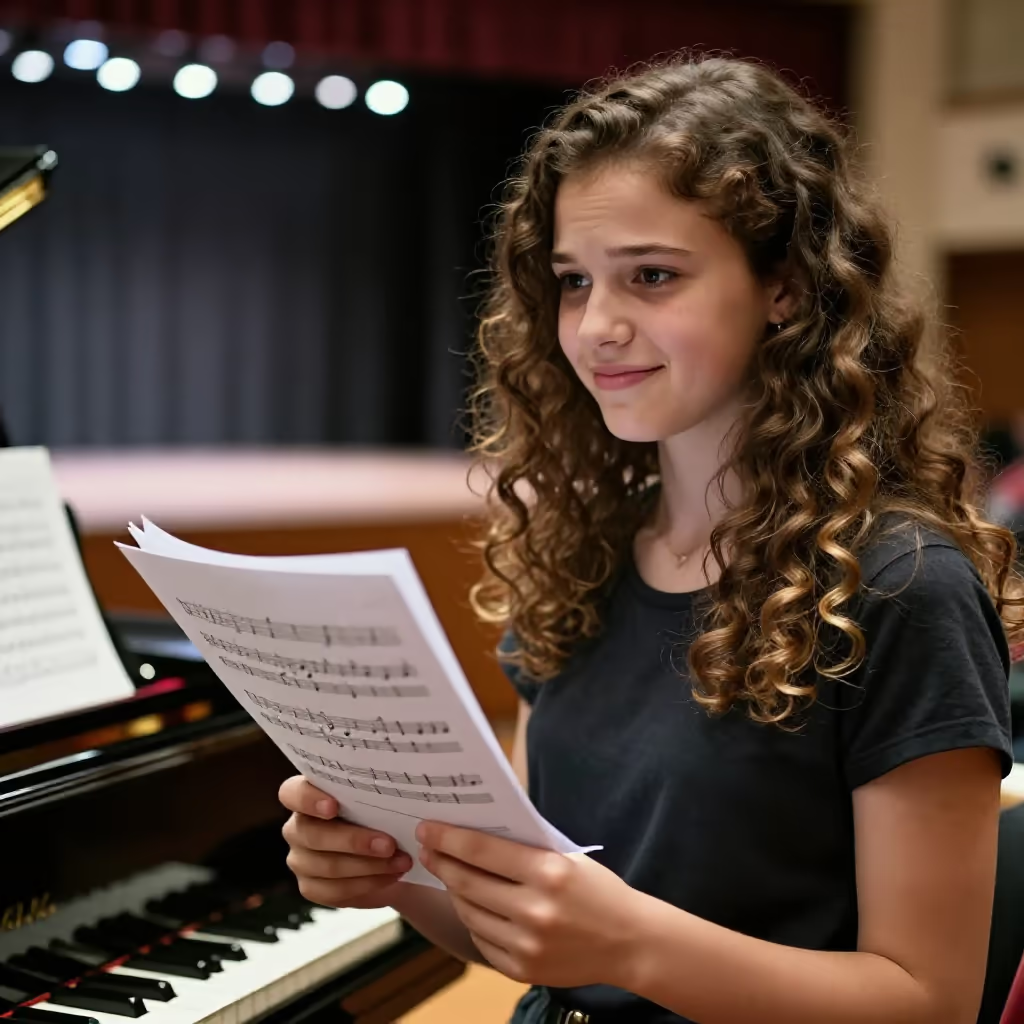
A state of strong emotional tension triggered by an upcoming event, which can be positive (anticipation) or negative (nervousness, fear).
example
Vor der Prüfung war die Aufregung im ganzen Raum spürbar.
Before the exam, the excitement was noticeable throughout the room.
Usage tips
Word family
'Aufregung' belongs to the word family of 'aufregen'. The verb 'sich aufregen' means to become emotionally worked up or angry. The adjective 'aufgeregt' describes the state someone is in.
EXAMPLE
Reg dich nicht so auf, es ist alles in Ordnung!
Don't get so worked up; everything is fine!
Context clue
The meaning depends on the context. If the 'Aufregung' (excitement) refers to an individual person and their inner feeling (often with 'vor'), it means nervousness or anticipation. If it refers to a public event (often with 'um'), it means general unrest or a commotion.
EXAMPLE
Vor seinem ersten Auftritt zitterte er vor Aufregung.
Before his first performance, he was trembling with excitement.
Preposition 'vor'
To express the reason for a strong emotional or physical reaction, 'Aufregung' is often used with the preposition 'vor' (+ dative). Typical phrases are 'vor Aufregung zittern' (to tremble with excitement), 'vor Aufregung rot werden' (to turn red with excitement), or 'vor Aufregung kaum sprechen können' (to hardly be able to speak because of excitement).
EXAMPLE
Sie konnte vor lauter Aufregung die ganze Nacht nicht schlafen.
She couldn't sleep all night because of all the excitement.
Typical collocations
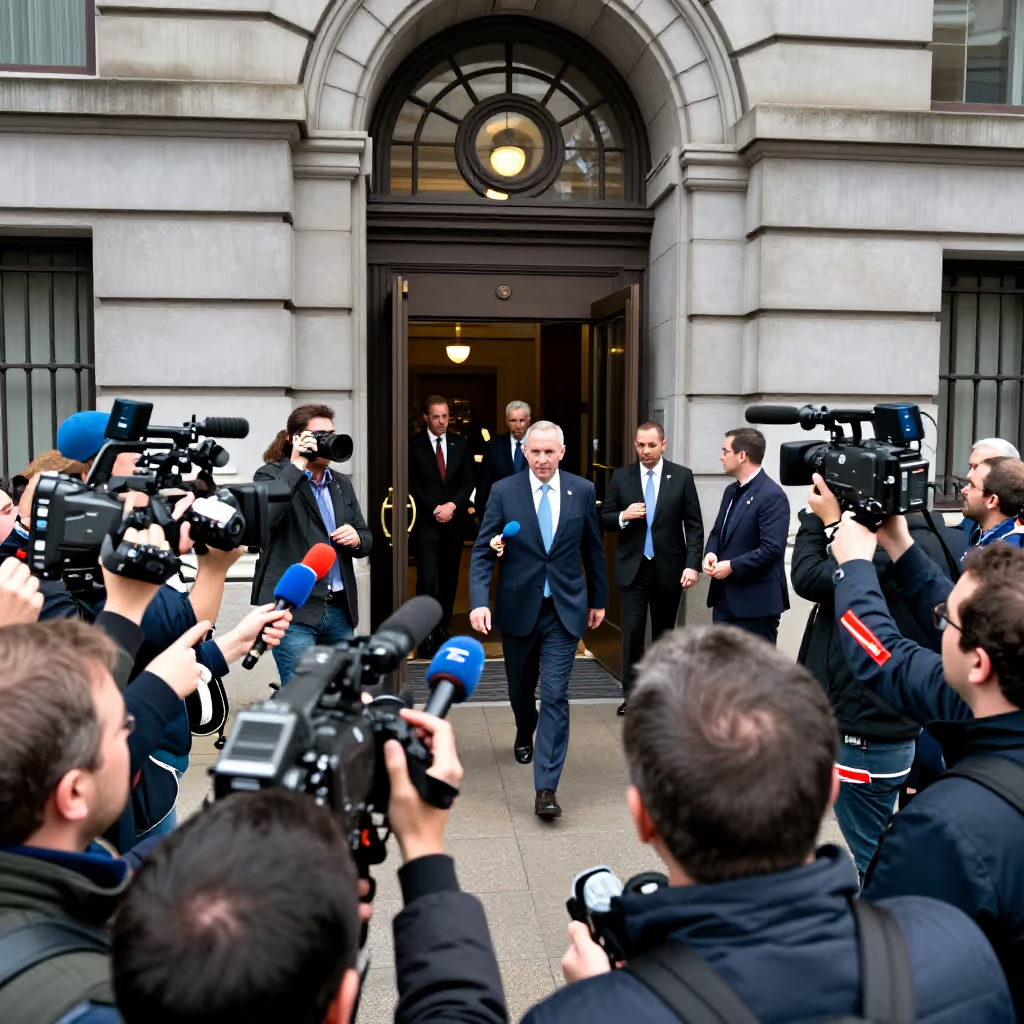
When referring to public unrest, 'Aufregung' is often combined with the verb 'sorgen für' (to cause). A piece of news or an event 'sorgt für große Aufregung' (causes great commotion).
EXAMPLE
Die Entscheidung des Politikers sorgte landesweit für Aufregung.
The politician's decision caused a stir across the country.
Compare with
antonym
Aufregung vs Ruhe
quiet / calm
'die Ruhe' and 'die Aufregung' form a contrast when it comes to feelings and behavior. 'die Ruhe' means that someone remains composed and does not become nervous or hectic. 'die Aufregung' means that strong feelings are present, for example nervousness, fear, or anticipation. It can be positive or negative. A lot of Aufregung can also arise around an event when many people react restlessly or talk about it. So 'Ruhe' is the calm state; 'Aufregung' is the restless, tense state.
Aufregung
Vor dem wichtigen Termin ist die Aufregung bei mir besonders groß.
Before the important appointment, I feel especially excited and nervous.
Ruhe
Frau Schmidt hat trotz des Problems bei der Arbeit ihre Ruhe behalten.
Despite the problem at work, Ms. Schmidt kept her calm.