


der Spaß
fun
A feeling of joy, pleasure, or cheerfulness.
EXAMPLE
Die Kinder hatten großen Spaß beim Spielen im Schnee.
The children had a lot of fun playing in the snow.
fun / joke
Loading your saved state.
fun
A feeling of joy, pleasure, or cheerfulness.
Die Kinder hatten großen Spaß beim Spielen im Schnee.
The children had a lot of fun playing in the snow.
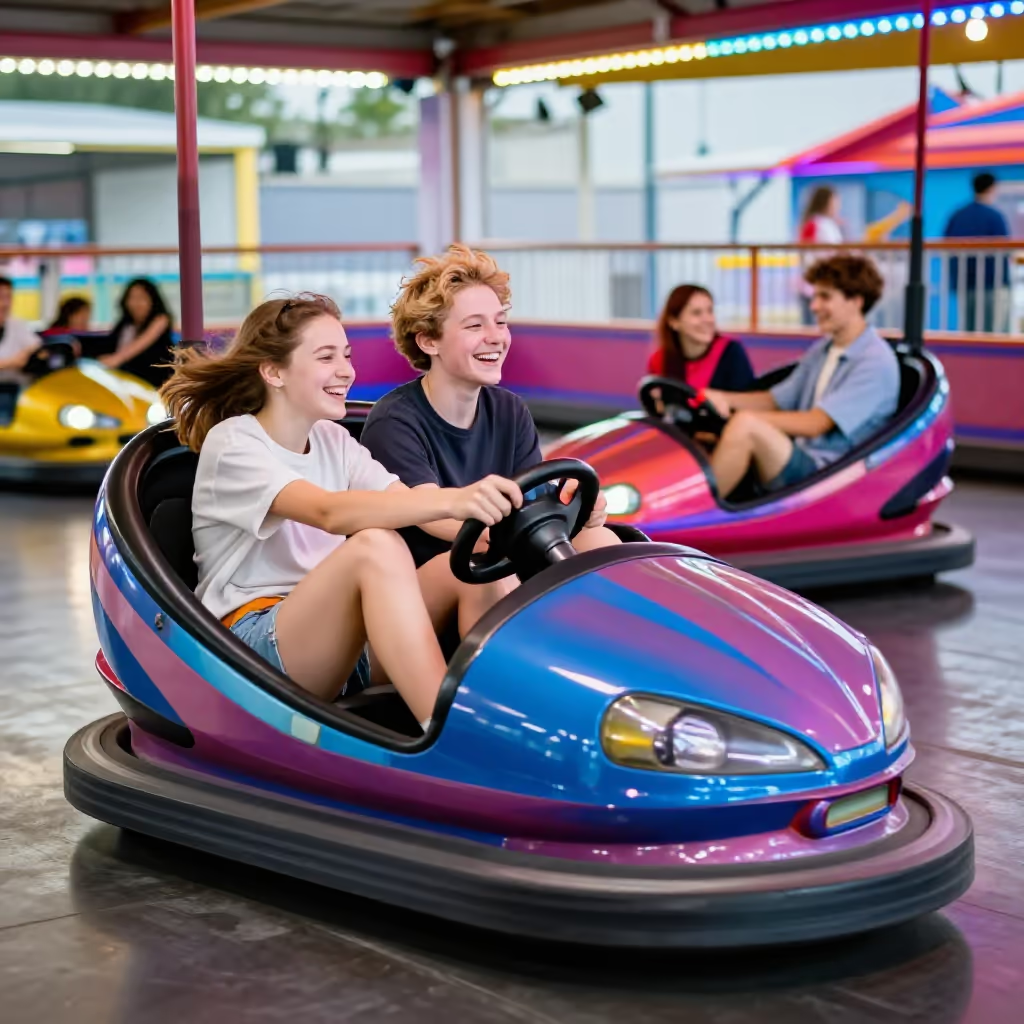
fun
An activity that brings joy, or an amusing event.
Die gestrige Geburtstagsfeier war ein riesiger Spaß.
Yesterday's birthday party was a lot of fun.

joke
A joke, jest, or prank that is not meant seriously.
Das war doch nur ein Spaß, nimm es nicht persönlich!
That was just a joke, don't take it personally!

Have fun!
A fixed expression used to wish someone a good and enjoyable time.
Du fährst in den Urlaub? Viel Spaß!
You're going on vacation? Have fun!

joking aside
An expression that indicates you are moving from a joking topic to a serious one.
Spaß beiseite, wir müssen jetzt eine ernsthafte Entscheidung treffen.
Joking aside, we now have to make a serious decision.
There are two basic sentence patterns: 'Spaß haben' (to have fun) describes that a person actively feels joy. 'Spaß machen' (to be fun) describes that a thing or activity is enjoyable for a person (in the dative).
Ich habe Spaß an der deutschen Sprache.
I have fun with the German language.
In its general meaning as joy or pleasure, 'Spaß' (fun) is very often used without an article, similar to other abstract nouns (e.g. Glück, Liebe, Zeit).
Wir hatten gestern Abend richtig viel Spaß.
We had a really great time last night.
To express that something is not meant seriously, you use the expressions 'aus Spaß' (for fun) or 'nur zum Spaß' (just for fun).
Ich habe das nur zum Spaß gesagt, sei nicht böse.
I only said that as a joke; don't be mad.
'Viel Spaß!' (Have fun!) is a fixed expression used like a greeting to wish someone a good time during an upcoming activity.
Du gehst ins Kino? Viel Spaß!
You're going to the movies? Have fun!
The expression 'Spaß beiseite' (joking aside) introduces a change of topic. It signals that you want to move from a joking or light topic to something serious.
Haha, sehr witzig. Aber Spaß beiseite, wir müssen über den Plan für morgen reden.
Haha, very funny. But joking aside, we need to talk about the plan for tomorrow.
joy
Spaß and Freude can both express that an activity evokes positive feelings. Spaß tends to emphasize an entertaining and cheerful experience, while Freude emphasizes felt happiness or lasting enjoyment. Use „Spaß“ for an enjoyable activity and „Freude“ also for a quieter or longer-lasting positive connection.

Das gemeinsame Kochen macht uns großen Spaß.
Cooking together is a lot of fun for us.
Das gemeinsame Kochen macht uns jeden Sonntag Freude.
Cooking together brings us joy every Sunday.