

die Stelle
place
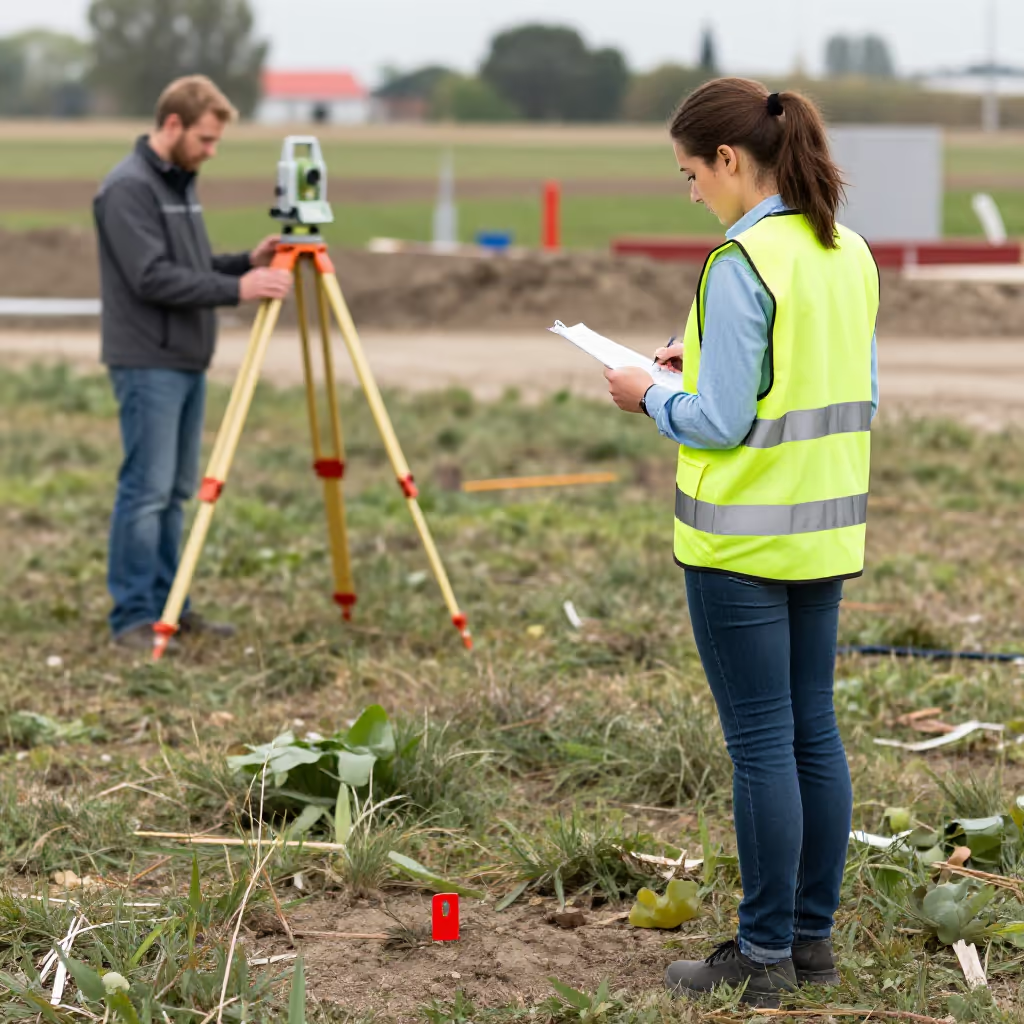
A specific place, point, or spot in a room or area.
EXAMPLE
Genau an dieser Stelle stand früher das alte Rathaus.
The old town hall used to stand exactly at this spot.
place / position
Loading your saved state.
place
A specific place, point, or spot in a room or area.
Genau an dieser Stelle stand früher das alte Rathaus.
The old town hall used to stand exactly at this spot.

position
A position as an employee in a company or organization; a job.
Er hat sich auf eine interessante Stelle als Projektmanager beworben.
He applied for an interesting position as a project manager.

passage
A specific section or passage in a text, book, or piece of music.
Kannst du mir die Stelle im Vertrag zeigen, in der die Kündigungsfrist geregelt ist?
Can you show me the passage in the contract where the notice period is regulated?

office / authority
An official institution, authority, or organization responsible for certain tasks.
Für die Beantragung des Personalausweises müssen Sie zur zuständigen amtlichen Stelle gehen.
To apply for an identity card, you have to go to the responsible official authority.

in someone's place
In place of someone; as a replacement or representative for another person.
An deiner Stelle würde ich das Jobangebot sofort annehmen.
In your place, I would accept the job offer immediately.
digit place
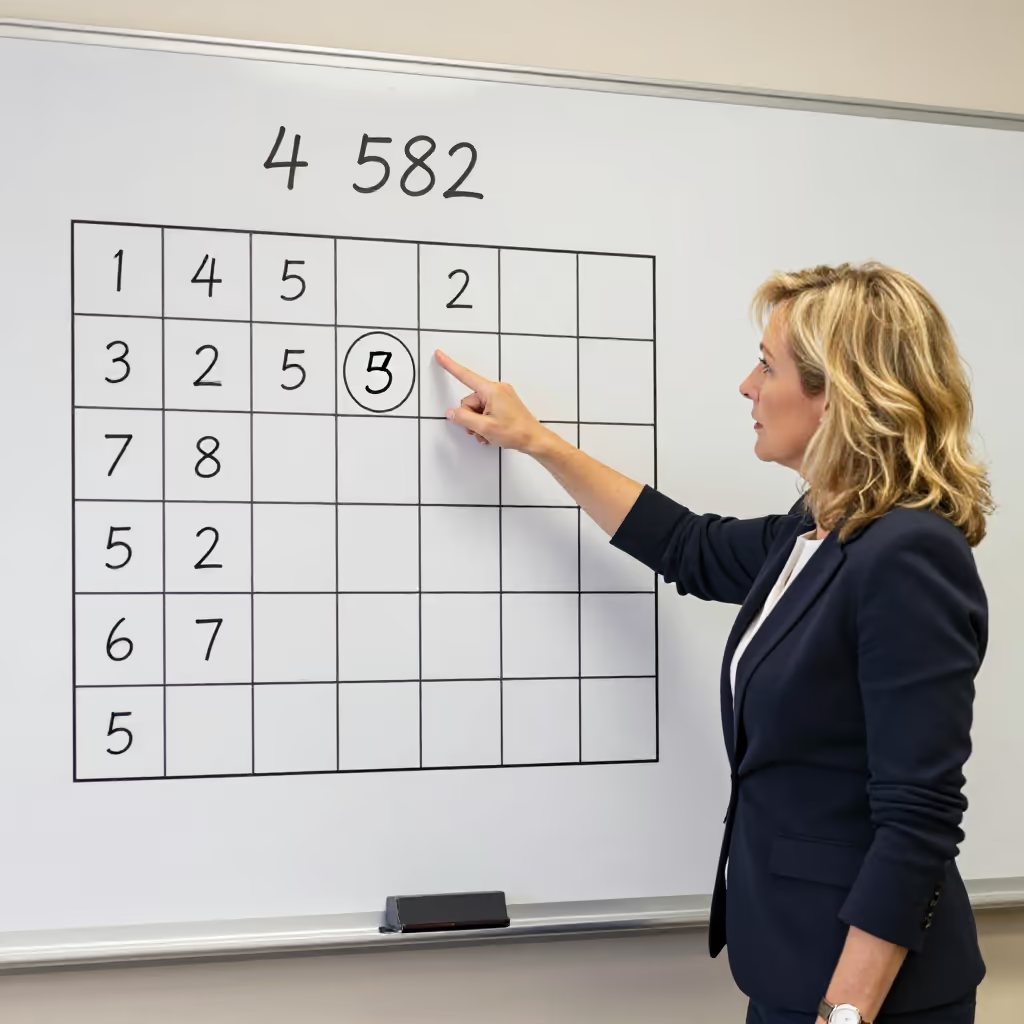
The position of a digit within a number.
Die Zahl Pi wird oft auf zwei Stellen nach dem Komma gerundet: 3,14.
The number pi is often rounded to two decimal places: 3.14.

on the spot
Immediately, without any delay.
Als der Betrug aufflog, wurde der Mitarbeiter auf der Stelle entlassen.
When the fraud came to light, the employee was fired on the spot.
The most common meanings are 'Ort' (place) and 'Arbeitsplatz' (job). The context makes the difference clear: verbs like 'suchen' (to look for), 'bewerben' (to apply), or adjectives like 'frei' (vacant) point to a job. Prepositions like 'an dieser' (at this) or 'an jener' (at that) point to a place.
An dieser Stelle stand früher ein Baum.
A tree used to stand at this spot.
In the context of a job, 'Stelle' (position/job) is often combined with certain verbs: you can 'suchen' (look for), 'finden' (find), 'annehmen' (accept), 'antreten' (start), or 'kündigen' (quit) a position.
Er hat sich auf drei verschiedene Stellen beworben.
He applied for three different positions.
When 'Stelle' means a section, it always refers to some kind of medium. Signal words in the context include 'Buch' (book), 'Text' (text), 'Vertrag' (contract), 'Film' (film), or 'Lied' (song).
Diese Stelle im Film habe ich nicht ganz verstanden.
I didn't fully understand this part of the film.
In the meaning of 'Behörde' (authority) or 'Institution' (institution), 'Stelle' (office/authority) rarely stands alone. It is usually specified by adjectives such as 'offizielle Stelle' (official office), 'zuständige Stelle' (responsible authority), or 'amtliche Stelle' (official authority).
Bitte wenden Sie sich an die dafür zuständige Stelle.
Please contact the authority responsible for that.
The expression 'an jemandes Stelle' (in someone's place) is used to give advice. It introduces a subjunctive II sentence and means 'If I were you, ...'.
An deiner Stelle würde ich das Angebot annehmen.
In your place, I would accept the offer.
This meaning is limited to the context of numbers and mathematics. You can recognize it in phrases like 'Stelle nach dem Komma' (decimal place) or in connection with number words.
Die Zahl hat fünf Stellen vor dem Komma.
The number has five digits before the decimal point.
The expression 'auf der Stelle' (on the spot) is a fixed expression and means 'sofort' (immediately) or 'unverzüglich' (without delay). It is often used in connection with a quick reaction or consequence.
Als sie den Fehler bemerkte, korrigierte sie ihn auf der Stelle.
When she noticed the mistake, she corrected it on the spot.
work
Arbeit and Stelle can both refer to paid employment. Arbeit refers to employment in general, while a Stelle means a specific workplace or position. If you are simply looking for employment, Arbeit is appropriate; if you are referring to a specific position, use Stelle.

Nach dem Umzug bewirbt sie sich auf eine bestimmte Stelle in der neuen Stadt.
After moving, she applied for a specific position in the new city.
Nach dem Umzug sucht sie schnell Arbeit in der neuen Stadt.
After moving, she quickly looked for work in the new city.