

wandern
to hike
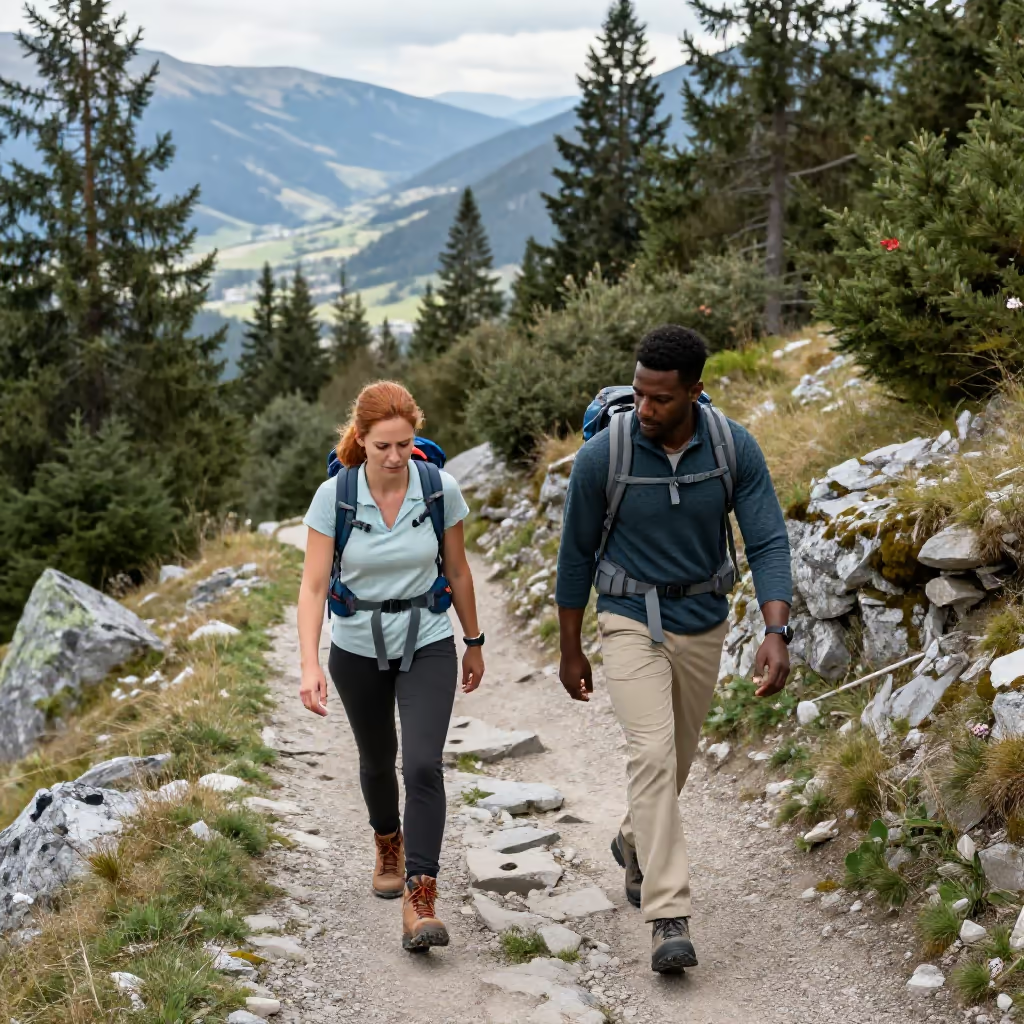
To cover a longer distance on foot in nature, usually as a form of recreation or sport.
EXAMPLE
Am Wochenende gehen wir gerne in den Bergen wandern.
On weekends, we like to go hiking in the mountains.
to hike / migrate / wander
Loading your saved state.
to hike
To cover a longer distance on foot in nature, usually as a form of recreation or sport.
Am Wochenende gehen wir gerne in den Bergen wandern.
On weekends, we like to go hiking in the mountains.
to migrate
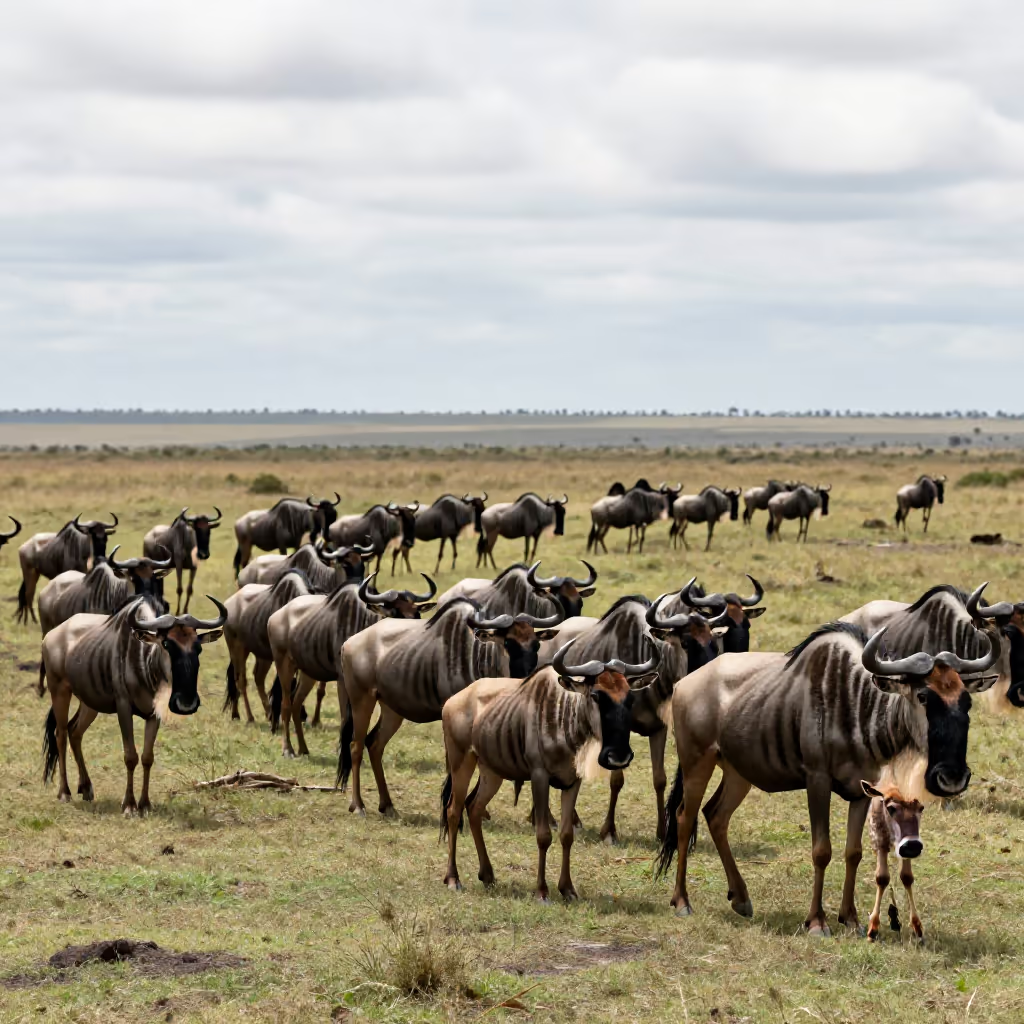
To move from one place to another; to migrate. Often used for animals or nomadic peoples.
Jedes Jahr wandern die Gnus durch die Serengeti.
Every year, the wildebeest migrate through the Serengeti.

to wander
Used figuratively for something that moves slowly or changes location or owner.
Sein Blick wanderte unsicher durch den Raum.
His gaze wandered uncertainly around the room.
Since 'wandern' (to hike / migrate / wander) describes movement from one place to another, the perfect tense is always formed with the auxiliary verb 'sein' (to be). Using 'haben' (to have) here is a common mistake.
Wir sind letztes Wochenende durch die Alpen gewandert.
We hiked through the Alps last weekend.
The verb 'wandern' (to hike / migrate / wander) belongs to a word family connected with walking in nature. Related words are 'die Wanderung' (the hike) and 'der Wanderer' (the hiker).
Für die geplante Wanderung brauchen wir gutes Schuhwerk.
For the planned hike, we need good footwear.
In the meaning 'spazieren gehen' (to go for a walk), 'wandern' (to hike) is often used in the combination 'wandern gehen' (to go hiking). Typical location phrases are 'in den Bergen' (in the mountains), 'im Wald' (in the forest), or 'am See entlang' (along the lake).
Am Sonntag gehen wir im Schwarzwald wandern.
On Sunday, we are going hiking in the Black Forest.
When the subject of the sentence is something abstract or an object that cannot move by itself, the figurative meaning is usually intended. Typical subjects are 'der Blick' (the gaze), 'die Gedanken' (the thoughts), or 'ein Gegenstand' (an object).
Seine Gedanken wanderten zurück in seine Kindheit.
His thoughts wandered back to his childhood.
The meaning 'migrieren' (to migrate) is usually recognized from context. It is used almost exclusively for animal species (e.g., birds, fish) or nomadic peoples that change their habitat.
Die Störche wandern im Herbst in den Süden.
The storks migrate south in autumn.
to go
Gehen refers to any ordinary movement on foot, including over a longer distance. Wandern more specifically means taking a longer trip in nature, usually for recreation or as a sport. What matters, therefore, is not just the distance and surroundings, but also the nature of the activity.

Wir wandern fünf Kilometer durch den Wald und genießen den freien Tag.
We are hiking five kilometers through the forest and enjoying our day off.
Wir gehen fünf Kilometer durch den Wald, um zum Bahnhof zu kommen.
We are walking five kilometers through the forest to get to the train station.