A spike-like protein on the surface of a virus that helps the virus enter host cells. The term became especially well known through the coronavirus SARS-CoV-2.
example
Die Impfung zielt auf das Spike-Protein des Virus ab.
The vaccine targets the virus's spike protein.

Usage tips
English loanword
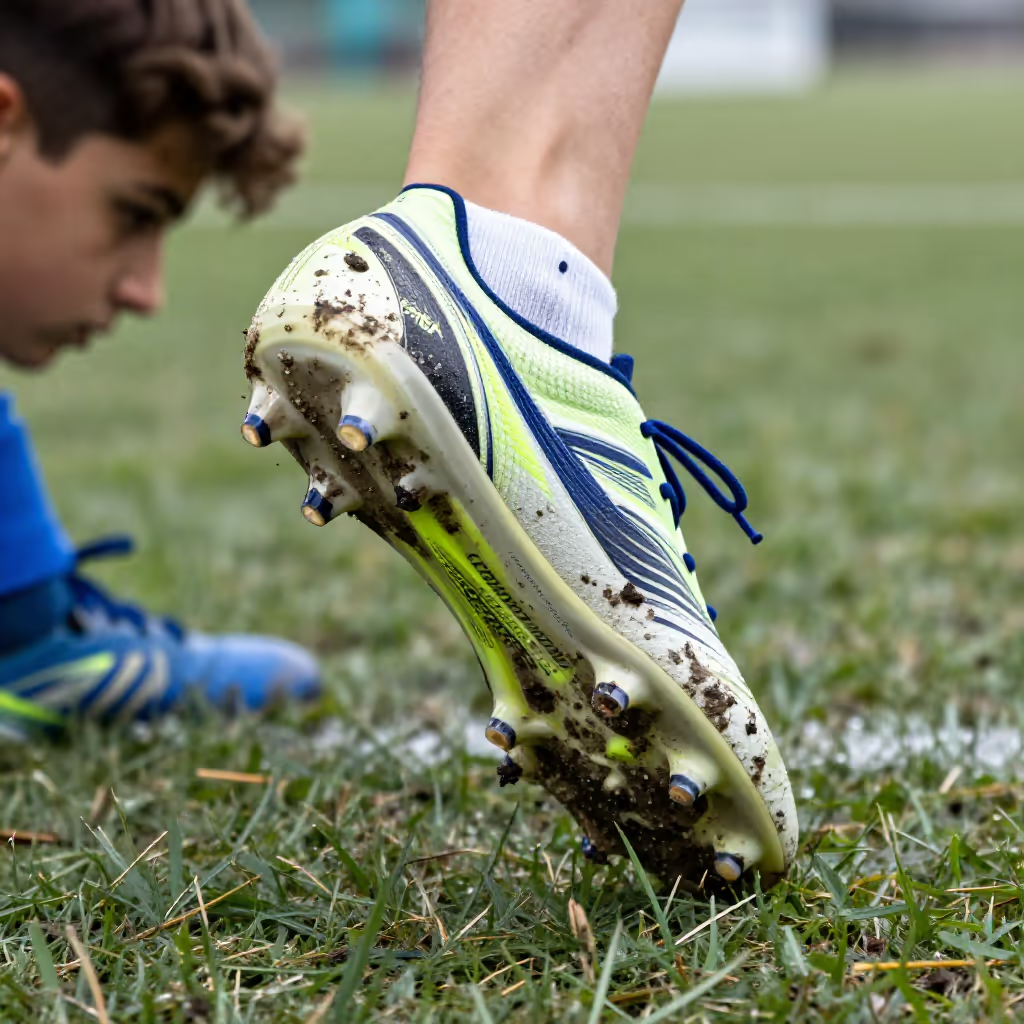
The word 'Spike' is borrowed directly from English, where it means 'Stachel' (spike) or 'Spitze' (point/tip). This original meaning helps you understand both German uses: the spike on a virus and the pin on a shoe.
EXAMPLE
Das Virus nutzt seine Spikes, um an Zellen anzudocken.
The virus uses its spikes to dock onto cells.
Context clue
You can easily recognize the meaning of 'Spike' from context. In connection with viruses, biology, or medicine, it refers to the protein. In the context of sports, shoes, cars, or winter tires, it refers to the metal pins.
EXAMPLE
Die Forschung konzentriert sich auf die Spikes des neuen Virus.
Research is focusing on the spikes of the new virus.
Typical combination
In a biological context, 'Spike' is very often used as part of the compound 'Spike-Protein' (spike protein). It is often treated as a single term.
EXAMPLE
Das Spike-Protein ist der Schlüssel für das Virus, um in die Zelle zu gelangen.
The spike protein is the key for the virus to enter the cell.
Use in the plural
When talking about shoes or tires, the word is usually used in the plural 'Spikes' (spikes), because it rarely refers to just one single pin. The combination with the preposition 'mit' (with) is typical.
EXAMPLE
Meine neuen Laufschuhe haben austauschbare Spikes.
My new running shoes have replaceable spikes.
Compare with
near_synonym · confusable
Spike vs Nagel
nail
'der Nagel' and 'der Spike' can both mean a short, pointed metal pin. The difference lies in their purpose. A 'Nagel' is usually driven into wood or a wall to fasten something. A 'Spike' is more likely to be on shoes or tires and provides better grip on ice, snow, or a running track. Learners may confuse the words because both can be pointed and made of metal. As a simple guide: for fastening things, you usually say 'Nagel'; for better grip in sports or on tires, 'Spike' is more likely.
Spike
Beim Training auf der nassen Bahn rutschte ein Spike aus dem Laufschuh.
During training on the wet track, a spike slipped out of the running shoe.
Nagel
Der Nagel in der Wand hält das kleine Bild über dem Schreibtisch.
The nail in the wall holds the small picture above the desk.