


springen
to jump
To push oneself off the ground or another surface with one's legs and move through the air for a brief moment.
EXAMPLE
Die Kinder springen vor Freude in die Luft.
The children jump into the air for joy.
to jump
Loading your saved state.
to jump
To push oneself off the ground or another surface with one's legs and move through the air for a brief moment.
Die Kinder springen vor Freude in die Luft.
The children jump into the air for joy.

to jump up
To move very quickly, suddenly, or hurriedly.
Als der Wecker klingelte, sprang sie sofort aus dem Bett.
When the alarm clock rang, she immediately jumped out of bed.
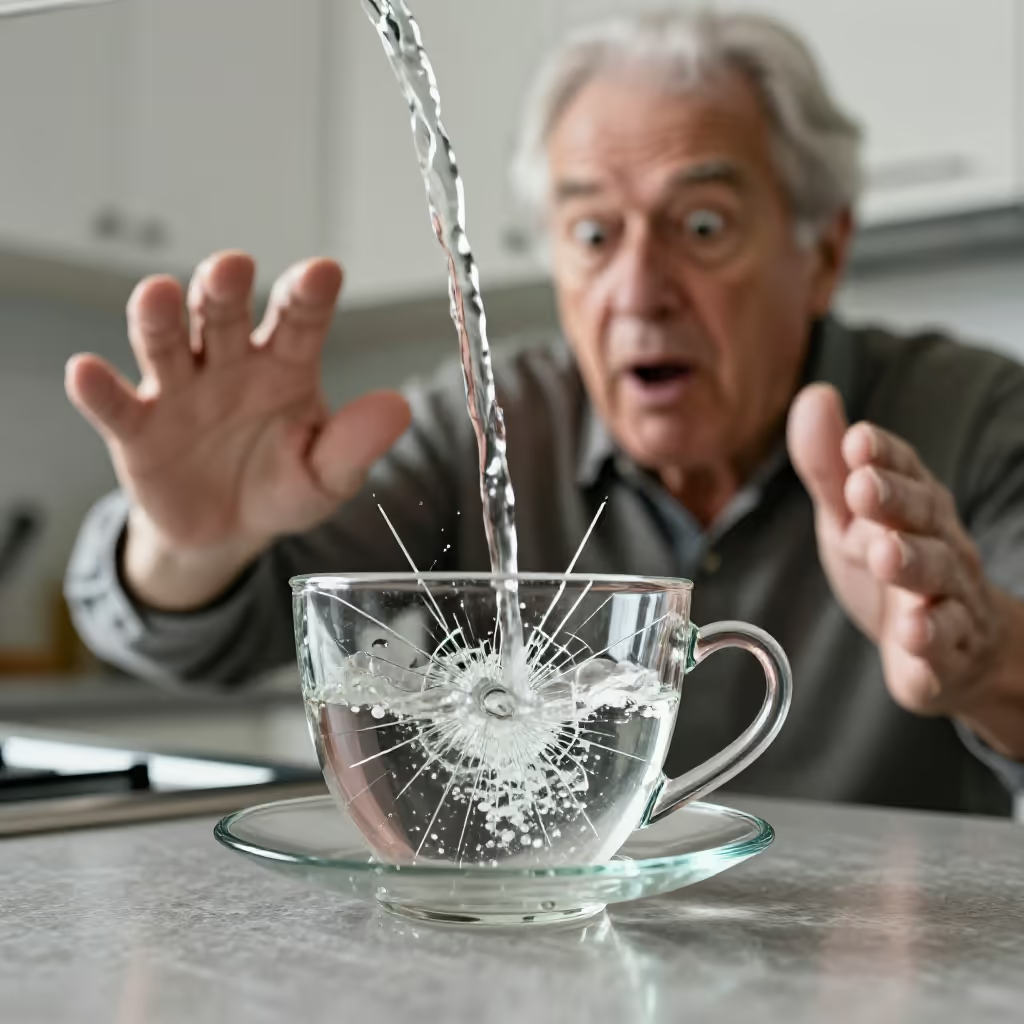
to crack
Of brittle materials such as glass or porcelain: to develop a crack or break, often due to stress or a change in temperature.
Ich habe heißes Wasser in das kalte Glas gegossen und es ist sofort gesprungen.
I poured hot water into the cold glass, and it cracked immediately.

to jump / skip
To skip over or leave something out in a sequence.
Da wir wenig Zeit haben, springen wir direkt zum letzten Tagesordnungspunkt.
Since we have little time, we'll jump straight to the last item on the agenda.
As a verb of movement or change of state, 'springen' (to jump/crack) always forms the perfect tense with the auxiliary verb 'sein' (to be). This applies to all meanings of the word.
Die Katze ist auf den Schrank gesprungen.
The cat jumped onto the cupboard.
When the subject is a brittle material such as glass, porcelain, or a wall, 'springen' means that it gets a crack or breaks. In this case, the verb is intransitive.
Die alte Vase ist gesprungen, als ich sie bewegt habe.
The old vase cracked when I moved it.
In the meaning of 'sich abstoßen' (to push oneself off), 'springen' is often combined with prepositions that indicate direction. Typical examples are 'in' (accusative), 'über' (accusative), or 'von' (dative).
Er ist mutig vom Fünfmeterbrett gesprungen.
He bravely jumped from the five-meter diving board.
To express a sudden, quick movement, 'springen' is often used in fixed expressions. Common combinations are 'aus dem Bett springen' (to jump out of bed) or 'ins Auto springen' (to jump into the car).
Als der Bus kam, sprang sie schnell auf und rannte zur Haltestelle.
When the bus came, she quickly jumped up and ran to the stop.
When 'springen' means to leave something out in a sequence, it is often used with the preposition 'zu' + dative to indicate the new target. It describes a direct change.
Der Professor ist von Kapitel 2 direkt zu Kapitel 5 gesprungen.
The professor jumped directly from chapter 2 to chapter 5.
to omit / leave out
Springen and auslassen can both mean that something is not considered in a sequence. Springen tends to describe skipping over something within a process, while auslassen directly refers to the deliberate omission of something. Use springen when moving over a point and auslassen when making a deliberate decision.

Beim Lesen können Sie den schwierigen Abschnitt springen und später zurückkehren.
When reading, you can skip the difficult section and come back to it later.
Beim Lesen können Sie den schwierigen Abschnitt auslassen, wenn Sie wenig Zeit haben.
When reading, you can leave out the difficult section if you are short on time.