

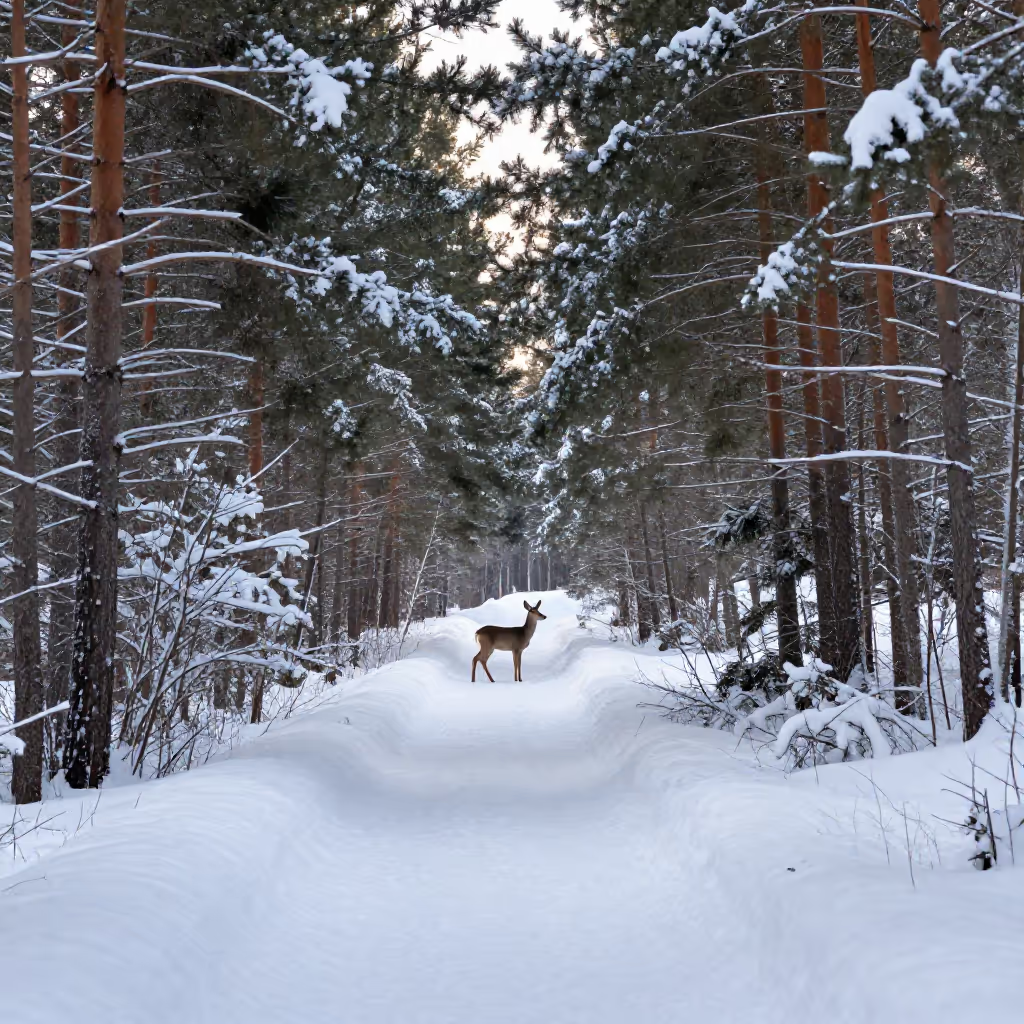
die Stille
silence
A state in which there are no sounds; complete noiselessness or quiet.
EXAMPLE
Nachdem der Motor ausging, herrschte eine unheimliche Stille.
After the engine stopped, an eerie silence fell.
silence / stillness
Loading your saved state.
silence
A state in which there are no sounds; complete noiselessness or quiet.
Nachdem der Motor ausging, herrschte eine unheimliche Stille.
After the engine stopped, an eerie silence fell.

stillness
A state of motionlessness, inner calm, or peace.
Er saß am See und genoss einfach nur die Stille des Moments.
He sat by the lake and simply enjoyed the stillness of the moment.
The noun 'die Stille' (silence/stillness) is derived from the adjective 'still' (quiet/still). When a place or situation is 'still', then there is 'Stille' there.
Sei bitte still, ich brauche etwas Stille zum Arbeiten.
Please be quiet; I need some silence to work.
'Stille' (silence/stillness) is often combined with certain verbs that describe a state. Typical phrases are 'Stille herrscht' (silence reigns/there is silence), 'Stille tritt ein' (silence falls), or 'die Stille genießen' (to enjoy the silence/stillness).
Als der Redner eine Pause machte, trat plötzlich Stille im Saal ein.
When the speaker paused, silence suddenly fell in the hall.
The expression 'in aller Stille' means that something happens secretly, unnoticed, or without much publicity.
Das Paar hat in aller Stille geheiratet, ohne Gäste einzuladen.
The couple got married quietly, without inviting any guests.
quiet / calm
Ruhe and Stille both refer to a quiet state. Ruhe mainly means that there are no disturbing sounds; Stille emphasizes more strongly that nothing at all can be heard. Therefore, a place can still offer Ruhe despite occasional quiet sounds.

Als auch das Rascheln aufhört, herrscht im Lesesaal völlige Stille.
Once the rustling stops too, the reading room is completely silent.
Im Lesesaal findet sie Ruhe, obwohl leise Seiten rascheln.
She finds Ruhe in the reading room, even though pages are rustling softly.