

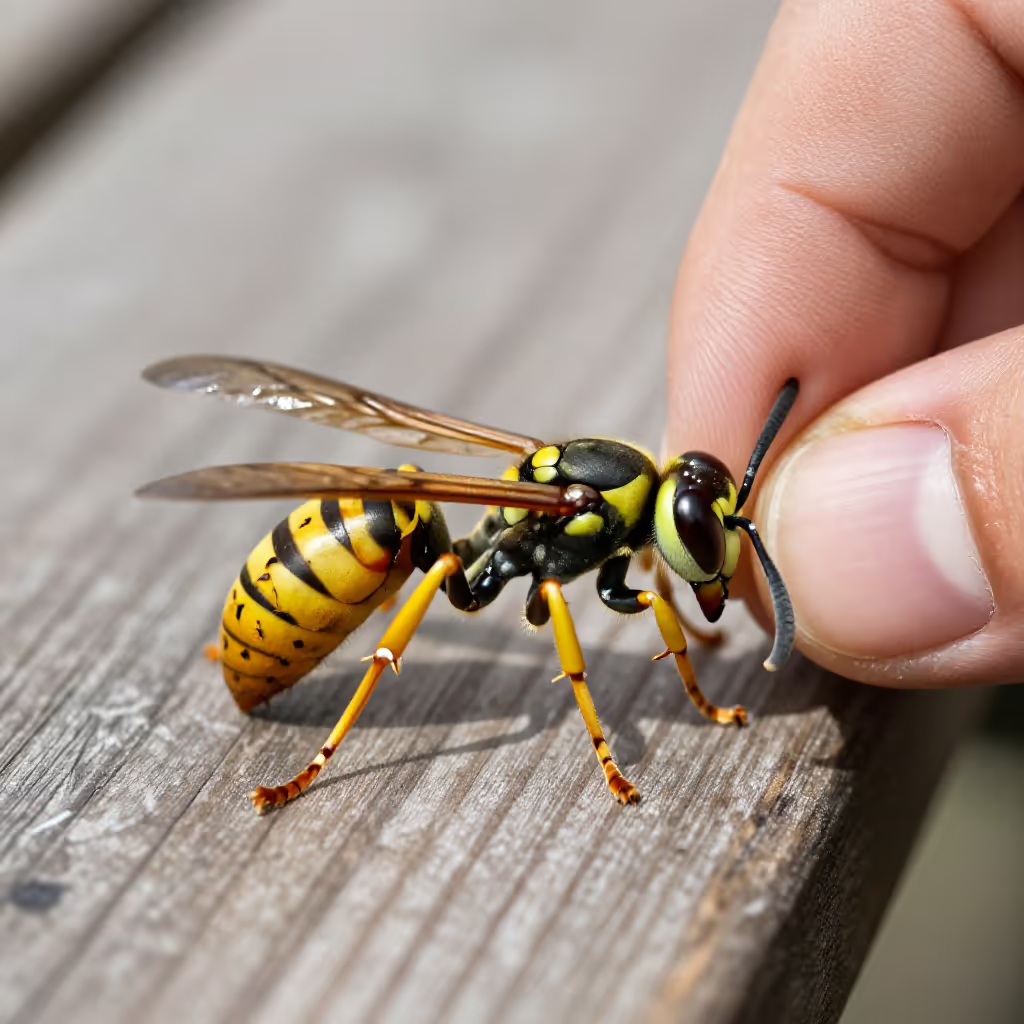
der Stachel
stinger
A pointed organ, often associated with venom, in certain insects or animals, used for stinging.
EXAMPLE
Die Wespe hat ihren Stachel in seiner Haut hinterlassen.
The wasp left its stinger in his skin.
stinger / thorn
Loading your saved state.
stinger
A pointed organ, often associated with venom, in certain insects or animals, used for stinging.
Die Wespe hat ihren Stachel in seiner Haut hinterlassen.
The wasp left its stinger in his skin.
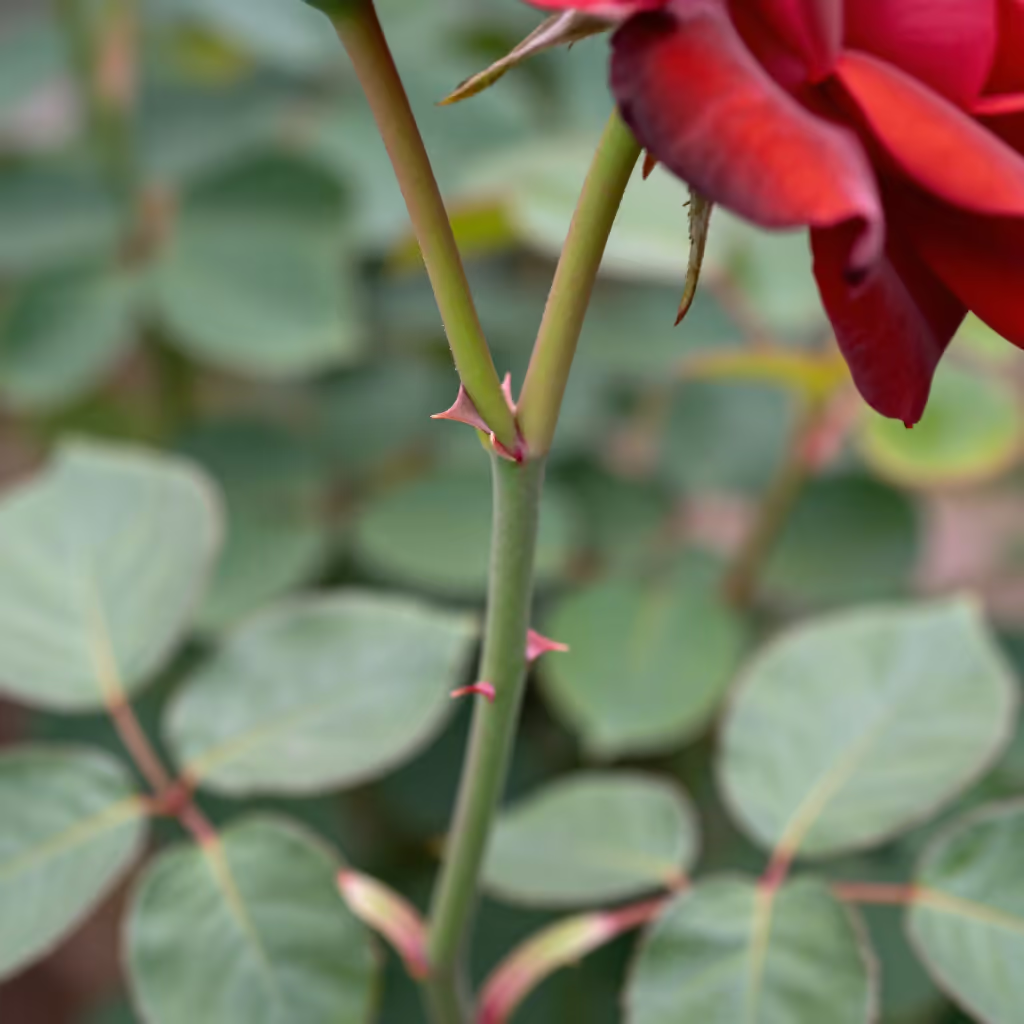
thorn / spine
A pointed, hard growth on a plant that serves as protection, such as on roses or cacti.
Ich habe mich am Stachel einer Rose verletzt.
I injured myself on the thorn of a rose.

sting
In a figurative sense, something that causes emotional pain, hurt, or unrest.
Seine abfällige Bemerkung hinterließ einen tiefen Stachel.
His disparaging remark left a deep sting.
'Der Stachel' (stinger/thorn) is the tool with which something stings. The word is closely related to the verb 'stechen' (to sting/prick), which describes the action of stinging or pricking.
Vorsicht, diese Wespen stechen, wenn sie sich bedroht fühlen.
Careful, these wasps sting when they feel threatened.
The context reveals the meaning. With animals like bees, it is the stinging organ; with plants like roses, it is the pointed growth; and with feelings like envy, it is emotional pain.
Die Biene verlor beim Stechen ihren Stachel.
The bee lost its stinger when it stung.
When talking about insect stings, people often say that you have to 'den Stachel entfernen' (remove the stinger) or 'herausziehen' (pull it out). The insect itself can 'einen Stachel hinterlassen' (leave a stinger behind).
Nach dem Bienenstich musste ich schnell den Stachel entfernen.
After the bee sting, I had to remove the stinger quickly.
In the figurative meaning, 'Stachel' (sting) describes emotional pain. Typical phrases are 'der Stachel der Eifersucht' (the sting of jealousy), 'der Stachel des Neides' (the sting of envy), or that a remark 'einen Stachel hinterlässt' (leaves a sting).
Der Stachel des Zweifels blieb auch nach seiner Erklärung.
The sting of doubt remained even after his explanation.
sting / stitch
Stich and Stachel are both related to an insect attack, but they do not mean the same thing. The Stachel is the animal’s pointed organ, whereas the Stich is the penetration of that organ or the wound it causes. Use Stachel when talking about the body part and Stich when talking about the injury.

Der Stachel der Biene blieb nach dem Angriff in meinem Arm stecken.
The bee’s stinger remained lodged in my arm after the attack.
Nach dem Stich der Biene schwoll die Haut an meinem Arm an.
After the bee sting, the skin on my arm swelled up.