der Stich
sting / puncture
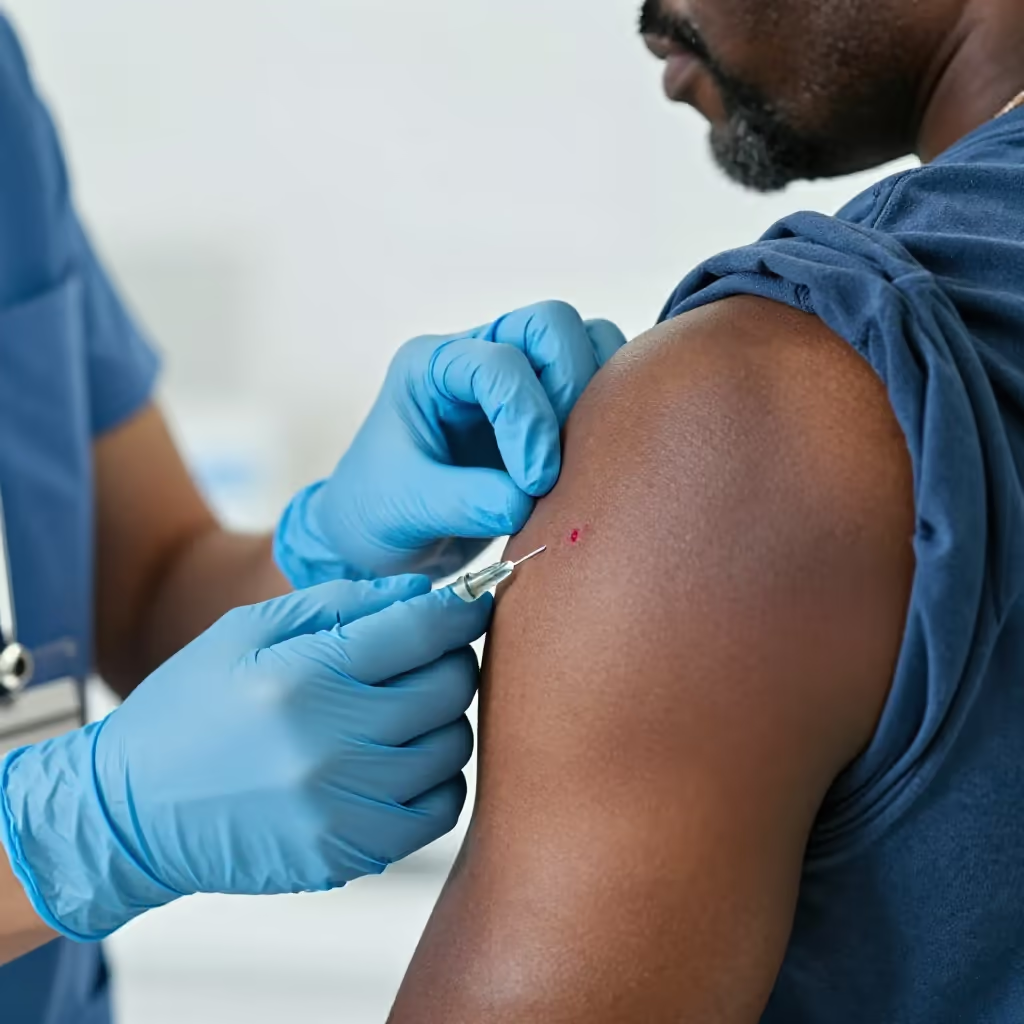
The penetration of a pointed object (e.g., needle, knife, insect stinger) into something, as well as the wound or mark caused by it.
Ein Wespenstich am Hals kann gefährlich sein.
A wasp sting on the neck can be dangerous.

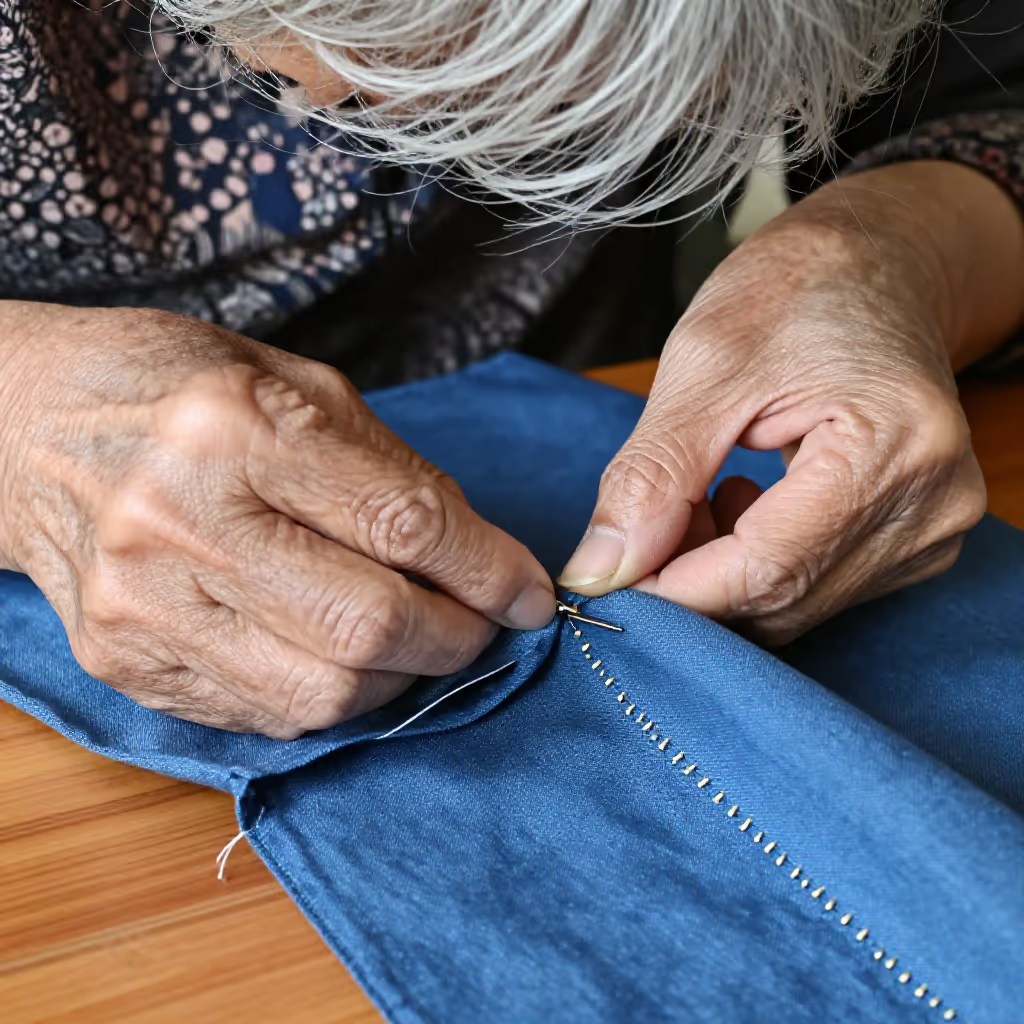
sting / stitch
Loading your saved state.
sting / puncture
The penetration of a pointed object (e.g., needle, knife, insect stinger) into something, as well as the wound or mark caused by it.
Ein Wespenstich am Hals kann gefährlich sein.
A wasp sting on the neck can be dangerous.

The noun 'der Stich' (sting/stitch) is directly derived from the verb 'stechen' (to sting/prick/stab). This connection helps you understand many meanings: an insect stings, a knife stabs, and a sudden pain feels like a stitch.
Die Biene hat mich gestochen und der Stich tut weh.
The bee stung me, and the sting hurts.
The context reveals the meaning: if it is about insects or weapons, it refers to a wound. If it is about the body, it means a pain. In card games it is a round, and with colors it is a shade or tinge.
Der Stich der Mücke juckt fürchterlich.
The mosquito bite itches terribly.
In this meaning, 'Stich' (sting/puncture) is often combined with its cause. Typical compounds are 'Mückenstich' (mosquito bite), 'Wespenstich' (wasp sting), or 'Nadelstich' (needle prick). For injuries, people also speak of a 'Stichwunde' (stab wound).
Ein Mückenstich ist meist harmlos, aber lästig.
A mosquito bite is usually harmless but annoying.
When 'Stich' (stitch) describes a pain, the affected body part is often named with 'in' + dative. Common phrases are 'ein Stich in der Seite' (a stitch in the side), 'ein Stich im Rücken' (a sharp pain in the back), or metaphorically 'ein Stich ins Herz' (a stab to the heart).
Beim Atmen spüre ich einen leichten Stich in der Brust.
When I breathe, I feel a slight stitch in my chest.
The idiom 'jemanden im Stich lassen' (to abandon someone / leave someone in the lurch) is fixed. The person who is left alone is always in the accusative.
Du kannst dich auf mich verlassen, ich lasse dich nicht im Stich.
You can rely on me; I won't abandon you.
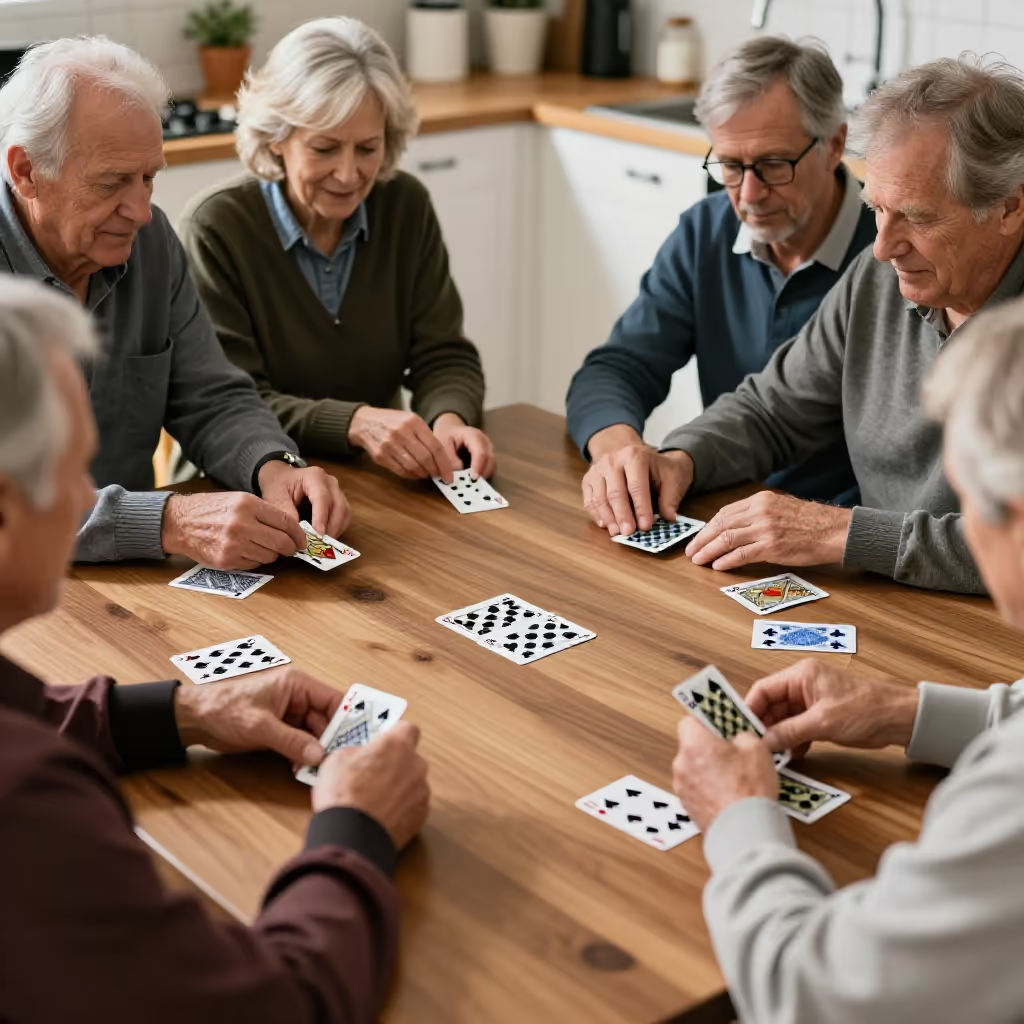
In the context of card games like Skat or bridge, 'Stich' (trick) means a round of play. Typical verbs in this context are 'einen Stich machen' (to take a trick) or 'einen Stich gewinnen' (to win a trick).
Mit dem höchsten Trumpf hat sie den wichtigen Stich gemacht.
With the highest trump card, she took the important trick.
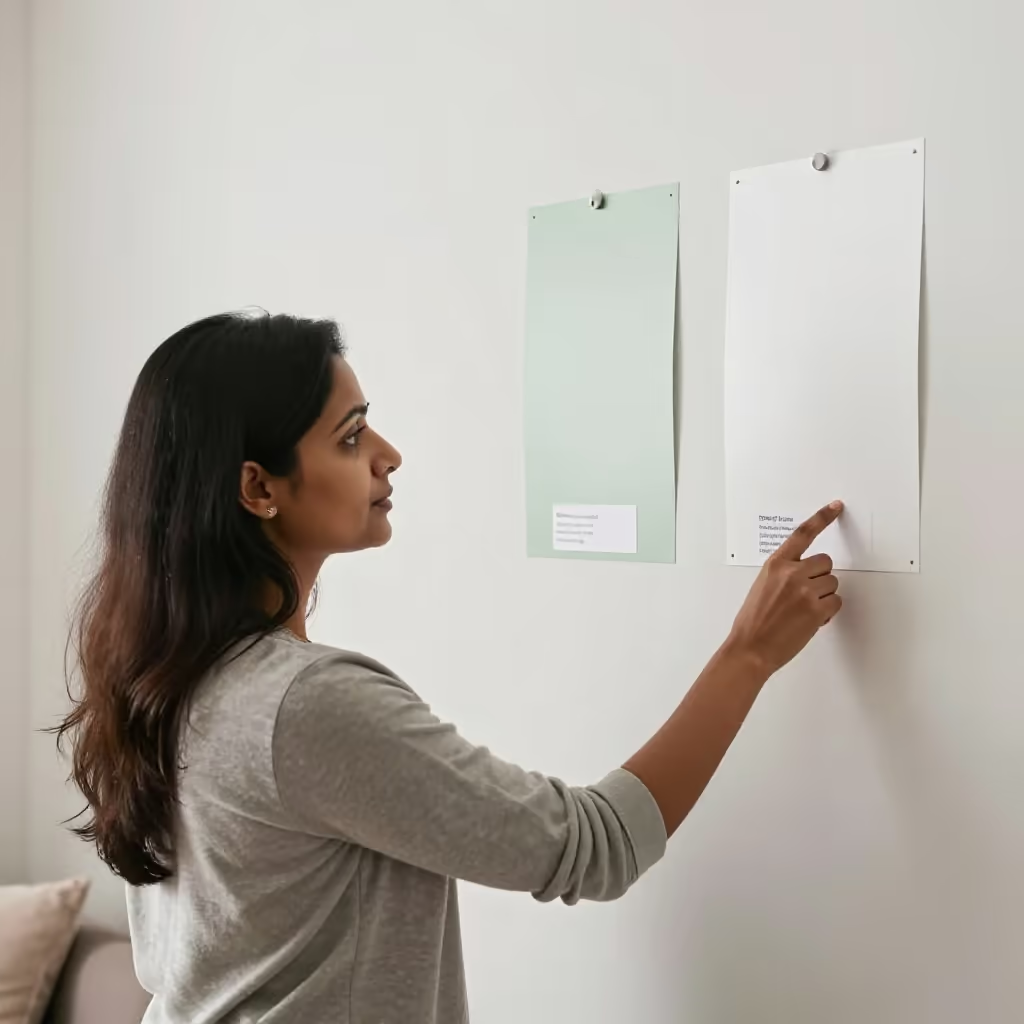
To describe a color nuance, the construction 'einen Stich ins [Farbe] haben' (to have a tinge of [color]) is used. The color is in the accusative after 'ins'.
Das Hemd ist nicht rein weiß, es hat einen Stich ins Bläuliche.
The shirt is not pure white; it has a bluish tinge.
Similar to physical pain, 'Stich' (stab) can also describe a sudden emotional injury caused by words or actions. The most common phrase for this is 'ein Stich ins Herz' (a stab to the heart).
Jedes seiner kalten Worte war ein Stich für sie.
Each of his cold words was a stab for her.
round
'die Runde' and 'der Stich' can both occur in games. 'die Runde' is a general section in a game or competition. After it, the next section often begins. 'der Stich' is more specific and belongs to certain card games: all players play cards, and one person wins that trick. In many card games, one round consists of several tricks. The words can be confused because both refer to small parts of a game. 'Runde' is more general; 'Stich' only fits suitable card games.

Marie hat den letzten Stich gewonnen und damit das Spiel entschieden.
Marie won the last trick and decided the game with it.
Nach der Arbeit spielt Frau Fischer noch eine Runde Karten mit den Nachbarn.
After work, Ms. Fischer plays another round of cards with the neighbors.