

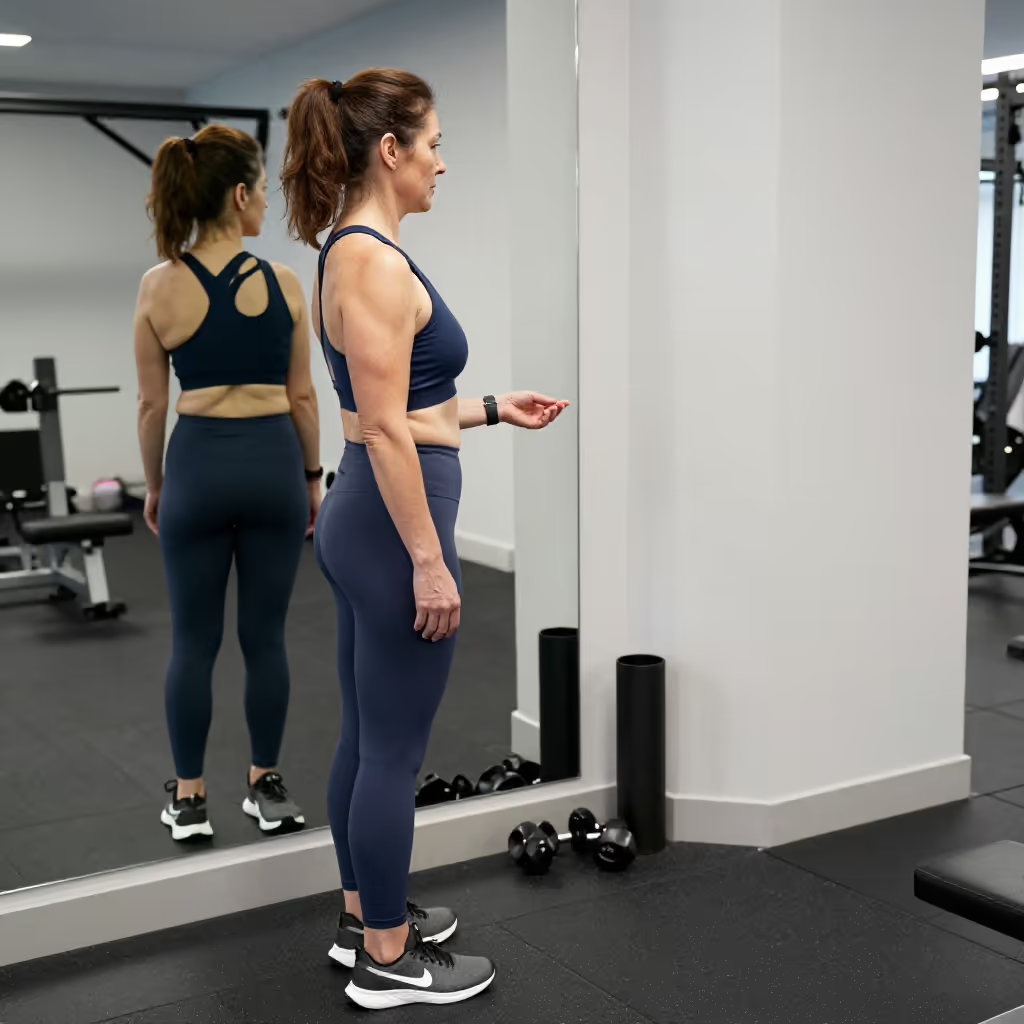
die Figur
figure
The outer form or shape of a human body.
EXAMPLE
Sie achtet sehr auf ihre Figur und treibt viel Sport.
She pays close attention to her figure and does a lot of sports.
figure
Loading your saved state.
figure
The outer form or shape of a human body.
Sie achtet sehr auf ihre Figur und treibt viel Sport.
She pays close attention to her figure and does a lot of sports.

character
A person or being that appears in a story, film, or play.
Die Hauptfigur des Romans ist ein junger Detektiv.
The main character of the novel is a young detective.
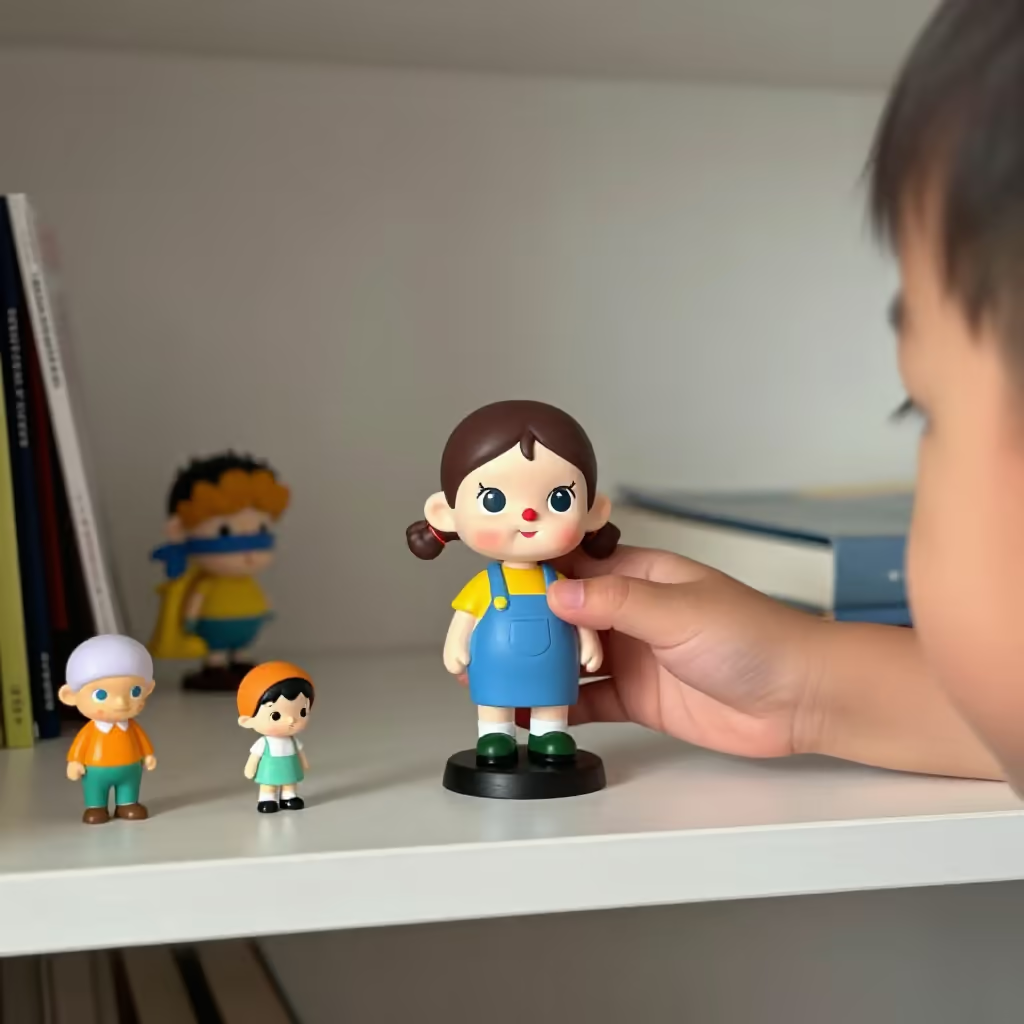
figure / piece
A small statue or model that represents a person, animal, or object, for example a game piece.
Beim Schach hat jede Figur eine bestimmte Funktion.
In chess, each piece has a specific function.

to cut a good/bad figure
To make a good or bad impression on others; to look or perform well or poorly.
Trotz der Nervosität hat er bei seinem Vortrag eine gute Figur gemacht.
Despite his nervousness, he cut a good figure during his presentation.
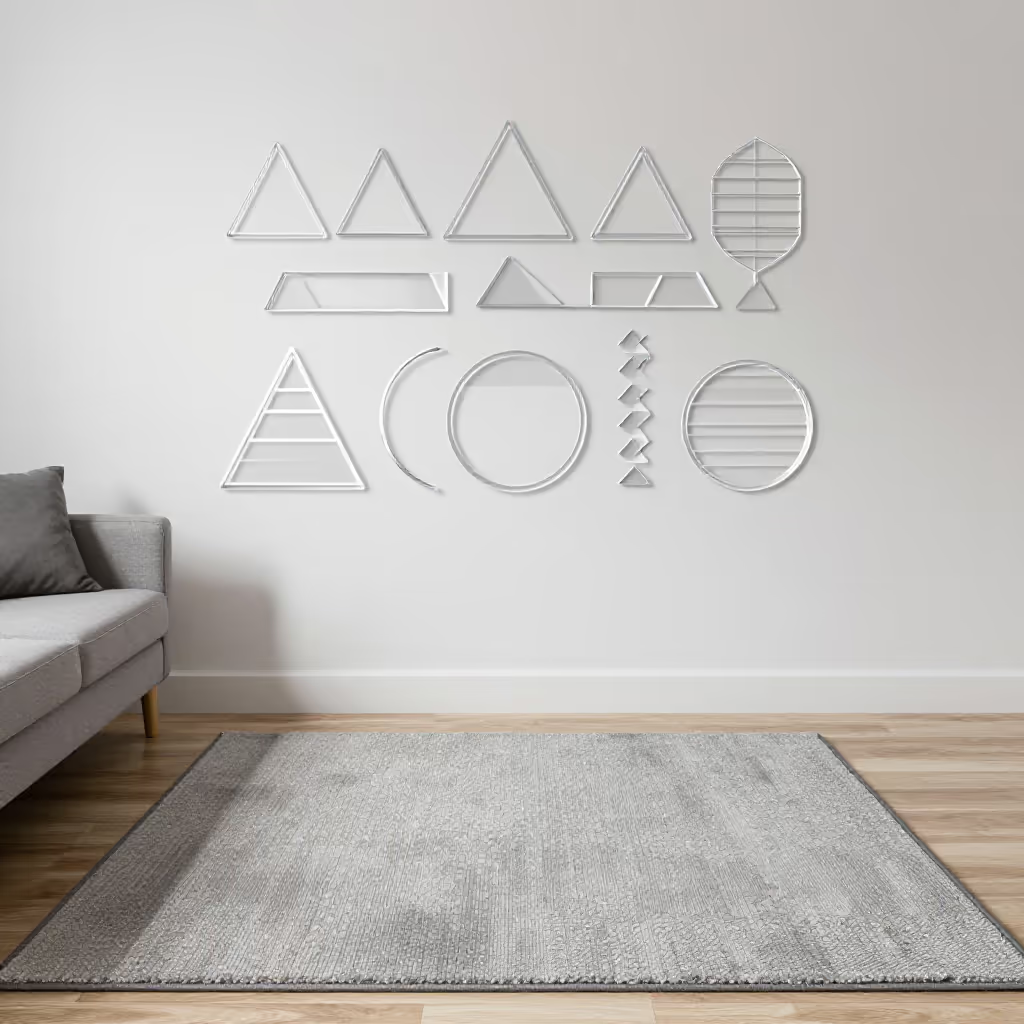
figure / shape
A geometric form or pattern.
Ein Quadrat ist eine geometrische Figur mit vier gleich langen Seiten.
A square is a geometric figure with four sides of equal length.
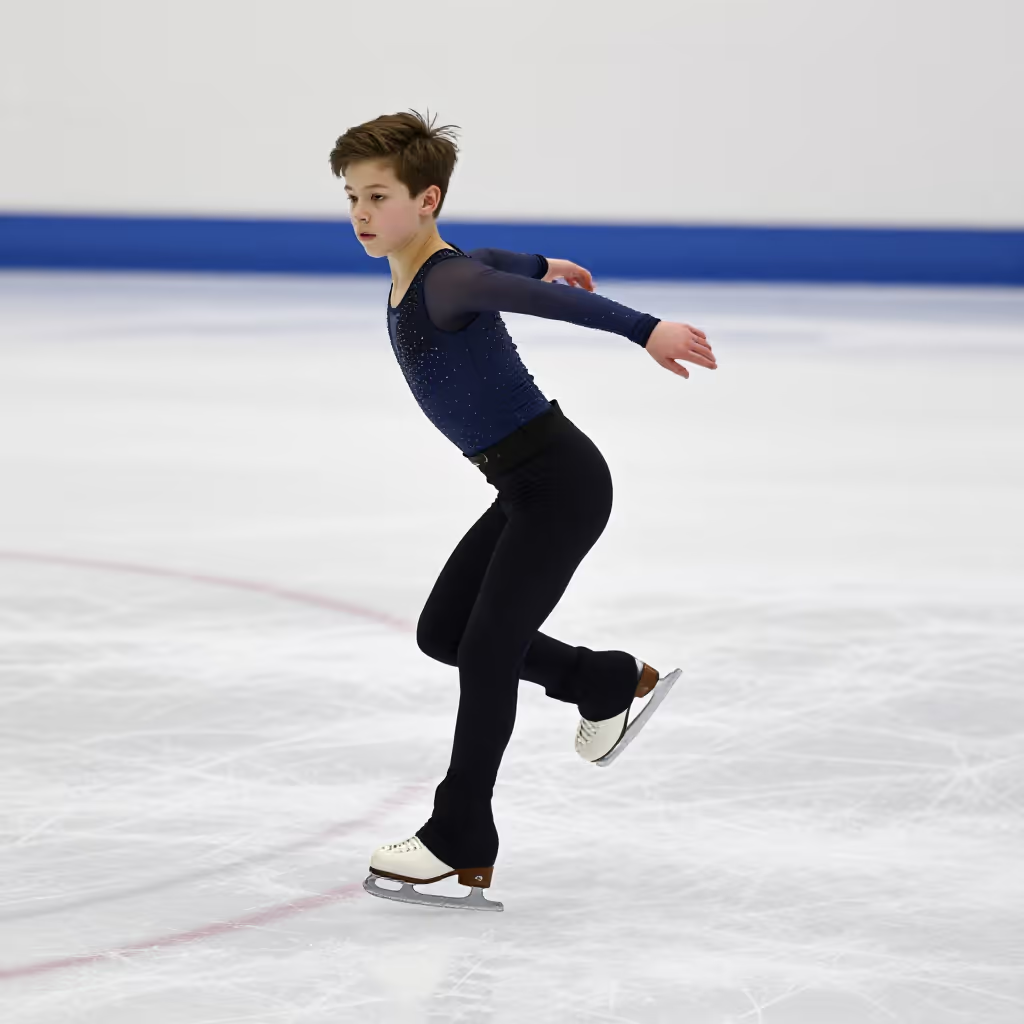
figure / move
A defined sequence of movements in dancing, figure skating, or gymnastics.
Die Eiskunstläuferin zeigte eine komplizierte Figur mit mehreren Sprüngen.
The figure skater performed a complicated figure with several jumps.
Unlike the English word 'figure', 'Figur' in German is not used for numbers, data, or prices. Don't say 'die Verkaufsfiguren' (sales figures), but rather 'die Verkaufszahlen' (sales numbers).
Die aktuellen Arbeitslosenzahlen sind besorgniserregend.
The current unemployment numbers are concerning.
The idiom 'eine gute/schlechte Figur machen' means to make a good or bad impression. It's often used to evaluate someone's appearance or performance.
Obwohl er schlecht vorbereitet war, hat er bei der Präsentation eine gute Figur gemacht.
Even though he was poorly prepared, he cut a good figure during the presentation.
The many meanings of 'Figur' are easy to recognize from context. If it's about sports or diet, it refers to body shape. In books or films, it means characters. In games like chess, it refers to game pieces.
Diese Figur in dem Roman hat mir besonders gut gefallen.
I especially liked this character in the novel.
When referring to body shape, typical phrases are 'auf seine Figur achten' (to watch one's figure), 'eine gute Figur haben' (to have a good figure), or 'eine schlanke Figur bekommen' (to get a slim figure).
Sie achtet sehr auf ihre Figur und isst viel Gemüse.
She pays close attention to her figure and eats a lot of vegetables.
In the context of stories, 'Figur' is often combined with adjectives: 'die Hauptfigur' (the main character), 'eine wichtige Nebenfigur' (an important supporting character), or 'eine tragische Figur' (a tragic character).
Die Hauptfigur des Films ist eine mutige Journalistin.
The main character of the film is a brave journalist.
In the meaning of 'Modell' (model) or 'Spielfigur' (game piece), 'Figur' is often part of compound words like 'die Schachfigur' (chess piece), 'die Spielfigur' (game piece), or 'die Porzellanfigur' (porcelain figurine).
Meine Oma sammelt kleine Porzellanfiguren.
My grandma collects small porcelain figurines.
person
In a story, „Person“ and „Figur“ can refer to the same human being or being. „Person“ views them more as an individual who acts, while „Figur“ views them from the perspective of the literary or cinematic structure. Use „Person“ when the actions matter, and „Figur“ when the role in the work is the focus.

Die Figur im Roman steht für den Konflikt zwischen Wahrheit und Bequemlichkeit.
The character in the novel represents the conflict between truth and convenience.
Die Person im Roman entscheidet sich schließlich für die Wahrheit.
The person in the novel ultimately chooses the truth.