

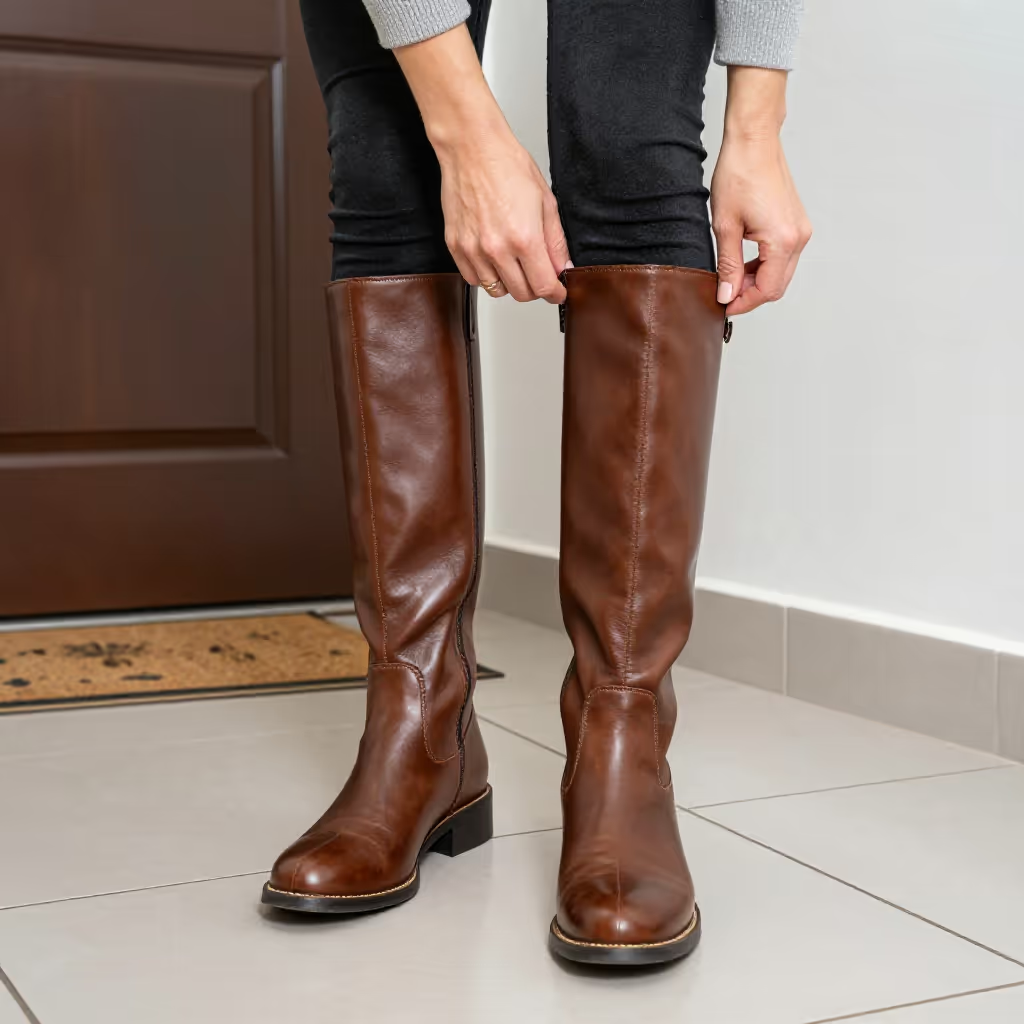
der Stiefel
boot
A shoe whose shaft reaches above the ankle and partly or fully covers the leg.
EXAMPLE
Für die Wanderung im Schnee brauchst du warme Stiefel.
For the hike in the snow, you need warm boots.
boot
Loading your saved state.
boot
A shoe whose shaft reaches above the ankle and partly or fully covers the leg.
Für die Wanderung im Schnee brauchst du warme Stiefel.
For the hike in the snow, you need warm boots.

to talk/play nonsense
Colloquial for speaking or playing very badly, incoherently, or nonsensically.
Die Fußballmannschaft hat heute einen unglaublichen Stiefel zusammengespielt.
The soccer team played incredibly badly today.
The meaning of 'Stiefel' (boot) depends heavily on context. Most of the time it is a shoe. In the colloquial expression 'einen Stiefel...' with verbs like 'spielen' (to play) or 'reden' (to talk), however, it means 'nonsense' or 'poor quality'.
Er hat seine neuen Stiefel geputzt.
He cleaned his new boots.
'Stiefel' (boot) is the base word for many types of shoes. Typical compounds are 'Gummistiefel' (rubber boots), 'Winterstiefel' (winter boots), 'Wanderstiefel' (hiking boots), or 'Reitstiefel' (riding boots).
Bei Regenwetter ziehe ich immer meine Gummistiefel an.
In rainy weather, I always put on my rubber boots.
The expression 'einen Stiefel zusammenspielen' (to play terribly / play a load of rubbish) or 'einen Stiefel reden' (to talk nonsense) is very colloquial. It is used to evaluate a performance or statement very negatively.
Die Band hat gestern Abend einen ziemlichen Stiefel gespielt.
The band played pretty terribly last night.
Because of its geographical shape, Italy is often colloquially referred to in German as 'der Stiefel' (the boot).
Wir machen dieses Jahr Urlaub auf dem italienischen Stiefel.
We're vacationing on the Italian boot this year.
ankle boot
A Stiefel extends above the ankle and can have a noticeably taller shaft. More precisely, a Stiefelette is a short, ankle-high boot. Stiefel is appropriate for the general type of footwear, while Stiefelette is more precise for a specifically short model.
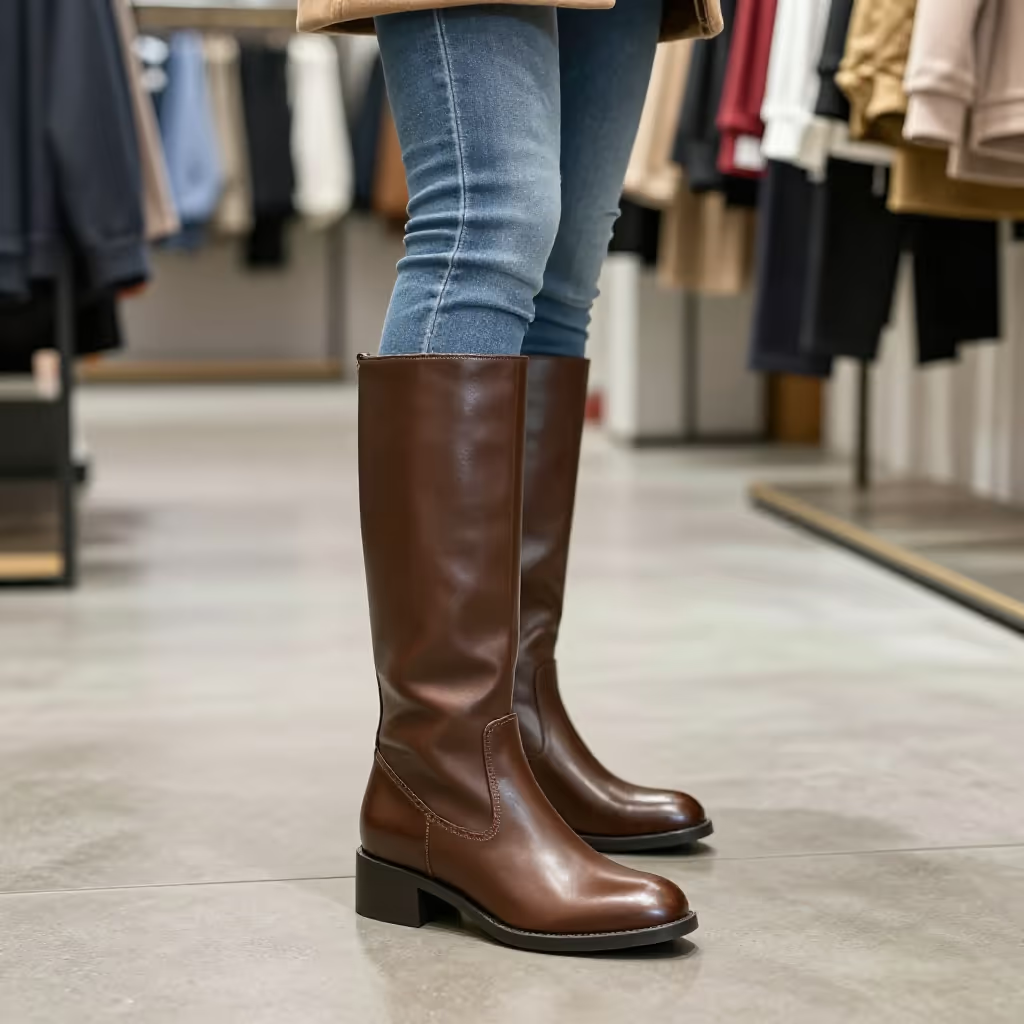
Für den Winter kauft Lea Stiefel, deren Schaft bis zur Wade reicht.
For the winter, Lea is buying boots whose shafts reach up to the calf.
Für den Herbst kauft Lea Stiefeletten, deren Schaft knapp über dem Knöchel endet.
For the fall, Lea is buying ankle boots whose shafts end just above the ankle.