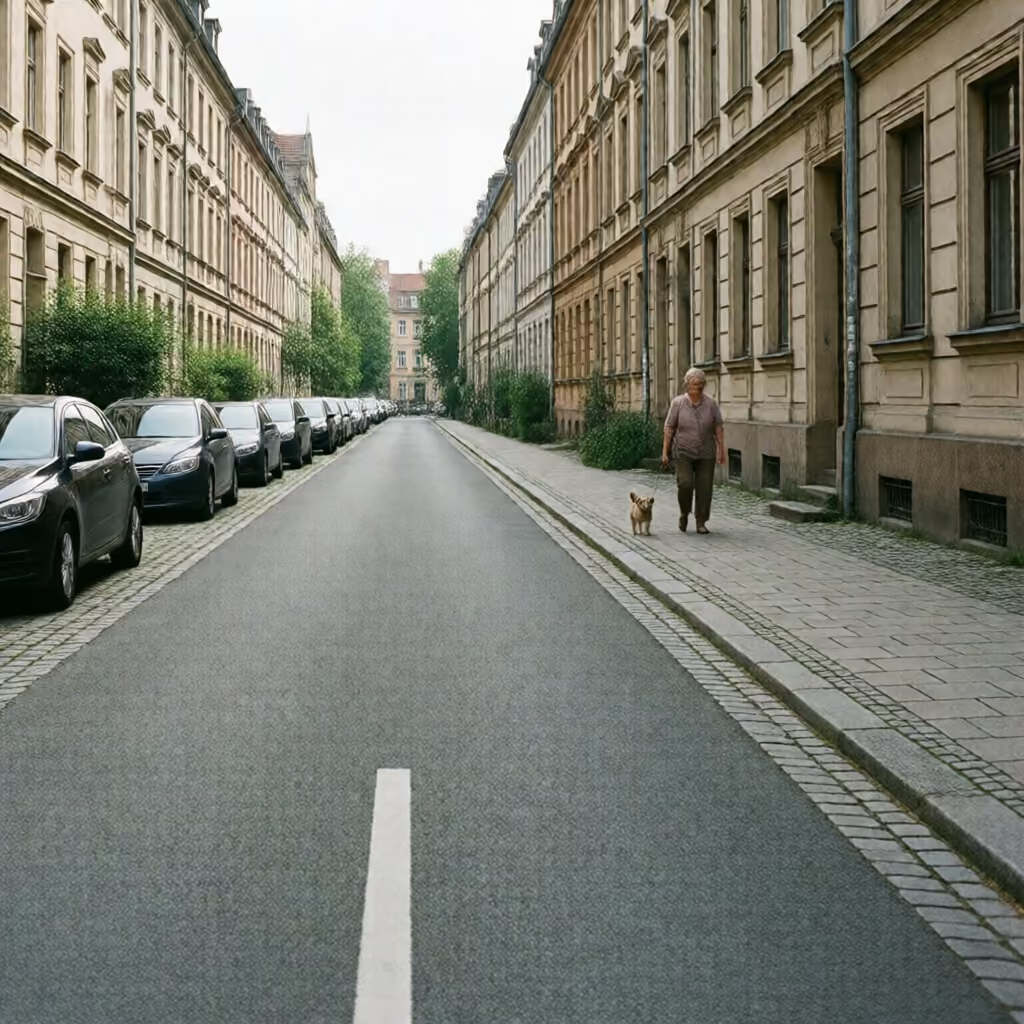
A paved route for vehicles, usually also with paths for people on foot. Streets connect places or run through built-up areas.
EXAMPLE
Die Straße zwischen den beiden Dörfern wird wegen Bauarbeiten gesperrt.
The road between the two villages is being closed because of construction work.
auf die Straße gehen
to take to the streets
To take part in a public demonstration to express a demand or protest.
EXAMPLE
Tausende Menschen gingen gegen die geplanten Kürzungen auf die Straße.
Thousands of people took to the streets to protest the planned cuts.
jemanden auf die Straße setzen
to put someone out on the street
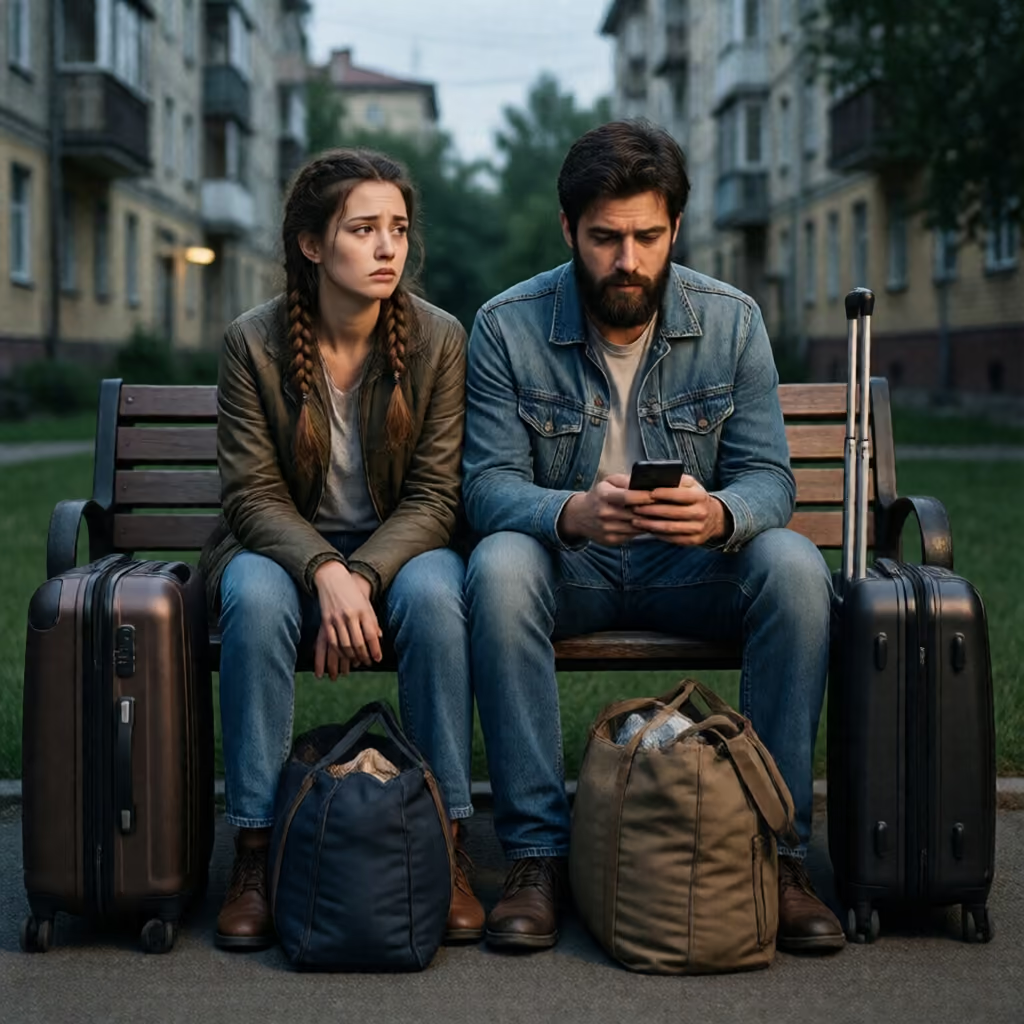
To throw someone out of their home, leaving them without accommodation.
EXAMPLE
Der Vermieter drohte, die Familie auf die Straße zu setzen.
The landlord threatened to put the family out on the street.
jemanden auf die Straße setzen
to put someone out on the street
Colloquial: To fire someone, thereby making them unemployed.
EXAMPLE
Trotz hoher Gewinne hat die Firma hundert Beschäftigte auf die Straße gesetzt.
Despite making high profits, the company put a hundred employees out on the street.
auf der Straße sitzen
to be out on the street
Colloquial: To no longer have a home or accommodation.
EXAMPLE
Wenn wir bis Monatsende keine neue Wohnung finden, sitzen wir auf der Straße.
If we don't find a new apartment by the end of the month, we'll be out on the street.
auf der Straße liegen
to be out of work
Colloquial: To be unemployed.
EXAMPLE
Nach der Schließung des Werks lag er monatelang auf der Straße, bis er eine neue Stelle fand.
After the plant closed, he was out of work for months until he found a new job.
die Straße
street
The people who live on a particular street, considered as a community.
EXAMPLE
Die ganze Straße kam zusammen, um den hundertsten Geburtstag der Nachbarin zu feiern.
The whole street came together to celebrate the neighbor's hundredth birthday.
die Straße
strait
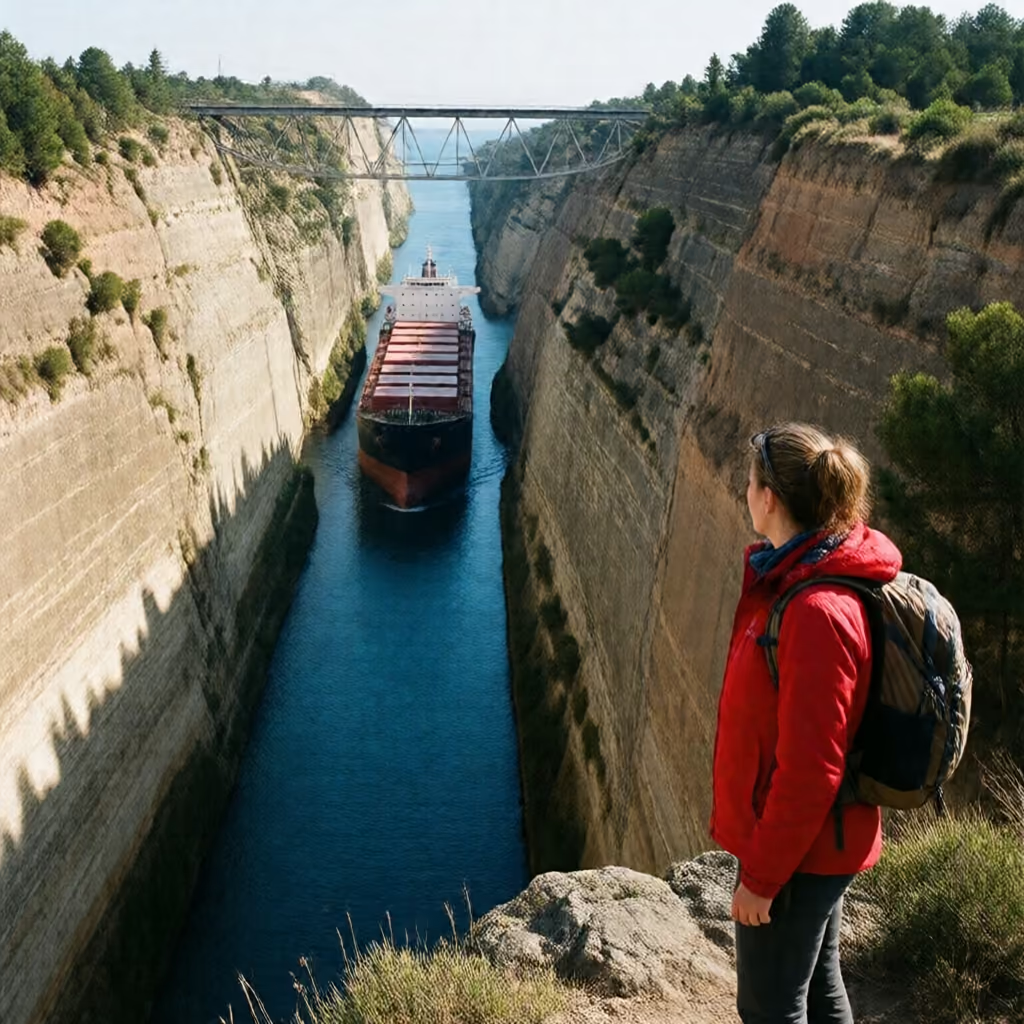
A narrow passage connecting two seas or parts of a sea.
EXAMPLE
Die Straße von Gibraltar verbindet das Mittelmeer mit dem Atlantik.
The Strait of Gibraltar connects the Mediterranean Sea with the Atlantic Ocean.
die Straße
straight
In poker, a combination of five cards with consecutive values.
EXAMPLE
Mit einer Fünf, einer Sechs, einer Sieben, einer Acht und einer Neun hatte sie eine Straße.
With a five, six, seven, eight, and nine, she had a straight.
das Geld liegt auf der Straße
money is there for the taking
There are easily accessible ways to earn money. This expression is often used in the negative to emphasize that earning money takes effort.
EXAMPLE
Auch mit einer guten Geschäftsidee muss man hart arbeiten, denn das Geld liegt nicht auf der Straße.
Even with a good business idea, you have to work hard, because money doesn't grow on trees.
Forms
Forms adapted from the German Wiktionary entry Straße, by Wiktionary contributors, licence CC BY-SA 4.0.
At a glance
gender
feminine die
plural
die Straßen
genitive
der Straße
The four cases
singular
plural
nominative
die Straße
die Straßen
accusative
die Straße
die Straßen
dative
der Straße
den Straßen
genitive
der Straße
der Straßen
The article changes with the case; it is shown in colour.
Usage tips
Typical collocations
For a route used by traffic, 'Straße' (street/road) commonly appears with verbs such as 'überqueren' (to cross), 'entlanggehen' (to walk along), and 'sperren' (to close). The phrase 'an der Straße liegen' (to be located on the street/by the road) also describes the location of a place or building.
EXAMPLE
Die Polizei musste die Straße nach dem Unfall mehrere Stunden sperren.
The police had to close the road for several hours after the accident.
Fixed expression
In 'auf die Straße gehen' (to take to the streets), 'auf' is used with the accusative because the phrase expresses movement toward a place. The expression usually refers to demonstrating publicly as a group.
EXAMPLE
Am Samstag gehen viele Studierende für bessere Arbeitsbedingungen auf die Straße.
On Saturday, many students are taking to the streets for better working conditions.
Sentence pattern
In 'jemanden auf die Straße setzen' (to put someone out on the street), the affected person is in the accusative. In this meaning, a context involving housing, rent, or a landlord indicates the loss of accommodation.
EXAMPLE
Die Familie befürchtet, dass der Eigentümer sie auf die Straße setzt.
The family is afraid that the owner will put them out on the street.
Context clue
In 'jemanden auf die Straße setzen' (to put someone out on the street), a context involving a company, workplace, or dismissal indicates the loss of a job. The object refers to the person who loses their position.
EXAMPLE
Durch die Schließung des Betriebs wurden viele Angestellte auf die Straße gesetzt.
Many employees were put out on the street when the company closed.
Fixed phrase
In 'auf der Straße sitzen' (to be out on the street), 'auf' is used with the dative because the phrase describes a state rather than movement. Words such as 'Wohnung' (apartment), 'Unterkunft' (accommodation), or 'Miete' (rent) usually show that homelessness is meant.
EXAMPLE
Ohne die Unterstützung ihrer Freunde würde sie bald auf der Straße sitzen.
Without the support of her friends, she would soon be out on the street.
Context clue
In 'auf der Straße liegen' (to be out of work), 'auf' is used with the dative. If the surrounding context involves work, a company, or an application, the phrase refers to unemployment rather than an actual place.
EXAMPLE
Nach der Insolvenz lag plötzlich die Hälfte der Belegschaft auf der Straße.
After the insolvency, half the workforce was suddenly out of work.
Metonymic use
In 'die ganze Straße' (the whole street), 'Straße' can refer to the people living there as a community. Verbs such as 'feiern' (to celebrate), 'helfen' (to help), or 'zusammenkommen' (to come together) indicate this meaning.
EXAMPLE
Die ganze Straße half bei der Suche nach dem vermissten Hund.
The whole street helped search for the missing dog.
Geographical names
For a sea passage, 'Straße' (strait) often appears in the fixed geographical expression 'Straße von' (Strait of) followed by a place name. Such names are capitalized because they are proper names.
EXAMPLE
Die Straße von Messina liegt zwischen Sizilien und dem italienischen Festland.
The Strait of Messina lies between Sicily and the Italian mainland.
Poker term
In poker, 'Straße' (straight) refers to a combination of cards; the word often appears with verbs such as 'haben' (to have), 'bekommen' (to get), or 'legen' (to lay down). The poker context and references to card values make this meaning clear.
EXAMPLE
Mit diesen fünf Karten habe ich eine Straße und gewinne die Runde.
With these five cards, I have a straight and win the round.
Fixed idiom
In 'Das Geld liegt auf der Straße' (The money is lying in the street), 'auf der Straße' (in the street) figuratively represents easily accessible ways to earn money. The expression is very often used in the negative to emphasize the effort required to earn money.
EXAMPLE
Man muss sorgfältig planen, denn das Geld liegt nicht auf der Straße.
You have to plan carefully, because money doesn't grow on trees.