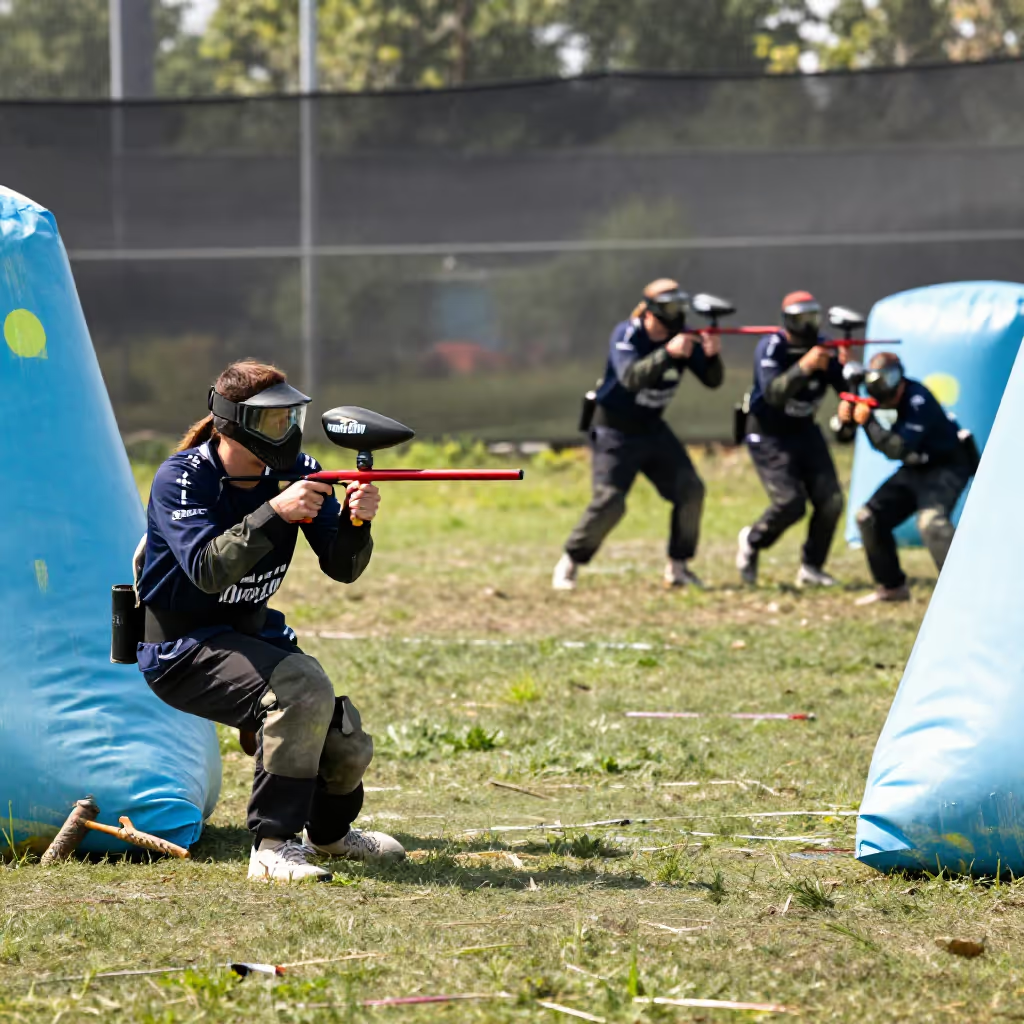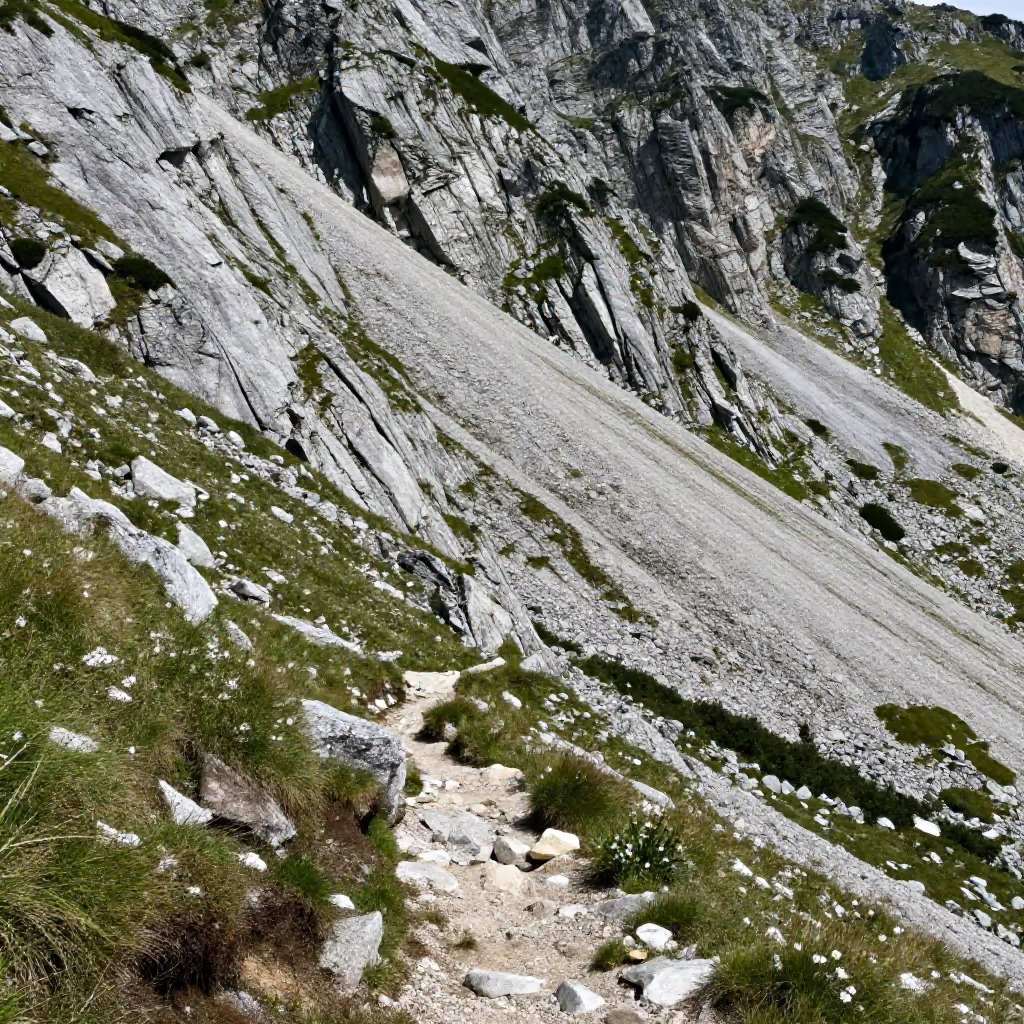
A specific area or piece of land, especially with regard to its natural qualities such as condition and shape.
example
Das unwegsame Terrain machte den Vormarsch der Truppen sehr langsam.
The difficult terrain made the troops' advance very slow.

Usage tips
Register and origin
'Terrain' is a loanword from French. It is often used in a more formal, technical, or military context.
EXAMPLE
Die Geologen untersuchten das Terrain auf Bodenschätze.
The geologists examined the terrain for mineral resources.
Typical adjectives
To describe the nature of the land, 'Terrain' is often combined with certain adjectives. Common examples are 'schwieriges Terrain' (difficult terrain), 'unwegsames Terrain' (impassable/difficult terrain), 'gebirgiges Terrain' (mountainous terrain), or 'offenes Terrain' (open terrain).
EXAMPLE
Für die Wanderung im alpinen Terrain braucht man gute Schuhe.
For the hike in alpine terrain, you need good shoes.
Context clue
You can recognize the figurative meaning by the fact that it is about a field of knowledge or a topic area. Signal words are often 'neu' (new), 'schwierig' (difficult), 'bekannt' (familiar), or 'sicher' (safe/secure) in combination with 'Terrain'.
EXAMPLE
Für mich ist die Programmierung noch völlig neues Terrain.
For me, programming is still completely new terrain.
Fixed expression
The expressions 'Terrain gewinnen' (to gain ground) and 'Terrain verlieren' (to lose ground) are fixed expressions. They mean to make progress or fall behind, and can be used both literally (e.g., in war) and figuratively (e.g., in a discussion).
EXAMPLE
Mit ihrem neuen Produkt konnte die Firma schnell Terrain gewinnen.
With its new product, the company was able to gain ground quickly.
Compare with
near_synonym · confusable
Terrain vs Bereich
area / field
'der Bereich' and 'das Terrain' can both mean an area or a field. 'Bereich' is the normal, neutral word and fits places, topics, and tasks. 'Terrain' sounds somewhat more elevated or figurative. Literally, it often means land with certain characteristics, for example 'steiniges Terrain' (rocky terrain) or 'schwieriges Terrain' (difficult terrain). Figuratively, it can also mean a topic or field of activity, especially when you want to emphasize that someone moves confidently or uncertainly in that area. Learners may confuse the words because both can be used spatially and figuratively. In everyday language, 'Bereich' is usually safer; 'Terrain' fits when land or a figurative comparison is important.
Terrain
Nach dem Regen war das Terrain im Wald sehr rutschig.
After the rain, the terrain in the forest was very slippery.
Bereich
Nach dem Gespräch kennen wir den Bereich, für den das Team verantwortlich ist.
After the conversation, we know the area that the team is responsible for.