

der Tritt
kick
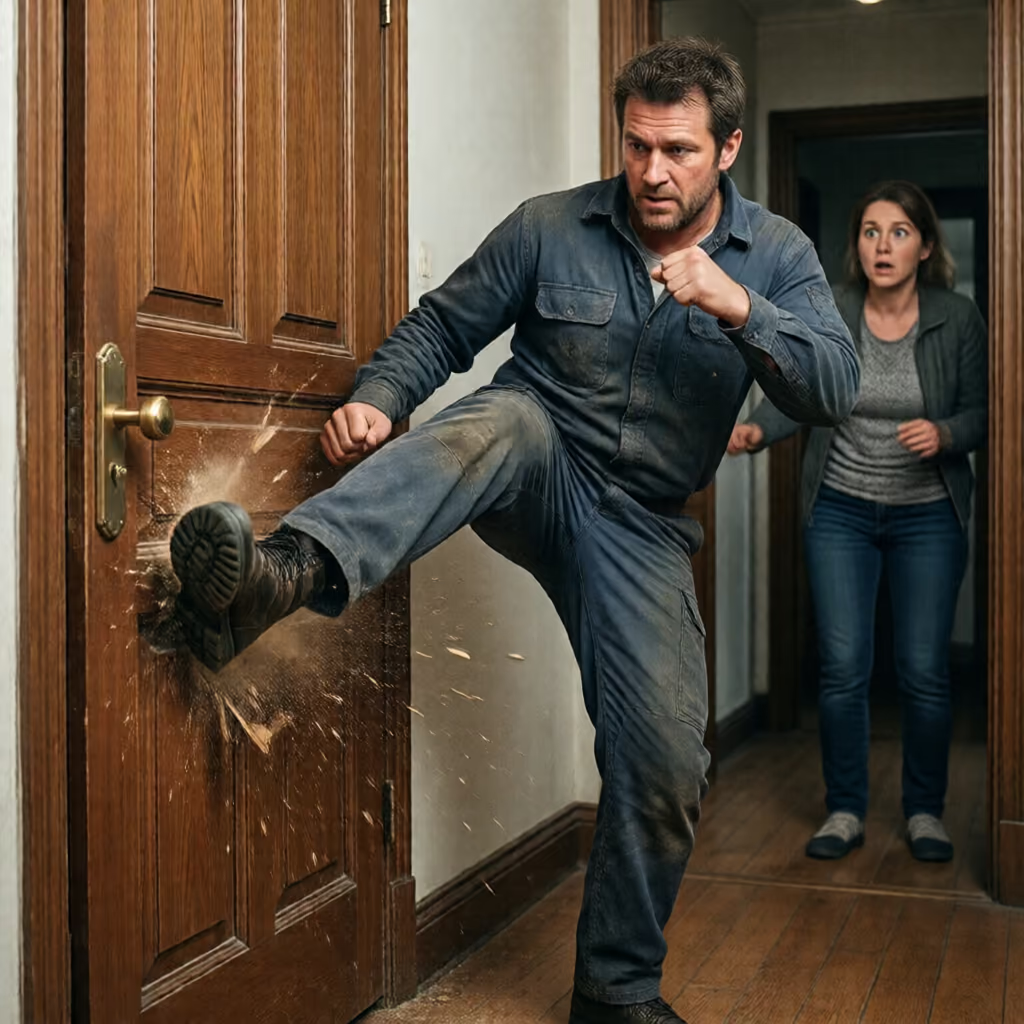
A forceful blow with the foot.
EXAMPLE
Mit einem kräftigen Tritt öffnete er die klemmende Tür.
With a powerful kick, he opened the jammed door.
kick / step / foothold
der Tritt, die Tritte
Loading your saved state.
kick
A forceful blow with the foot.
Mit einem kräftigen Tritt öffnete er die klemmende Tür.
With a powerful kick, he opened the jammed door.
step
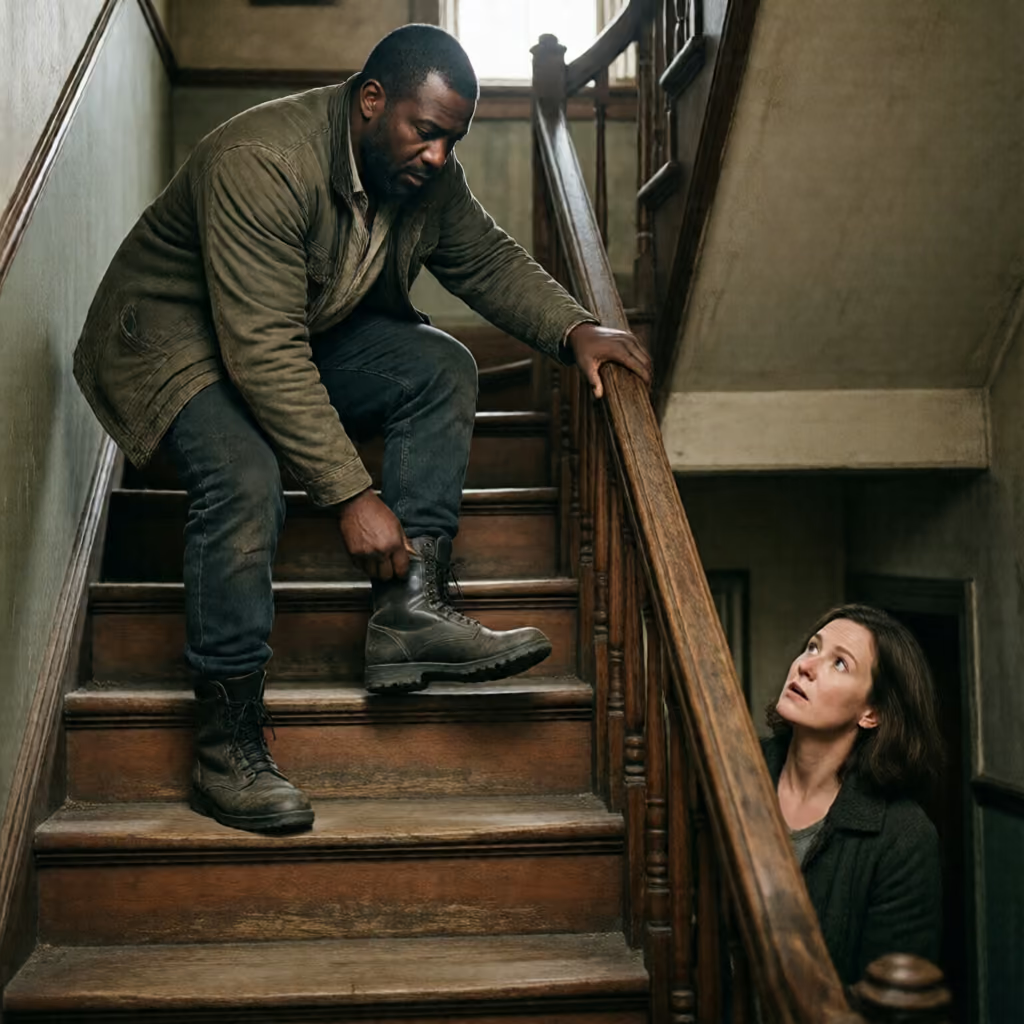
A single step when walking or running, or the sound it makes.
Auf der knarrenden Treppe war jeder Tritt zu hören.
Every step could be heard on the creaky stairs.
foothold
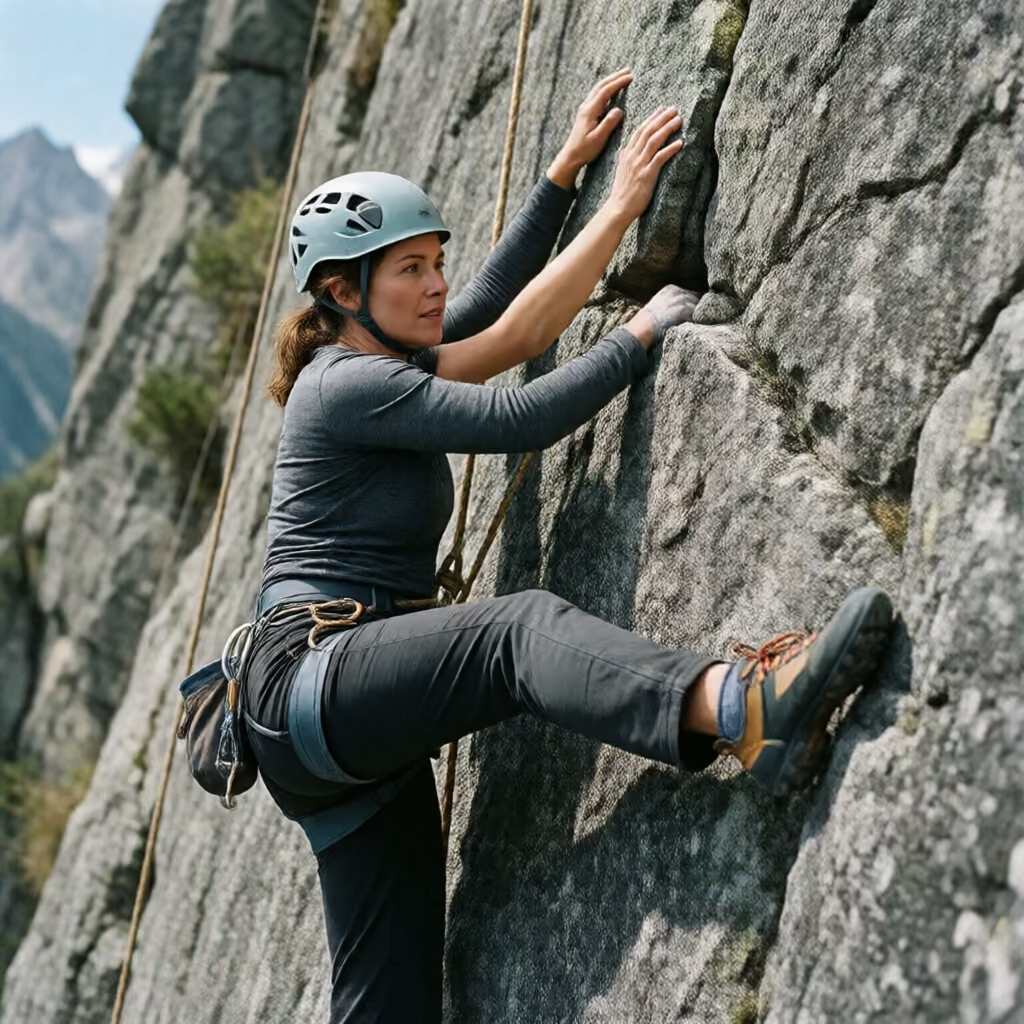
A step or small surface on which you place your foot to climb higher or gain support.
Die Kletterin suchte mit dem Fuß nach einem sicheren Tritt im Fels.
The climber felt around with her foot for a secure foothold in the rock.
step stool
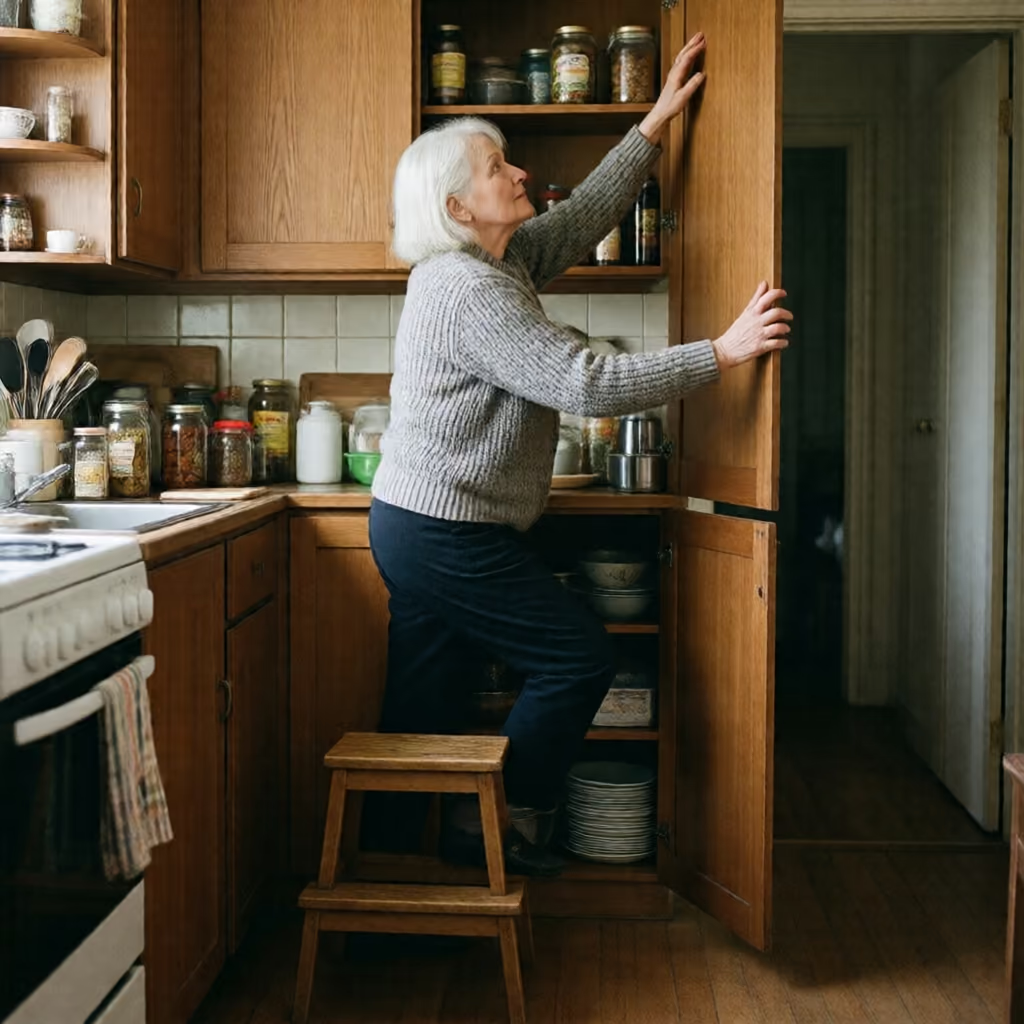
A small stool or low ladder that you stand on to reach something higher up.
Ohne einen Tritt komme ich nicht an das oberste Regalfach.
Without a step stool, I can't reach the top shelf.

at every turn
Everywhere and all the time; in almost everything someone does.
In dieser Stadt begegnet man auf Schritt und Tritt Spuren der römischen Vergangenheit.
In this city, you encounter traces of its Roman past at every turn.

to lose one's rhythm
To lose the steady rhythm of a movement. Figuratively, the expression means to lose your usual confidence and sense of order in an activity or in everyday life.
Durch die ständigen Unterbrechungen geriet sie bei ihrer Arbeit völlig aus dem Tritt.
The constant interruptions made her completely lose her rhythm at work.
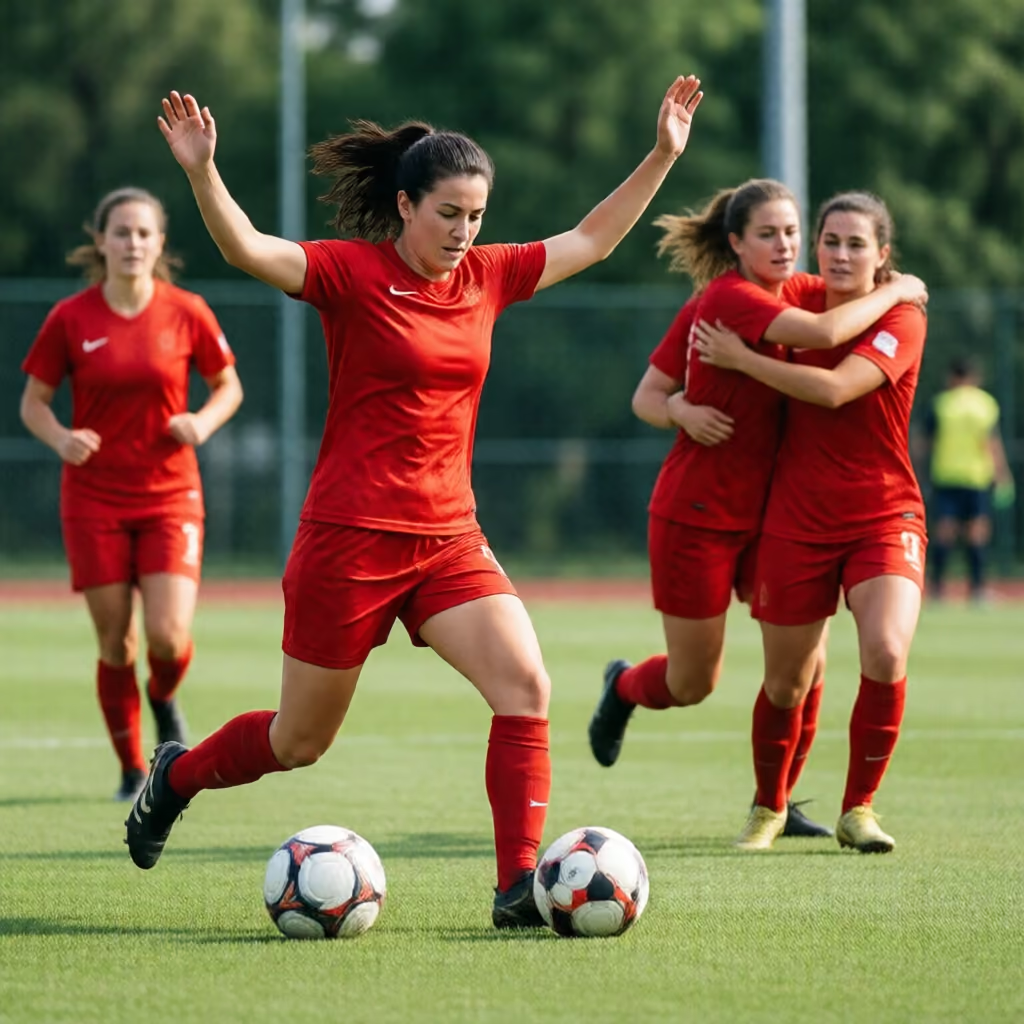
to hit one's stride
To find a steady rhythm. Figuratively, the expression means to start performing confidently and successfully again after initial difficulties.
Nach dem schwachen Saisonstart kommt die Mannschaft langsam wieder in Tritt.
After a weak start to the season, the team is slowly hitting its stride again.

to give someone a kick
Informal: To get someone to finally do something through a firm instruction or pressure.
Ohne einen kräftigen Tritt von seiner Schwester hätte er die Bewerbung nie abgeschickt.
Without a good kick from his sister, he would never have sent off the application.
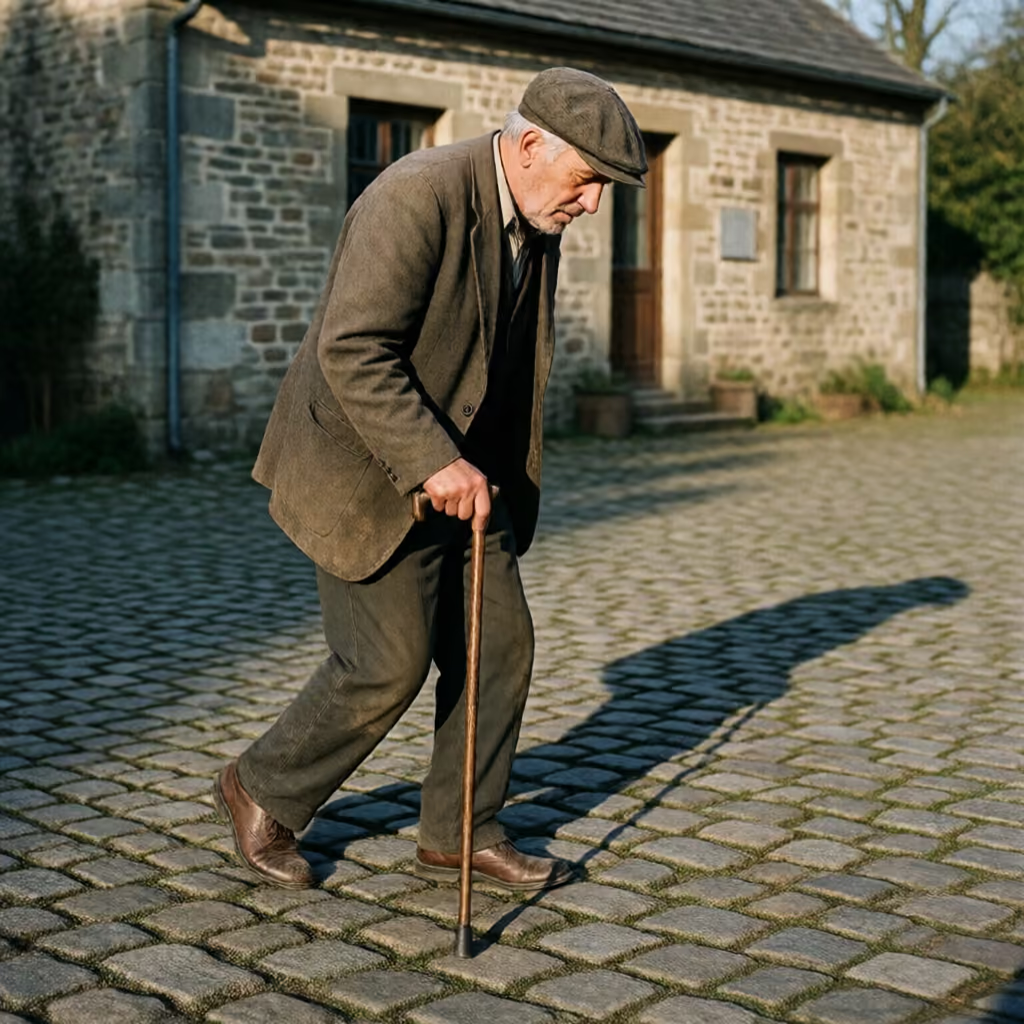
tread
The way someone walks and places their feet on the ground.
Der alte Mann ging mit schwerem, schleppendem Tritt über den Hof.
The old man crossed the courtyard with a heavy, shuffling tread.

to find one's footing
To regain support and stability after an uncertain or difficult period. The expression originally means to get into step while marching.
Die Wirtschaft hat nach der Krise nur langsam wieder Tritt gefasst.
After the crisis, the economy was slow to find its footing again.

track
Especially in hunting terminology: A single footprint left by a wild animal.
Der Jäger untersuchte den frischen Tritt eines Hirsches im weichen Boden.
The hunter examined a fresh deer track in the soft ground.
| gender | masculine der |
|---|---|
| plural | die Tritte |
| genitive | des Trittes |
| singular | plural | |
|---|---|---|
| nominative | der Tritt | die Tritte |
| accusative | den Tritt | die Tritte |
| dative | dem Tritt | den Tritten |
| genitive | des Trittes des Tritts | der Tritte |
The article changes with the case; it is shown in colour.
'Tritt' (kick / step / foothold) belongs to the same word family as 'treten' (to step / to kick). This connection helps you recognize its various meanings relating to foot movements, steps, and placing the foot on a surface.
Beim Wandern achtete sie auf jeden Tritt im unebenen Gelände.
While hiking, she paid attention to every step on the uneven terrain.
When referring to a physical kick, the person affected is usually in the dative case. The body part that is hit is often introduced by 'gegen' (against) followed by the accusative.
Das Pferd versetzte dem Tierarzt einen Tritt gegen das Schienbein.
The horse gave the vet a kick in the shin.
In this sense, 'Tritt' (step) often appears with words describing a sound or rhythm. Typical combinations include 'jeder Tritt' (every step), 'leiser Tritt' (quiet step), and 'schwerer Tritt' (heavy step).
Sein leiser Tritt auf dem Flur weckte niemanden.
His quiet steps in the hallway woke no one.
When referring to a small surface on which to place the foot, 'Tritt' (foothold) is particularly common in combinations with 'Fels' (rock), 'Wand' (wall), or 'Halt' (support / grip). The context usually involves looking for or finding a secure foothold.
In der glatten Wand gab es kaum einen Tritt, der genug Halt bot.
There was hardly a foothold on the smooth wall that offered enough support.
The small stool is often mentioned with 'aufstellen' (to set up), 'holen' (to fetch), or 'benutzen' (to use). The construction 'einen Tritt vor etwas stellen' (to place a step stool in front of something) is typical when you want to reach a higher place.
Er stellte einen Tritt vor das Fenster und wechselte die Glühbirne.
He placed a step stool in front of the window and changed the light bulb.
In 'auf Schritt und Tritt' (at every turn), 'Tritt' (step) always appears together with 'Schritt' (step). The expression is often used before phrases indicating a place or activity and describes something you experience constantly or everywhere.
Der kleine Hund folgt seinem Besitzer auf Schritt und Tritt.
The little dog follows its owner at every turn.
'Aus dem Tritt geraten' (to lose one's rhythm) is often triggered by disruptions, stress, or unexpected events. In figurative use, it is often followed by details about work, everyday life, or a familiar routine.
Nach der überraschenden Nachricht geriet sein ganzer Tagesplan aus dem Tritt.
After the surprising news, his entire daily routine lost its rhythm.
'In Tritt kommen' (to hit one's stride) very often appears with 'wieder' (again) or 'langsam' (slowly). The expression describes a person, group, or activity settling into a working rhythm after a difficult initial phase.
Der Stürmer kommt nach seiner langen Verletzungspause nur schwer wieder in Tritt.
The striker is struggling to hit his stride again after his long injury layoff.
'Jemandem einen Tritt geben' (to give someone a kick) is informal and figurative in this sense. The expression often appears with an instruction or context that makes clear what the person is finally supposed to do.
Sein Vater musste ihm einen Tritt geben, damit er die Rechnung bezahlte.
His father had to give him a kick to get him to pay the bill.
When describing someone's way of walking, 'Tritt' (tread) often appears with descriptive adjectives such as 'schwer' (heavy), 'schleppend' (shuffling), or 'sicher' (sure). These combinations draw attention to rhythm and foot placement.
An ihrem unsicheren Tritt bemerkte man, dass sie müde war.
You could tell from her unsteady tread that she was tired.
'Tritt fassen' (to find one's footing) is usually used with 'wieder' (again). The expression describes a person, a company, or the economy regaining support and stability after a difficult time.
Nach dem Umzug musste sie erst wieder Tritt fassen.
After the move, she needed some time to find her footing again.
This meaning belongs to hunting terminology and therefore appears especially in accounts of wild animals, tracks, and searches in the field. 'Tritt' (track) is often combined with an animal species or adjectives such as 'frisch' (fresh) and 'deutlich' (clear).
Im Schnee entdeckte der Förster frische Tritte eines Rehs.
The forester discovered fresh roe deer tracks in the snow.