

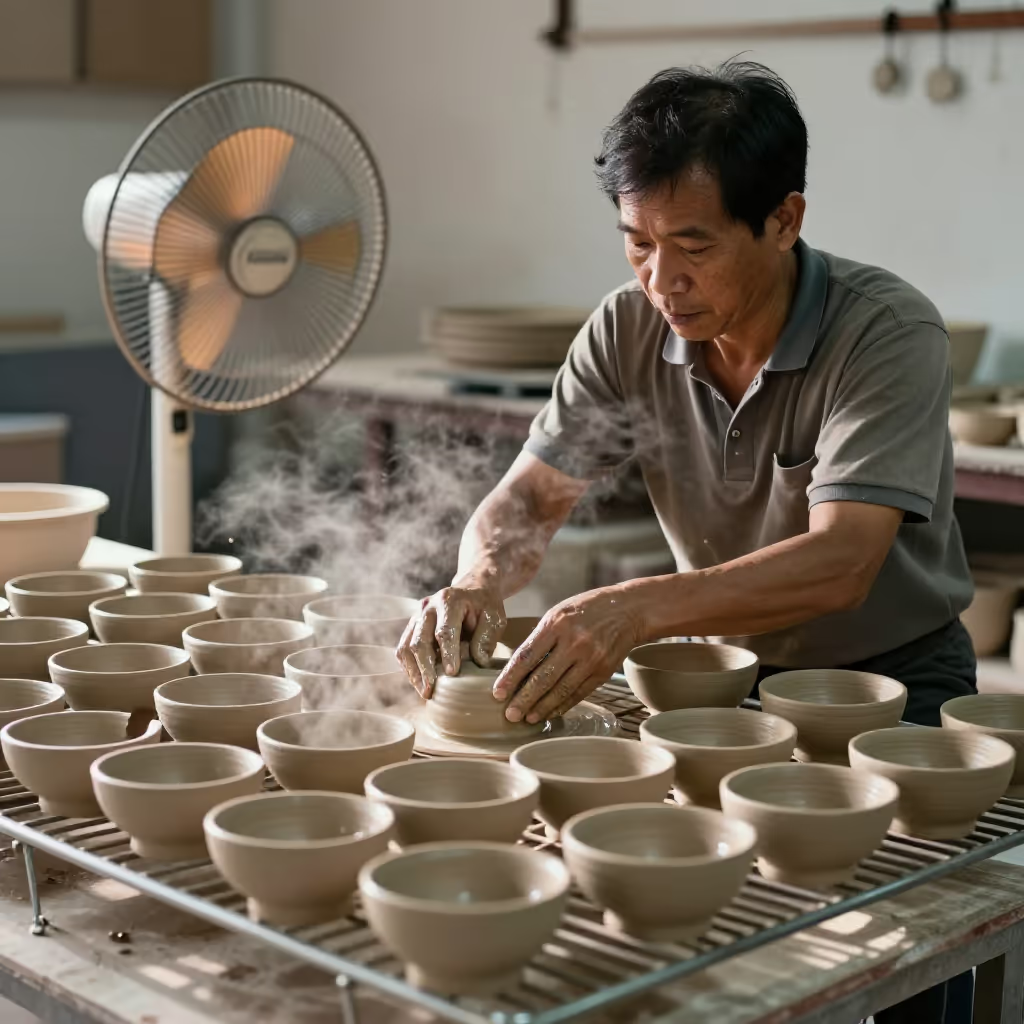
die Trocknung
drying
The process in which something is dried or dries, meaning moisture is removed.
EXAMPLE
Die Trocknung der frisch gestrichenen Wand dauert mehrere Stunden.
The drying of the freshly painted wall takes several hours.
drying
Loading your saved state.
drying
The process in which something is dried or dries, meaning moisture is removed.
Die Trocknung der frisch gestrichenen Wand dauert mehrere Stunden.
The drying of the freshly painted wall takes several hours.
The noun 'Trocknung' (drying) is derived from the verb 'trocknen' (to dry). The ending '-ung' turns a verb into a noun that describes the process or result of the action. This pattern is very common in German, e.g. 'prüfen' (to check / examine) → 'die Prüfung' (the exam / inspection).
Die Trocknung der Wäsche an der frischen Luft ist umweltfreundlich.
Drying laundry in the fresh air is environmentally friendly.
To indicate what is being dried, German usually uses the preposition 'von' followed by the dative. This construction is typical for process nouns ending in '-ung'.
Die Trocknung von Früchten konserviert sie für den Winter.
The drying of fruit preserves it for the winter.
Common adjectives that describe the process are 'schnelle' (fast), 'langsame' (slow), 'natürliche' (natural), or 'künstliche' (artificial) drying. Typical verbs are 'dauern' (to take / last) or 'beschleunigen' (to speed up).
Eine schonende Trocknung bei niedriger Temperatur erhält die Nährstoffe.
Gentle drying at a low temperature preserves the nutrients.
to dry
Use “trocknen” as a verb when something loses moisture or when you make it dry. “Die Trocknung” refers to the same process as a noun and sounds more technical. In everyday speech, people usually say that something dries or is dried; “Trocknung” is appropriate when describing the process.

Die Trocknung der nassen Handtücher dauert im Keller länger.
The drying of the wet towels takes longer in the basement.
Die nassen Handtücher trocknen heute in der Sonne.
The wet towels are drying in the sun today.