

trommeln
to drum
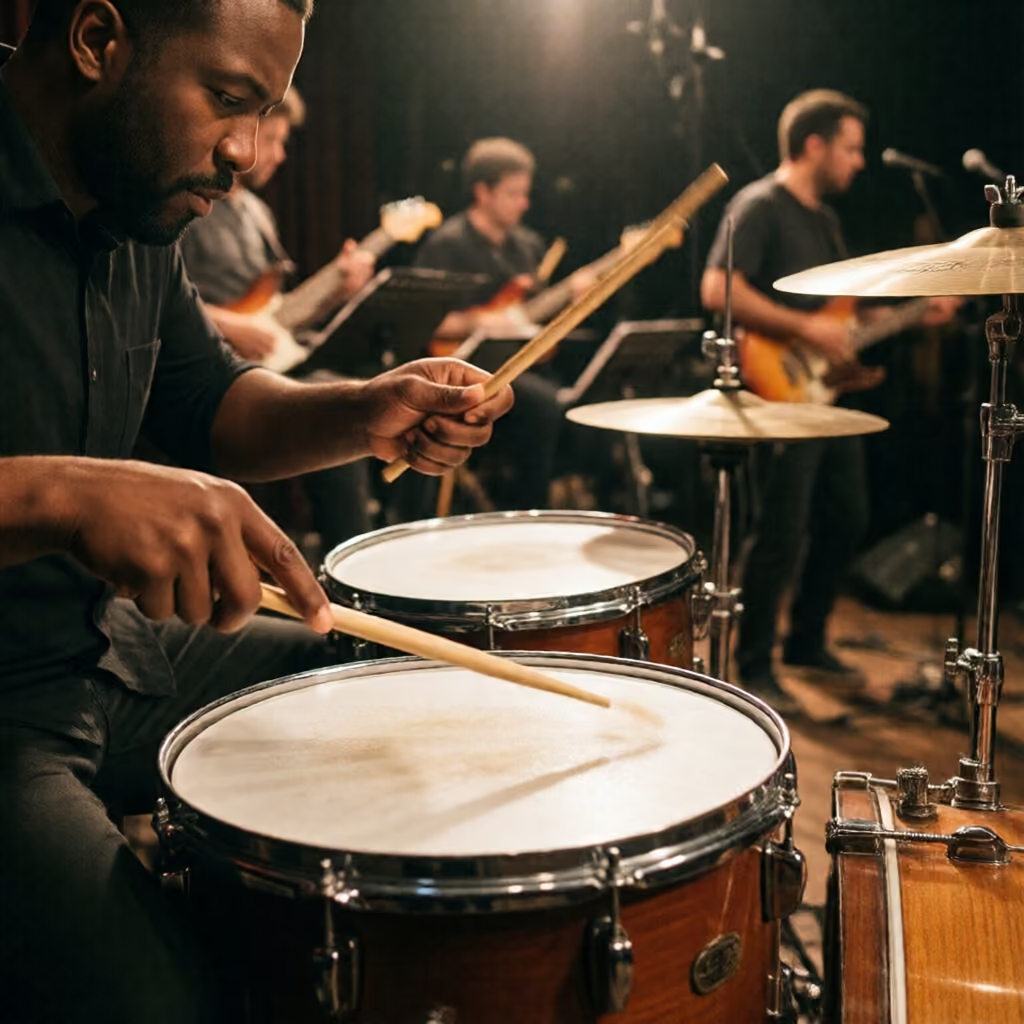
To play an instrument, especially a drum, by striking it to produce rhythms.
EXAMPLE
Die Musiker trommeln einen schnellen Rhythmus.
The musicians drum a fast rhythm.
to drum
trommeln – trommelte – hat getrommelt
Loading your saved state.
to drum
To play an instrument, especially a drum, by striking it to produce rhythms.
Die Musiker trommeln einen schnellen Rhythmus.
The musicians drum a fast rhythm.

to drum
To strike something repeatedly and usually rhythmically, often with your fingers or hands.
Während des Gesprächs trommelte er ungeduldig mit den Fingern auf den Tisch.
During the conversation, he drummed his fingers impatiently on the table.

to drum
To produce a loud, regular sound through repeated impacts, especially rain or similar natural phenomena.
Im Zelt hörten wir die ganze Nacht den Regen trommeln.
In the tent, we heard the rain drumming all night.
to campaign for
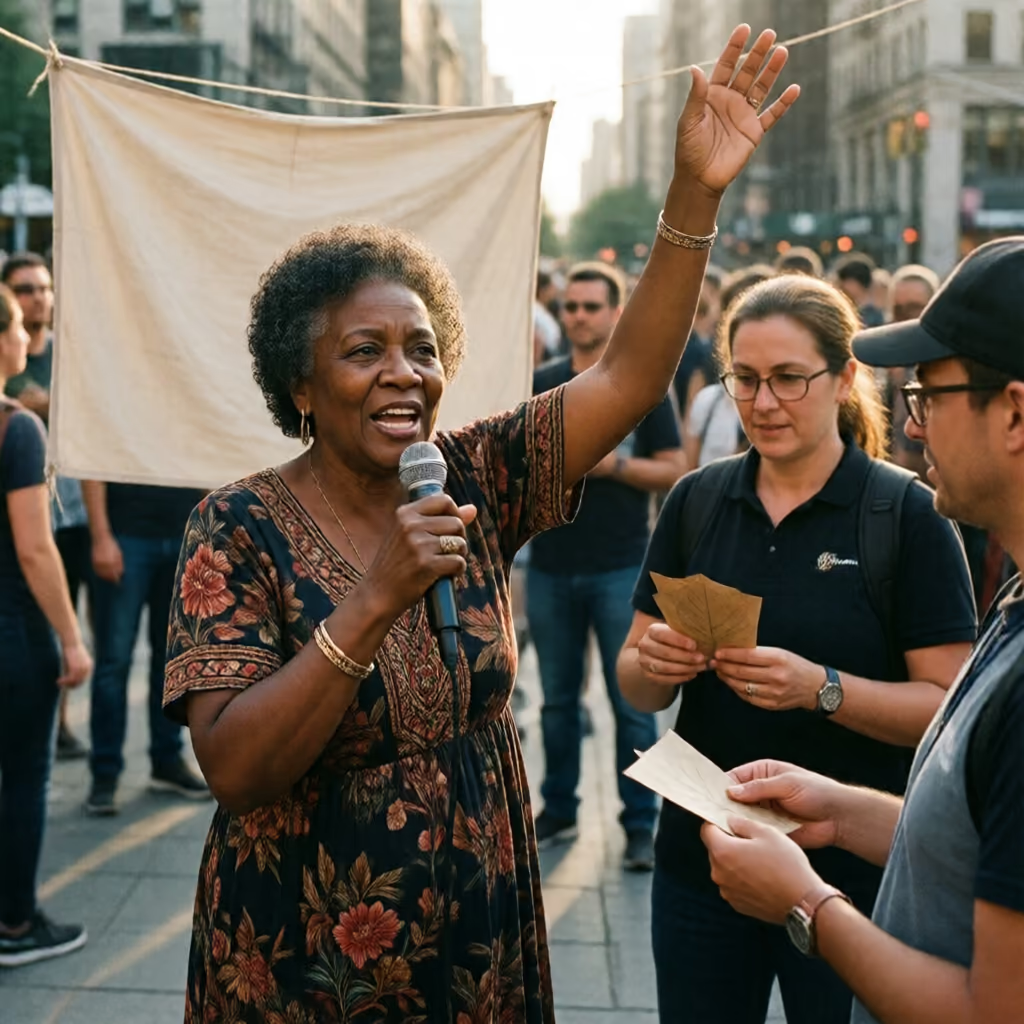
To promote something publicly and emphatically or try to gain support for it.
Die Organisation trommelt seit Wochen für mehr Klimaschutz.
The organization has been campaigning for stronger climate action for weeks.
| ich | trommle trommele |
|---|---|
| du | trommelst |
| er/sie/es | trommelt |
| wir | trommeln |
| ihr | trommelt |
| sie | trommeln |
| ich | trommelte |
|---|---|
| du | trommeltest |
| er/sie/es | trommelte |
| wir | trommelten |
| ihr | trommeltet |
| sie | trommelten |
| ich | habe getrommelt |
|---|---|
| du | hast getrommelt |
| er/sie/es | hat getrommelt |
| wir | haben getrommelt |
| ihr | habt getrommelt |
| sie | haben getrommelt |
| du | trommel! trommele!, trommle! |
|---|---|
| ihr | trommelt! |
| Sie | trommeln Sie! |
| ich | hatte getrommelt |
|---|---|
| du | hattest getrommelt |
| er/sie/es | hatte getrommelt |
| wir | hatten getrommelt |
| ihr | hattet getrommelt |
| sie | hatten getrommelt |
| ich | werde trommeln |
|---|---|
| du | wirst trommeln |
| er/sie/es | wird trommeln |
| wir | werden trommeln |
| ihr | werdet trommeln |
| sie | werden trommeln |
| ich | trommele trommle |
|---|---|
| du | trommelst trommlest |
| er/sie/es | trommele trommle |
| wir | trommeln |
| ihr | trommelt trommlet |
| sie | trommeln |
Used for reported speech.
| ich | trommelte |
|---|---|
| du | trommeltest |
| er/sie/es | trommelte |
| wir | trommelten |
| ihr | trommeltet |
| sie | trommelten |
Used for wishes and “would”.
| infinitive | trommeln |
|---|---|
| with zu | zu trommeln |
| present participle | trommelnd |
| past participle | getrommelt |
'trommeln' (to drum) belongs to the same word family as 'die Trommel' (drum). The connection to the drum helps you remember the verb's core idea of rhythmic striking.
Schon als Kind wollte er trommeln und gründete später eine Band.
Even as a child, he wanted to drum, and he later started a band.
When referring to playing music, 'trommeln' (to drum) is often used with 'einen Rhythmus' (a rhythm) or 'auf der Trommel' (on the drum). The instrument can be specified using 'auf' (on) followed by a noun phrase in the dative.
Der Junge trommelt jeden Nachmittag auf seiner alten Trommel.
The boy drums on his old drum every afternoon.
When describing repeated striking, it is common to specify what is used to strike and what is struck: in the pattern 'mit den Fingern auf' (with one's fingers on), 'auf' is followed by a noun phrase in the accusative.
Das Kind trommelte wütend mit den Fäusten auf den Boden.
The child angrily drummed their fists on the floor.
With rain or similar natural phenomena, 'trommeln' (to drum) is often used with 'gegen' (against) followed by a noun phrase in the accusative. The subject is then the natural phenomenon producing the sound.
Der Hagel trommelte heftig gegen das Dach.
The hail drummed hard against the roof.
In the figurative expression 'für etwas trommeln' (to campaign for something), 'für' (for) takes the accusative. This expression is often used for public campaigns and sustained efforts.
Vor der Wahl trommelten alle Parteien für ihre Kandidaten.
Before the election, all the parties campaigned for their candidates.