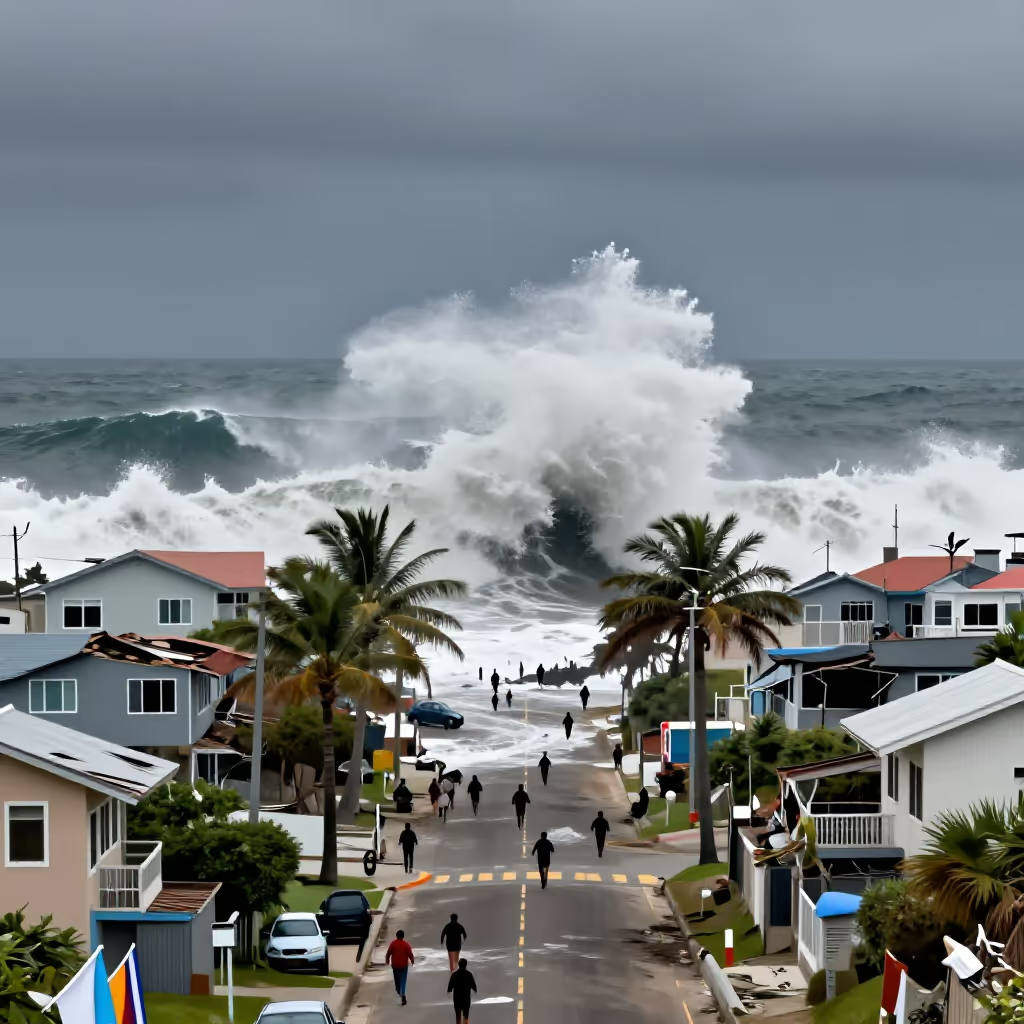
A huge, destructive ocean wave that is usually triggered by an undersea earthquake or a volcanic eruption on the ocean floor.
example
Nach dem Erdbeben warnte die Regierung die Küstenbewohner vor einem drohenden Tsunami.
After the earthquake, the government warned coastal residents of an impending tsunami.

Usage tips
Origin of the word
'Tsunami' is a loanword from Japanese (津波), where it means 'harbor wave'. This explains the spelling and pronunciation, which are unusual for German.
EXAMPLE
Das Wort Tsunami ist heute international verständlich.
The word tsunami is now understood internationally.
Context clue
You can recognize the figurative meaning by the fact that 'Tsunami' (tsunami) is combined with abstract nouns. The literal meaning appears in the context of 'Erdbeben' (earthquake), 'Meer' (sea), or 'Küste' (coast).
EXAMPLE
Nach dem Skandal gab es einen Tsunami der Empörung in den Medien.
After the scandal, there was a tsunami of outrage in the media.
Typical verbs
In connection with a real tsunami, verbs such as 'auslösen' (to trigger), 'warnen' (to warn), 'treffen' (to hit), or 'erreichen' (to reach) are often used.
EXAMPLE
Ein starkes Seebeben kann einen Tsunami auslösen.
A strong undersea earthquake can trigger a tsunami.
Usage pattern
In the figurative meaning, the preposition 'an' with the dative or a genitive construction is often used: 'ein Tsunami an Beschwerden' (a tsunami of complaints) or 'ein Tsunami der Kritik' (a tsunami of criticism).
EXAMPLE
Die Firma erhielt nach der Produktänderung einen Tsunami an wütenden E-Mails.
After the product change, the company received a tsunami of angry emails.
Compare with
near_synonym · confusable
Tsunami vs Welle
wave
'die Welle' and 'der Tsunami' can both mean a movement of water in the sea. 'Welle' is the general word: a wave can be small, large, harmless, or dangerous. 'Tsunami' refers to a special, very large and destructive ocean wave that usually arises from an undersea earthquake. The words can be confused because a tsunami is also a kind of wave. But not every wave is a tsunami. In a figurative sense, both can describe a large amount of something, but 'Tsunami' sounds much stronger and often more threatening.
Tsunami
Nach dem Seebeben warnte die Polizei vor einem Tsunami.
After the undersea earthquake, the police warned of a tsunami.
Welle
Am Strand sprang das Kind über jede kleine Welle.
At the beach, the child jumped over every small wave.