

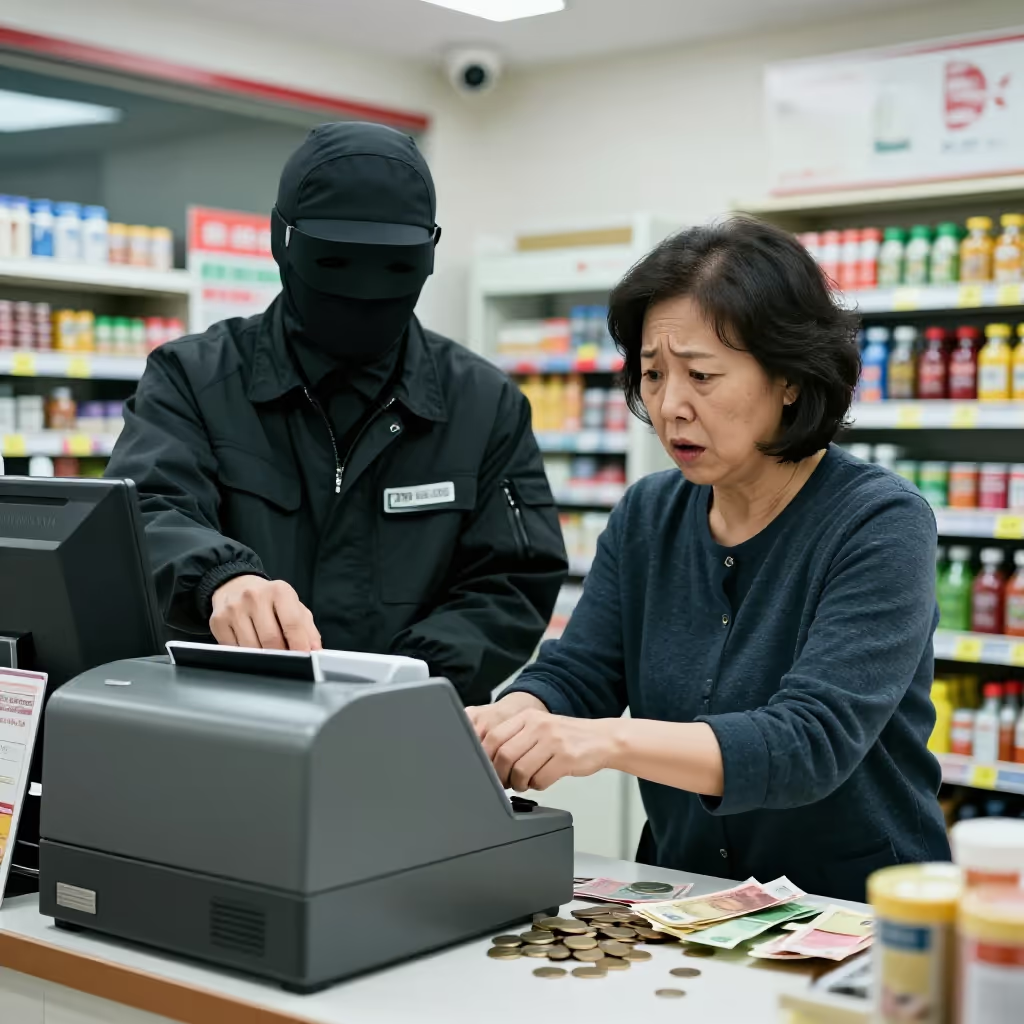
der Überfall
robbery / attack
A sudden, violent attack, usually with the intention of stealing.
EXAMPLE
Die Polizei untersucht den bewaffneten Überfall auf die Tankstelle.
The police are investigating the armed robbery of the gas station.
robbery / attack
Loading your saved state.
robbery / attack
A sudden, violent attack, usually with the intention of stealing.
Die Polizei untersucht den bewaffneten Überfall auf die Tankstelle.
The police are investigating the armed robbery of the gas station.
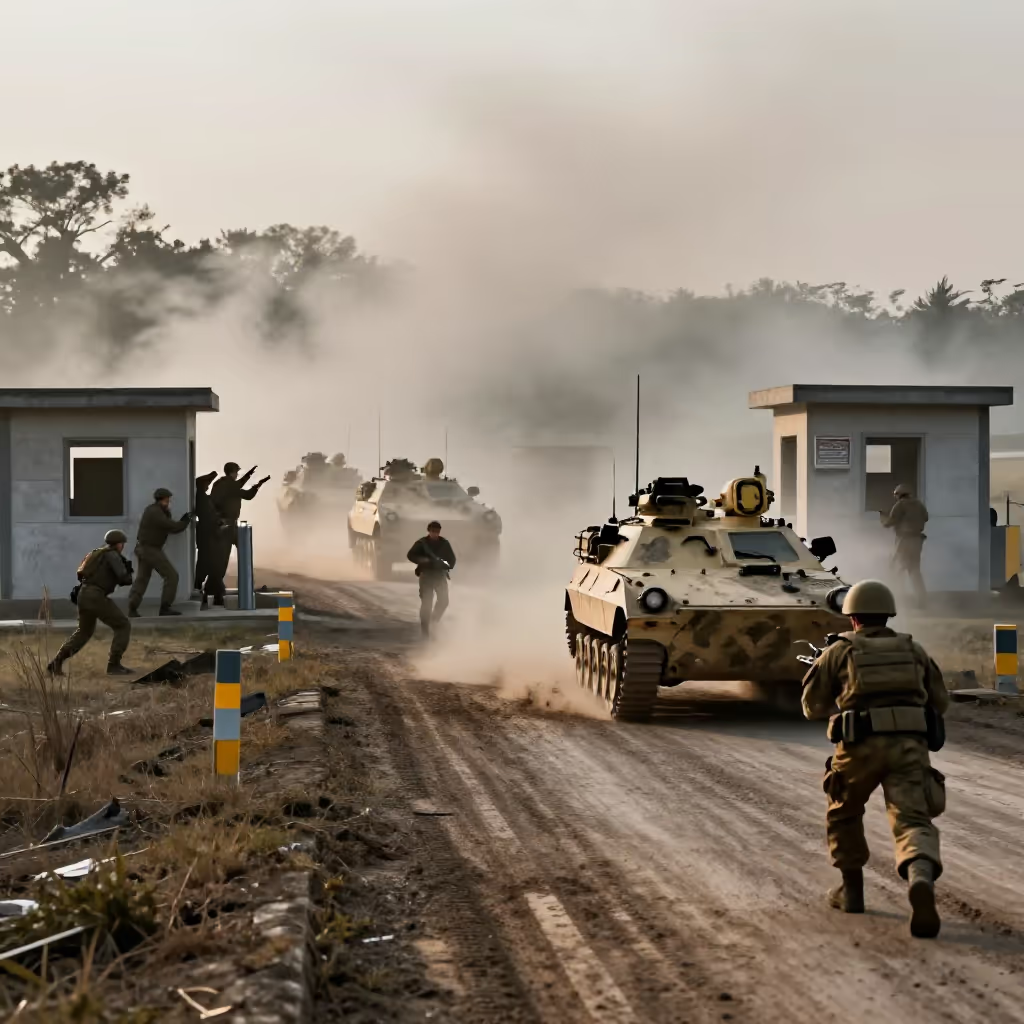
attack / assault
A surprise military attack on another country, city, or position.
Der Überfall auf die Festung erfolgte im Morgengrauen.
The attack on the fortress took place at dawn.

surprise visit
Colloquial for a sudden, unannounced visit that is perceived as disruptive or overwhelming.
Der spontane Besuch meiner gesamten Verwandtschaft am Sonntag war ein regelrechter Überfall.
The spontaneous visit from my entire family on Sunday was a real surprise invasion.
'Der Überfall' (the robbery/attack) is the noun corresponding to the separable verb 'überfallen' (to attack, to raid, to ambush). The basic idea is that someone or something suddenly 'falls over' a person or place, meaning attacks unexpectedly and often aggressively.
Die Wanderer wurden von einem Gewitter überfallen.
The hikers were caught by a thunderstorm.
The meaning is easy to recognize from context. With 'Bank' (bank), 'Geld' (money), or 'bewaffnet' (armed), it is about a robbery. With 'Armee' (army), 'Soldaten' (soldiers), or 'Land' (country), it is about war. With 'Besuch' (visit) or 'Familie' (family), it means a surprise visit.
Der Überfall auf die Schmuckhandlung dauerte nur wenige Minuten.
The robbery of the jewelry store lasted only a few minutes.
In a criminal context, 'Überfall' is often used with the preposition 'auf' + accusative. Typical verbs are 'einen Überfall verüben' (to carry out a robbery/attack) or 'einen Überfall begehen' (to commit a robbery/attack).
Die Täter haben den Überfall auf den Supermarkt monatelang geplant.
The perpetrators planned the robbery of the supermarket for months.
The use of 'Überfall' for an unannounced visit is colloquial and usually meant ironically or as a slight exaggeration. It expresses that one feels overwhelmed by the spontaneity.
Sorry für den Überfall, aber ich war gerade in der Nähe.
Sorry for dropping in on you like this, but I was just nearby.
visit / visitor
Besuch and Überfall can both refer to an unannounced visit to someone’s home. Besuch sounds neutral, while Überfall is colloquial and expresses a sudden, disruptive, or overwhelming effect. Use Besuch in a normal situation and Überfall when the person affected feels clearly pressured or imposed upon.

Der unangekündigte Überfall der Freunde störte uns beim Abendessen.
Our friends’ unannounced surprise visit disrupted us during dinner.
Die Freunde kamen unangekündigt zu Besuch, und wir freuten uns trotzdem.
Our friends came over unannounced, but we were happy to see them anyway.