
To prove beyond doubt that a person is guilty of a crime or offense.
example
Anhand der Fingerabdrücke konnte der Einbrecher schnell überführt werden.
Based on the fingerprints, the burglar could quickly be convicted.
Usage tips
Inseparable verb
'Überführen' is an inseparable verb. The prefix 'über-' remains firmly attached to the verb stem 'führen' in all tenses and sentence constructions.
EXAMPLE
Die Polizei überführte den Täter.
The police convicted the perpetrator.
Sentence structure with genitive
In this meaning, a fixed structure is used: 'jemanden (accusative) einer Sache (genitive) überführen' (to convict someone of something). The genitive names the crime.
EXAMPLE
Der Detektiv konnte den Mann des Diebstahls überführen.
The detective was able to convict the man of theft.
Sentence structure with 'in'
When something is transformed, you use the structure 'etwas (accusative) in etwas (accusative) überführen' (to convert something into something). The preposition 'in' introduces the new state or new form.
EXAMPLE
Die Firma will ihre gesamte Produktion in ein nachhaltiges System überführen.
The company wants to convert its entire production to a sustainable system.
Context clues
You can recognize the meaning from the sentence structure: if it is about a crime, often with the genitive, meaning 1 is intended. If it is about transport, often with 'von/nach' (from/to), it is meaning 2. With a transformation, often with 'in' (into), it is meaning 3.
EXAMPLE
Man überführte den Angeklagten der Lüge.
They convicted the defendant of lying.
Register and style
In the meaning 'transportieren' (to transport), 'überführen' is mainly used in formal or official language. It sounds more official than 'bringen' (to bring) or 'transportieren' (to transport).
EXAMPLE
Der Gefangene wurde in ein anderes Gefängnis überführt.
The prisoner was transferred to another prison.
Compare with
near_synonym
überführen vs bringen
to bring
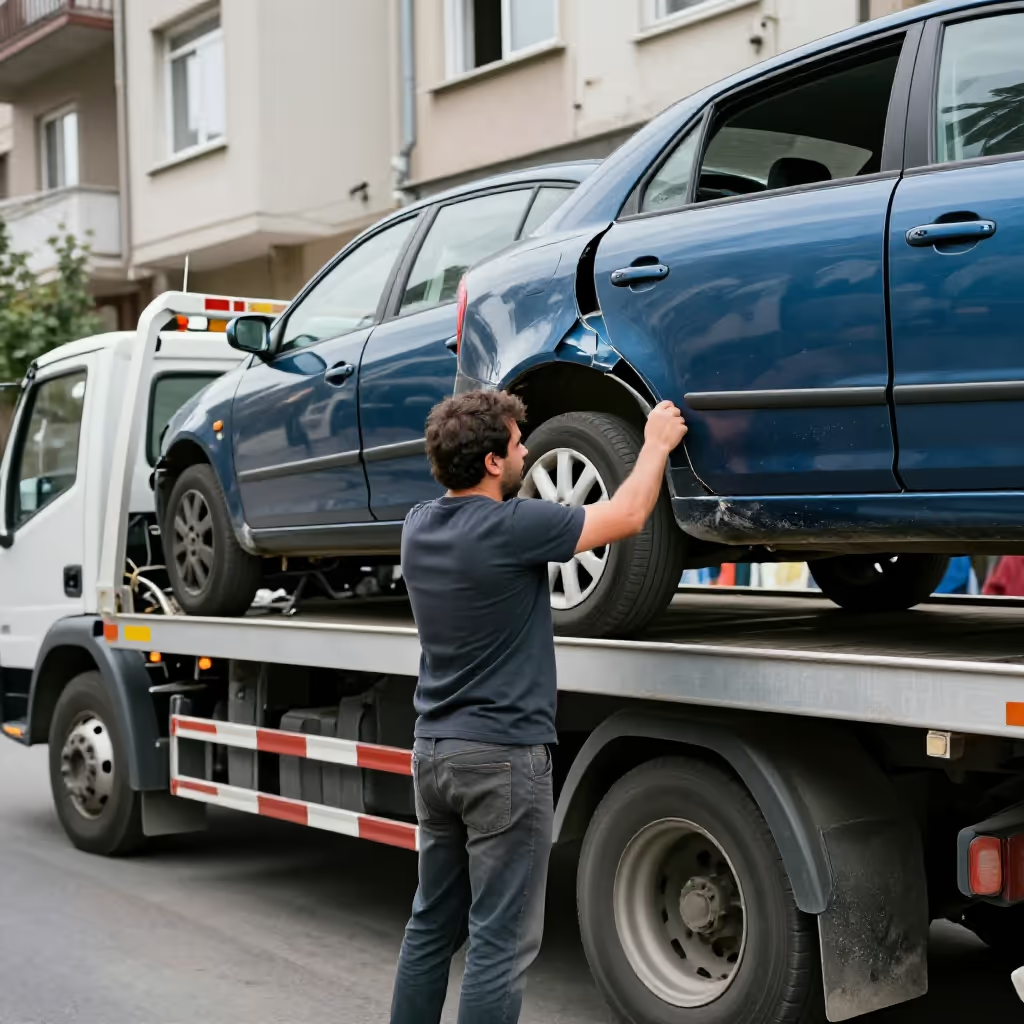
'bringen' and 'überführen' can both mean that something or someone gets to another place. 'bringen' is the normal word for many everyday situations. 'überführen' is more specific and sounds more formal. It is often used when a vehicle, a ship, a patient, or also a deceased person is brought to another place. This is more about planned or official transport. If you are simply carrying or driving something from A to B in everyday life, 'bringen' is more natural. 'überführen' fits when the transport feels more special, technical, or official.
überführen
Die Werkstatt überführt das reparierte Auto am Freitag in eine andere Filiale.
The garage will transfer the repaired car to another branch on Friday.
bringen
Morgen bringe ich die Unterlagen zum Bürgeramt.
Tomorrow I’ll take the documents to the citizens’ office.