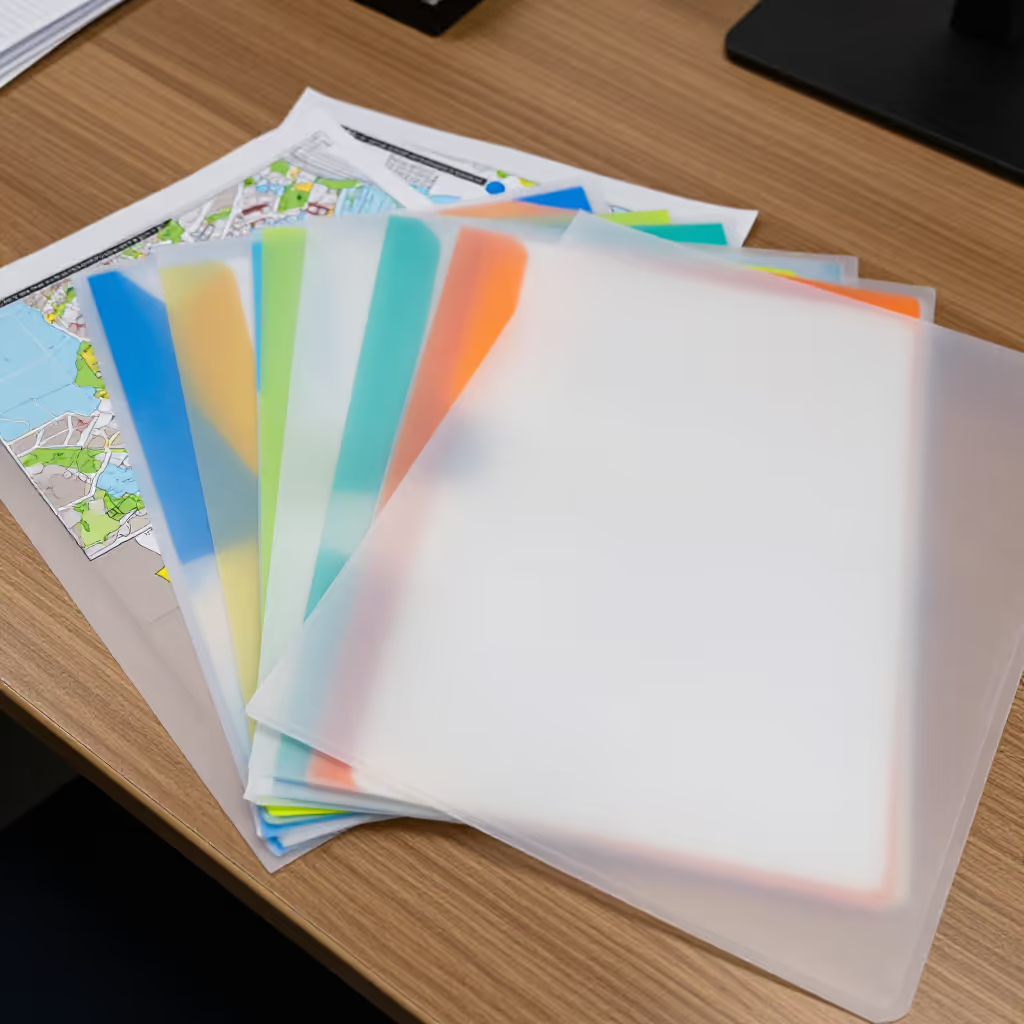
Two or more things lie partly or completely on top of one another, so that they cover each other.
example
Die verschiedenen Gesteinsschichten überlagern sich und erzählen die geologische Geschichte der Region.
The different rock layers overlap and tell the geological history of the region.

Usage tips
Inseparable verb
'Überlagern' (to overlap / overshadow) is an inseparable verb. The prefix 'über-' always stays attached to the verb stem 'lagern' (to store), even in a main clause.
EXAMPLE
Die eine Gesteinsschicht überlagert die andere.
One rock layer overlaps the other.
Reflexive or not
Pay attention to whether the verb is used reflexively ('sich überlagern') or non-reflexively. 'Sich überlagern' means that things lie on top of one another or happen at the same time. Without 'sich', it usually means that something else is pushed into the background or becomes too old.
EXAMPLE
Die beiden Termine überlagern sich leider.
Unfortunately, the two appointments overlap.
Typical collocations
In the figurative meaning, 'überlagern' is often used with feelings, events, or topics. Typical formulations are 'ein Gefühl überlagert ein anderes' (one feeling overshadows another) or 'ein Thema überlagert die Diskussion' (one topic overshadows the discussion).
EXAMPLE
Die Freude über den Sieg wurde von der Nachricht seiner Verletzung überlagert.
The joy over the victory was overshadowed by the news of his injury.
Participle as adjective
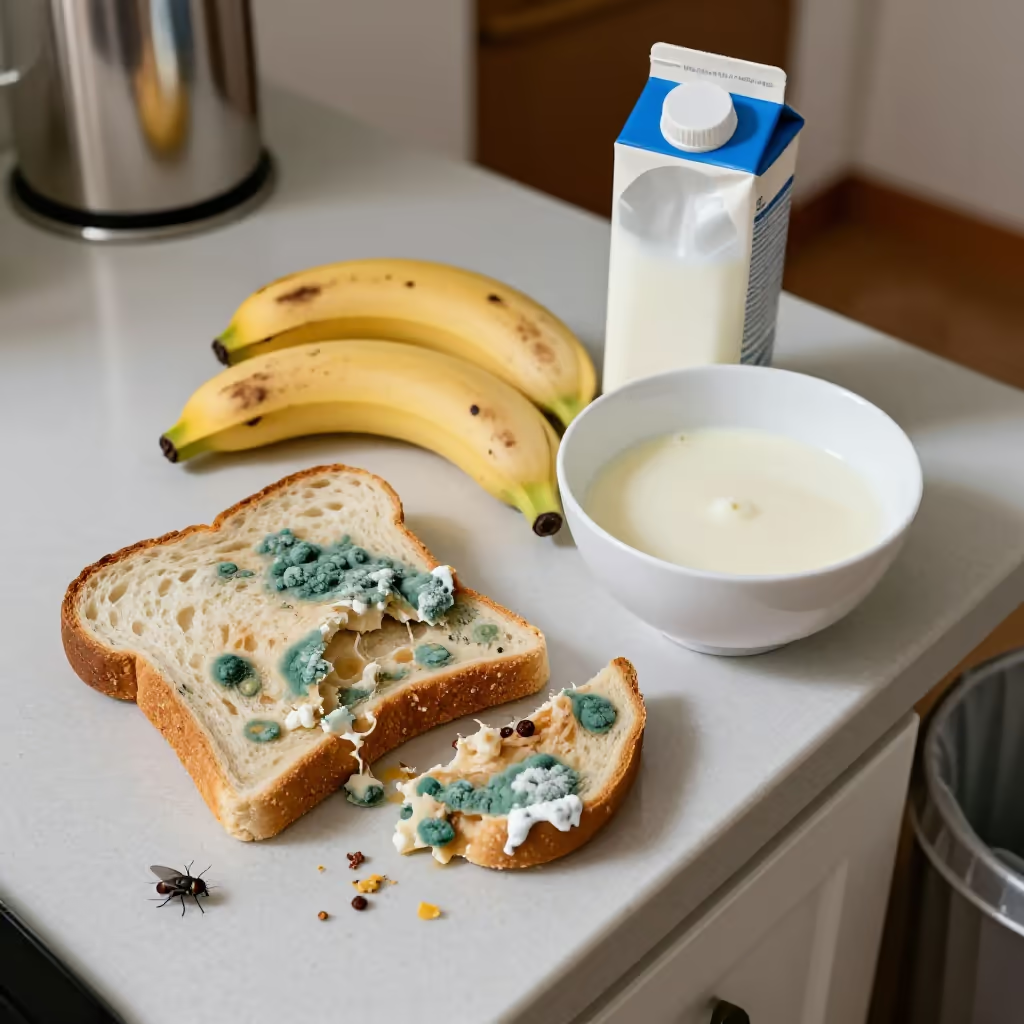
When food or goods have been stored for too long, the past participle 'überlagert' is often used as an adjective. It then describes the state of no longer being fresh.
EXAMPLE
Der Käse ist schon etwas überlagert, aber man kann ihn noch essen.
The cheese is already a bit stale, but you can still eat it.
Compare with
near_synonym · confusable
überlagern vs bedecken
to cover
'bedecken' and 'überlagern' can both have to do with things lying on top of each other. 'bedecken' usually simply describes that a layer or object lies on a surface and covers it. 'überlagern' puts more emphasis on several things coming together on top of each other at the same time, or on one thing dominating another. This can happen with images, sounds, feelings, or topics. Learners may confuse the words because both can mean covering something. If only a surface is being covered, 'bedecken' fits. If several layers mix or one thing covers up another, 'überlagern' fits better.
überlagern
Auf der Feier überlagert laute Musik fast jedes Gespräch.
At the party, loud music drowns out almost every conversation.
bedecken
Wegen der Hitze bedeckt Max den Balkon mit einem Sonnentuch.
Because of the heat, Max covers the balcony with a sun cloth.