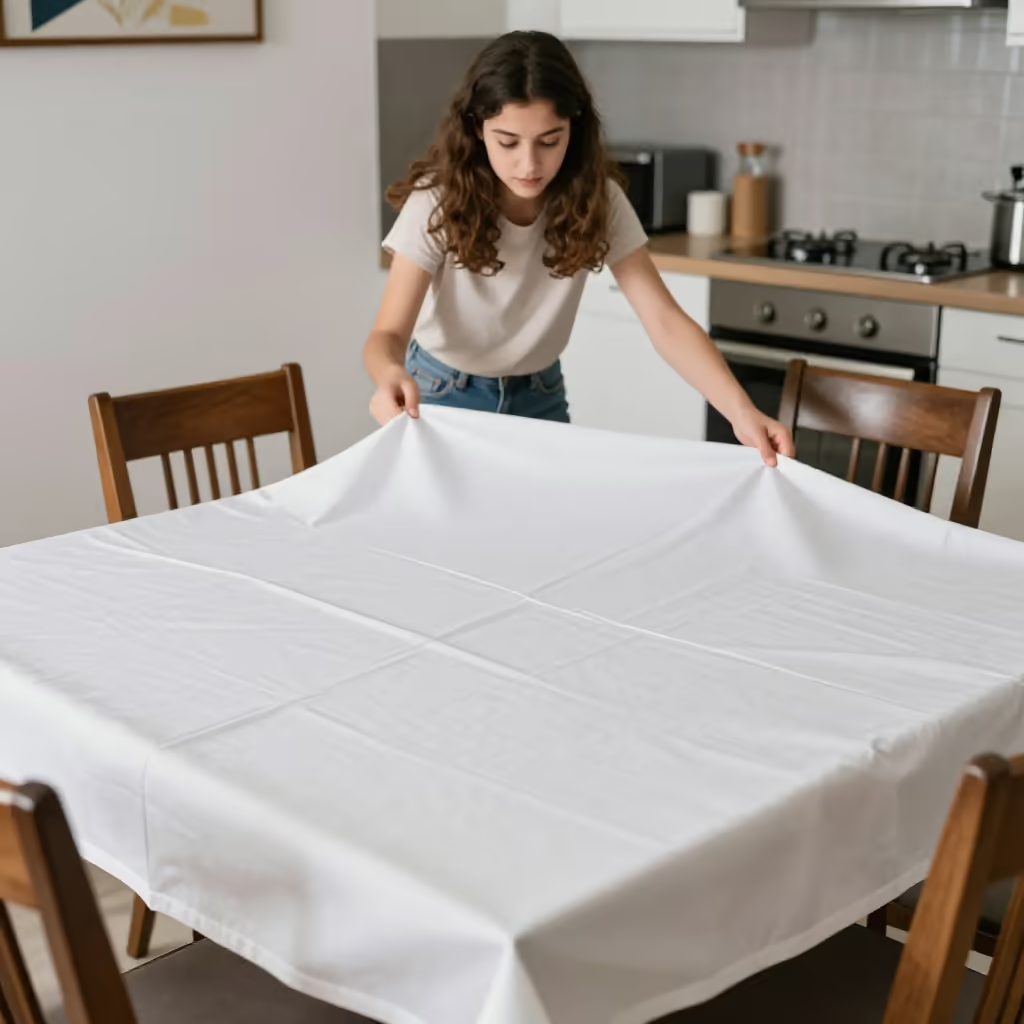
To cover something completely so that it is no longer visible, audible, or noticeable. This can refer to objects, but also to sounds, smells, or feelings.
example
Sie versuchte, ihre Unsicherheit mit einem lauten Lachen zu überdecken.
She tried to cover her insecurity with loud laughter.
Usage tips
Inseparable verb
The verb 'überdecken' (to cover / overlap) is inseparable. The prefix 'über-' remains firmly attached to the verb in all sentence forms and tenses and is not placed at the end of the sentence.
EXAMPLE
Der Schnee überdeckt die gesamte Landschaft.
The snow covers the entire landscape.
Sentence structure and use
When you want to express what something is covered with, you use the preposition 'mit' (with) followed by the dative. The structure is therefore: someone/something überdeckt something (accusative) mit something (dative).
EXAMPLE
Man kann den Fleck mit einem Teppich überdecken.
You can cover the stain with a rug.
Reflexive use
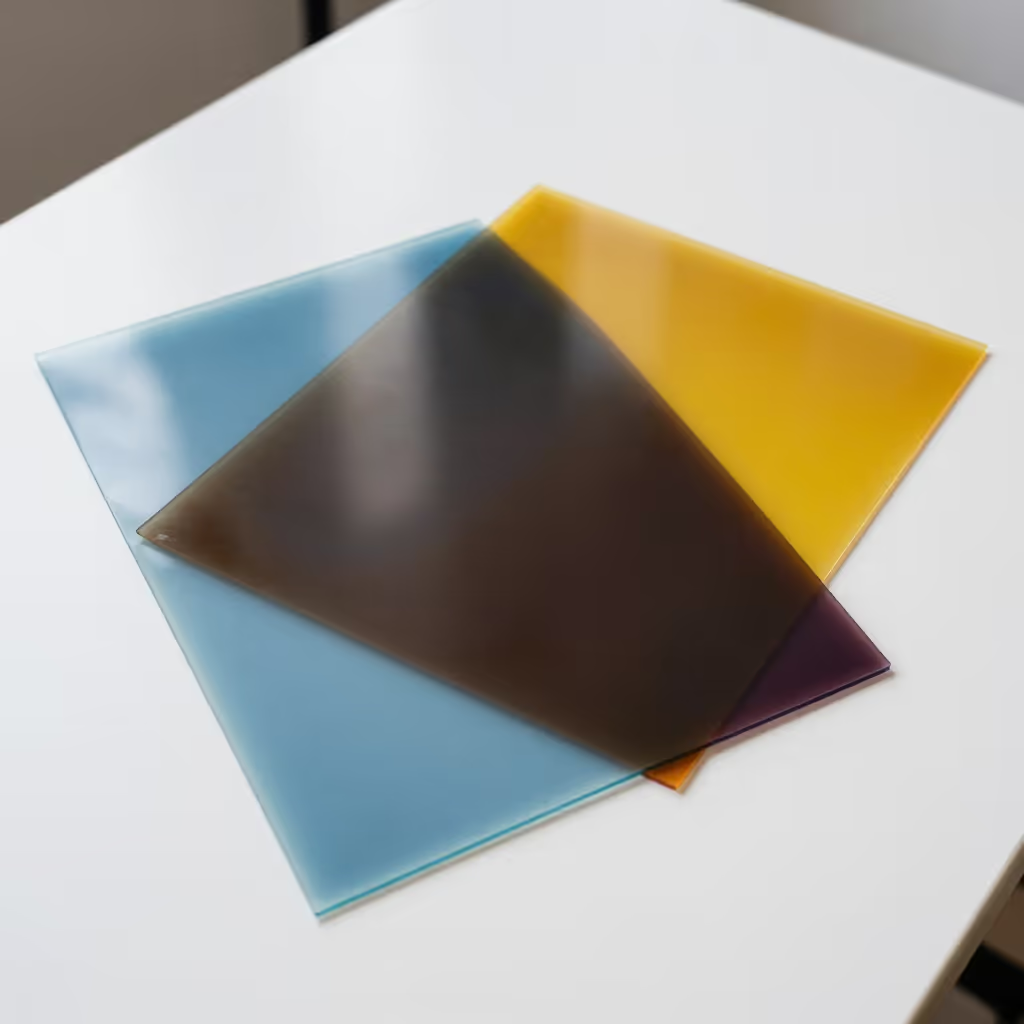
In the meaning 'sich überlappen' (to overlap), the verb is always used reflexively with 'sich' (oneself / each other). The context here is often formal and refers to topics, tasks, or periods of time.
EXAMPLE
Meine Termine für heute Nachmittag überdecken sich leider.
My appointments for this afternoon unfortunately overlap.
Compare with
near_synonym · confusable
überdecken vs bedecken
to cover
'bedecken' and 'überdecken' both mean that something lies or acts over something else. 'bedecken' is more general: a surface is no longer visible, either completely or partly. 'überdecken' sounds stronger. It often means that something disappears completely or is no longer noticeable, also with sounds, smells, or feelings. Learners may confuse the words because both are formed with 'decken'. As a guide: 'bedecken' works well for a visible surface, while 'überdecken' is more suitable when something else is clearly pushed aside or made invisible.
überdecken
Laute Musik überdeckt das Gespräch am Nachbartisch.
Loud music covers the conversation at the next table.