


überlassen
to let have
To give someone something for use, disposal, or as property, often without direct compensation.
EXAMPLE
Er hat mir sein altes Fahrrad überlassen.
He let me have his old bicycle.
to leave / to entrust
Loading your saved state.
to let have
To give someone something for use, disposal, or as property, often without direct compensation.
Er hat mir sein altes Fahrrad überlassen.
He let me have his old bicycle.

to leave to
To give someone else responsibility for a decision or task.
Ich überlasse dir die Wahl des Films für heute Abend.
I'll leave the choice of the film for tonight to you.
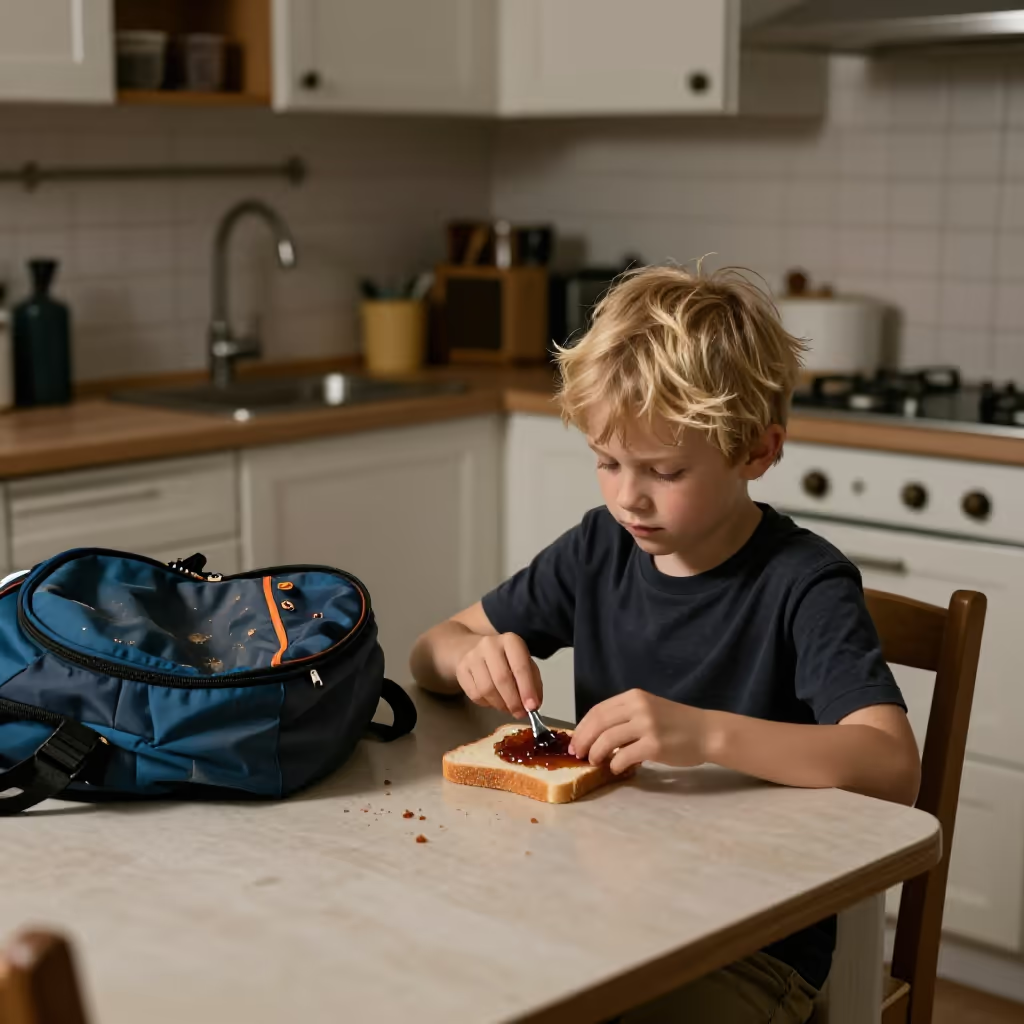
to be left alone
To be alone and without help, supervision, or support.
Die Kinder waren den ganzen Nachmittag sich selbst überlassen.
The children were left to themselves all afternoon.

to leave to chance
To not plan or control something, but simply let it happen.
Bei einem so wichtigen Projekt sollten wir nichts dem Zufall überlassen.
With such an important project, we shouldn't leave anything to chance.
'Überlassen' (to leave/to entrust) is an inseparable verb. The prefix 'über-' is not separated from the verb and is unstressed. It remains firmly attached to the verb in all sentence forms.
Sie hat mir ihre alten Bücher überlassen.
She let me have her old books.
'Überlassen' (to leave/to entrust) is typically used with a person in the dative and a thing in the accusative. The structure is: someone (nominative) leaves someone (dative) something (accusative).
Mein Vater überlässt mir für das Wochenende sein Auto.
My father is letting me have his car for the weekend.
When you give someone responsibility for an action, the structure 'es jemandem überlassen, zu + infinitive' (to leave it to someone to + infinitive) is often used. The 'es' is a placeholder here for the following infinitive construction.
Ich überlasse es dir, zu entscheiden, wohin wir essen gehen.
I'll leave it to you to decide where we're going to eat.
The expression 'sich selbst überlassen sein' (to be left to oneself) is reflexive and is formed with the verb 'sein' (to be). The reflexive pronoun adapts to the person who is being left alone.
Nach dem Stromausfall waren die Bewohner der kleinen Insel sich selbst überlassen.
After the power outage, the residents of the small island were left to themselves.
The expression 'etwas dem Zufall überlassen' (to leave something to chance) is a fixed expression. 'Dem Zufall' is always in the dative here. You can also negate the expression to say that you plan something carefully.
Bei der Sicherheit sollten wir nichts dem Zufall überlassen.
When it comes to safety, we shouldn't leave anything to chance.
to give
Geben generally describes an object coming into someone’s hands or possession. Überlassen places more emphasis on that person being allowed to use or control the object; whether they keep it permanently depends on the context.
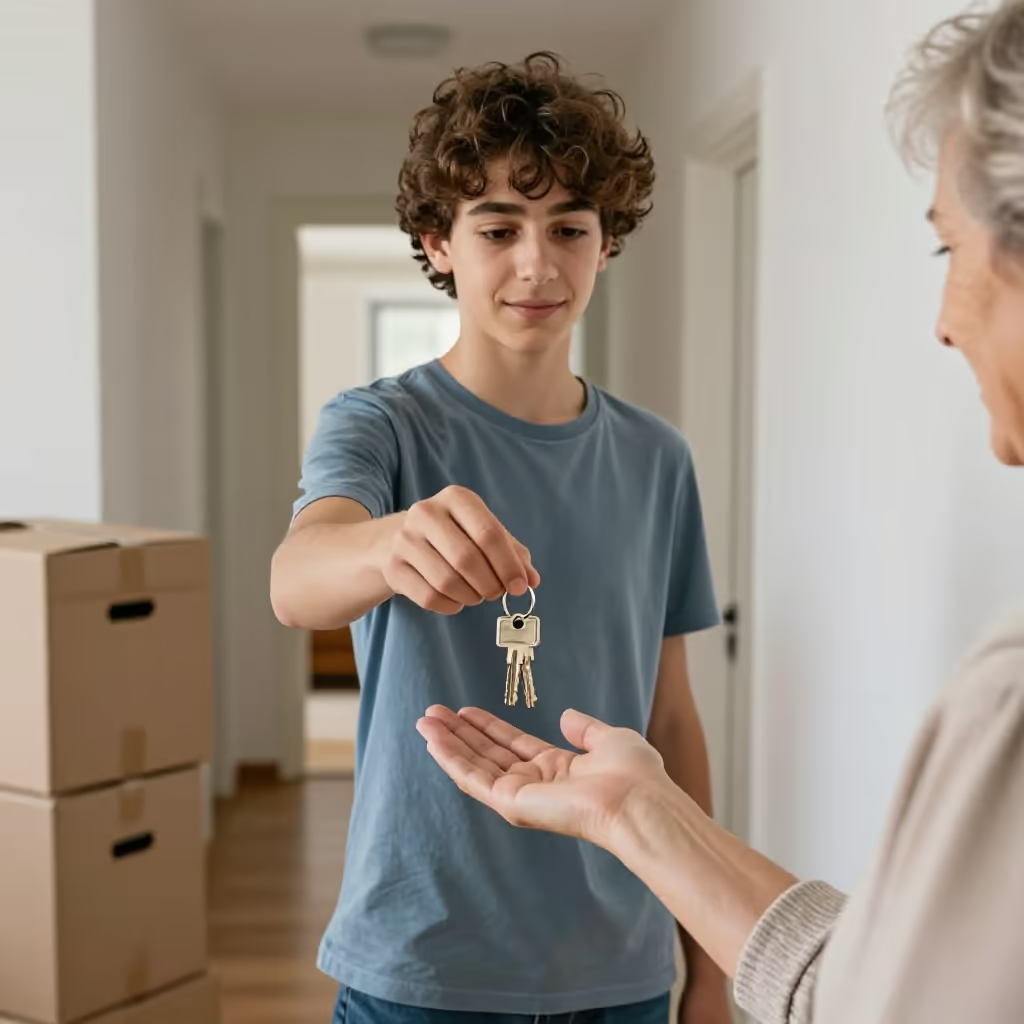
Für den Nachmittag überlasse ich dir mein Fahrrad.
I’ll let you use my bicycle for the afternoon.
Für den Nachmittag gebe ich dir mein Fahrrad.
I’ll give you my bicycle for the afternoon.