

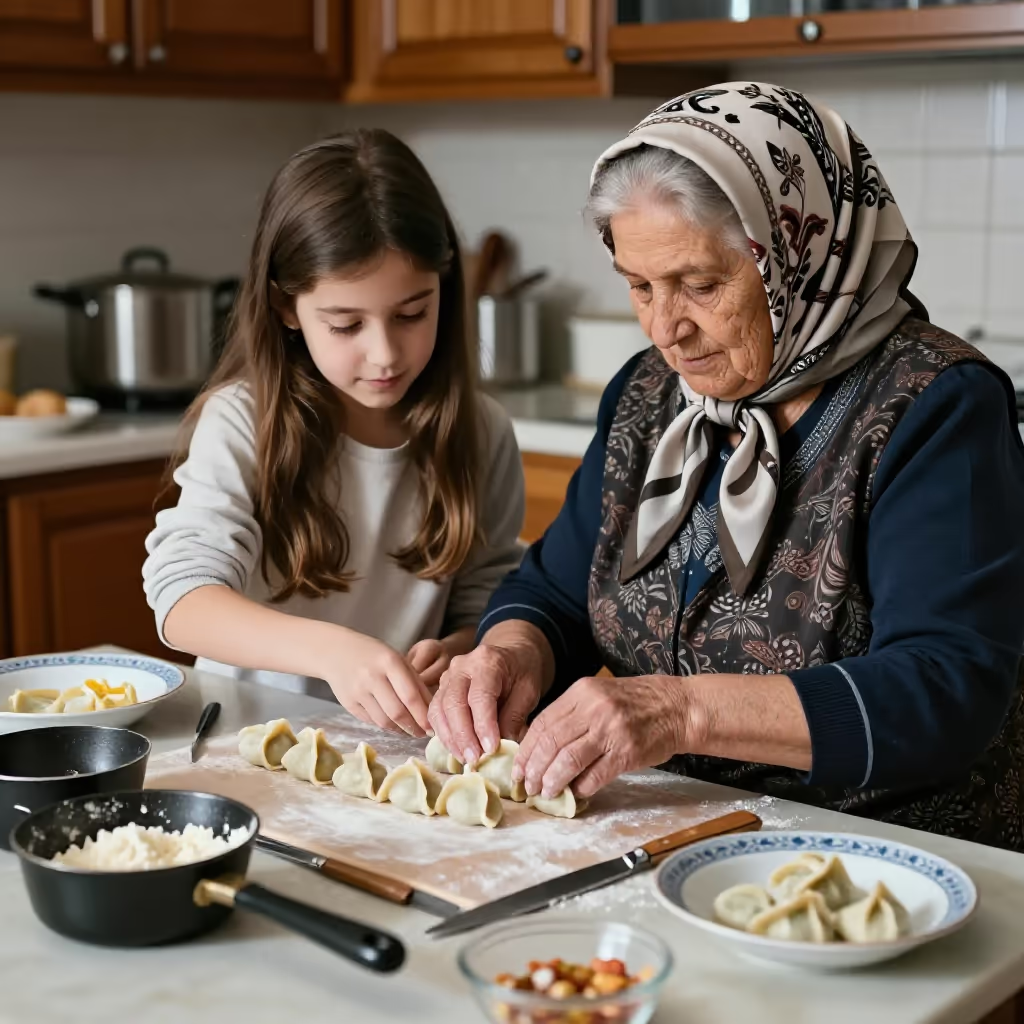
überliefern
to pass down
To pass on knowledge, stories, customs, or traditions from one generation to the next so that they are preserved.
Diese Legende wurde über Jahrhunderte mündlich überliefert.
This legend was passed down orally over centuries.


to pass down / hand over
Loading your saved state.
to pass down
To pass on knowledge, stories, customs, or traditions from one generation to the next so that they are preserved.
Diese Legende wurde über Jahrhunderte mündlich überliefert.
This legend was passed down orally over centuries.

'Überliefern' (to pass down / hand over) is an inseparable verb because the prefix 'über-' is unstressed. The prefix remains directly connected to the verb in all sentence forms.
Man überlieferte die alten Mythen von Generation zu Generation.
The old myths were passed down from generation to generation.
'Überliefern' (to pass down) is used especially often in the passive to emphasize that a piece of information comes from the past. A typical formulation is 'es ist überliefert, dass ...' (it has been passed down that ... / tradition has it that ...).
Es ist überliefert, dass der König sehr weise war.
It has been passed down that the king was very wise.
This verb is almost always combined with immaterial things such as 'Geschichten' (stories), 'Wissen' (knowledge), 'Traditionen' (traditions), 'Bräuchen' (customs), or 'Sagen' (legends).
Die Rezepte wurden in der Familie mündlich überliefert.
The recipes were passed down orally in the family.
The meaning 'jemanden ausliefern' (to extradite someone / hand someone over) is very rare today and belongs to formal or historical language. You mainly find it in historical texts or novels.
Der Gefangene wurde dem Gericht überliefert.
The prisoner was handed over to the court.
to hand over / to vomit
'übergeben' and 'überliefern' both have to do with passing something on. 'übergeben' is used when something is given concretely to a person, an office, or a group, for example a document, a task, or even a person. 'überliefern' is usually used when stories, knowledge, customs, or traditions are passed down over a long time. It can also mean, formally or historically, to deliver or hand someone or something over. Learners may confuse the words because both sound like passing something on. In everyday life, 'übergeben' is much more natural for concrete things; 'überliefern' mainly fits history, culture, and tradition.

In der Familie wird dieses alte Rezept seit vielen Jahren überliefert.
This old recipe has been passed down in the family for many years.
Ich übergebe den Schlüssel heute Nachmittag an die neue Mieterin.
I am handing the key over to the new tenant this afternoon.