


übertreiben
to exaggerate
To present something as bigger, more important, or worse than it really is.
EXAMPLE
Er neigt dazu, seine Erfolge maßlos zu übertreiben.
He tends to greatly exaggerate his achievements.
to exaggerate
Loading your saved state.
to exaggerate
To present something as bigger, more important, or worse than it really is.
Er neigt dazu, seine Erfolge maßlos zu übertreiben.
He tends to greatly exaggerate his achievements.
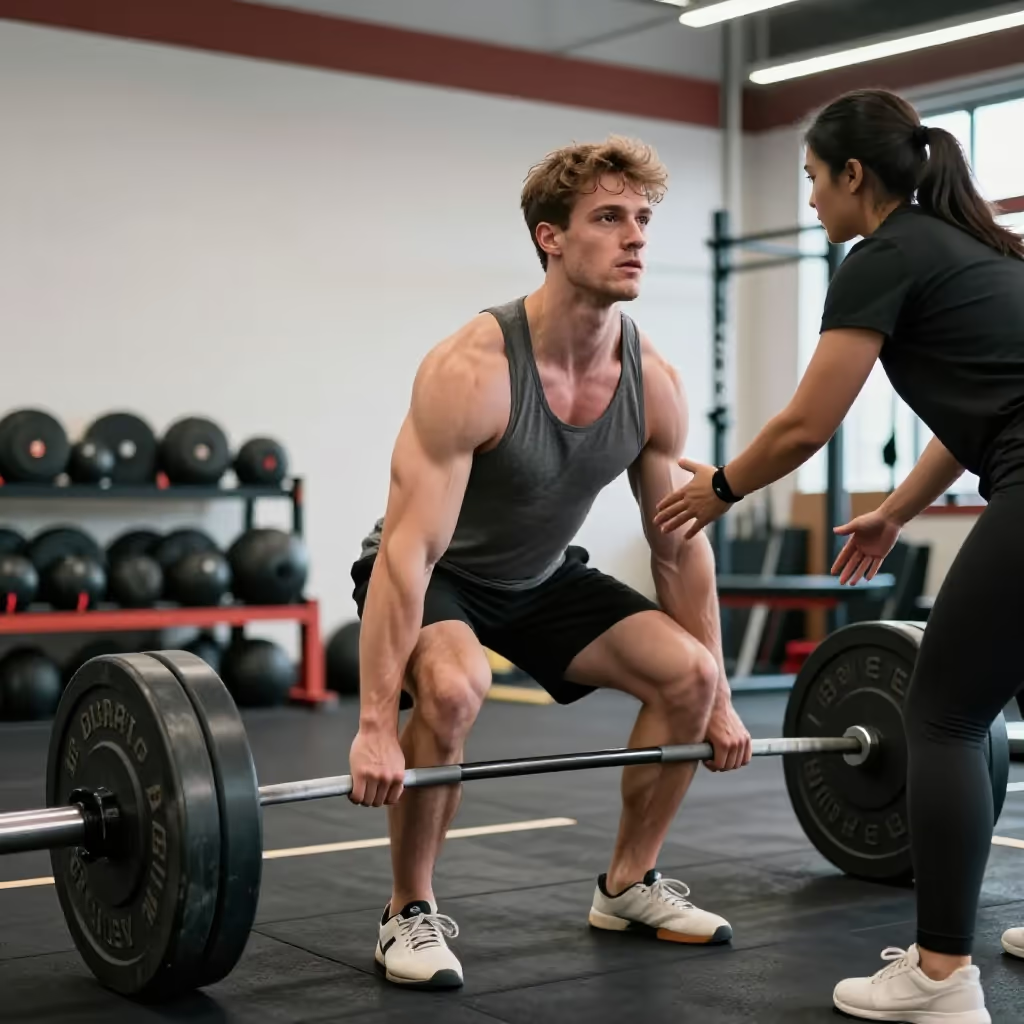
to overdo it
To carry out a certain behavior or action to an excessive or inappropriate degree; to go too far.
Ein Glas Wein ist in Ordnung, aber man sollte es nicht übertreiben.
One glass of wine is fine, but you shouldn't overdo it.
'Übertreiben' (to exaggerate) is an inseparable verb. The prefix 'über-' stays firmly attached to the verb in all conjugated forms and sentence positions. The past participle is formed without 'ge-': 'übertrieben' (exaggerated).
Ich finde, du übertreibst ein wenig.
I think you're exaggerating a little.
In the meaning 'etwas größer darstellen' (to present something as bigger), the thing that is being exaggerated appears directly after the verb as an accusative object.
Sie übertreibt oft ihre Abenteuer aus dem Urlaub.
She often exaggerates her adventures from her vacation.
The expression 'es übertreiben' means 'to go too far' or 'to overdo it'. The word 'es' is a fixed part of the expression here and cannot be replaced by something else.
Mit dem Alkohol sollten wir es heute Abend nicht übertreiben.
We shouldn't overdo it with the alcohol tonight.
to put on / overdraw / coat
Übertreiben generally means going too far with a behavior. Überziehen more specifically refers to exceeding the planned duration of a speech or event. If a talk lasts too long, both are possible, but überziehen makes the breached time limit more explicit.
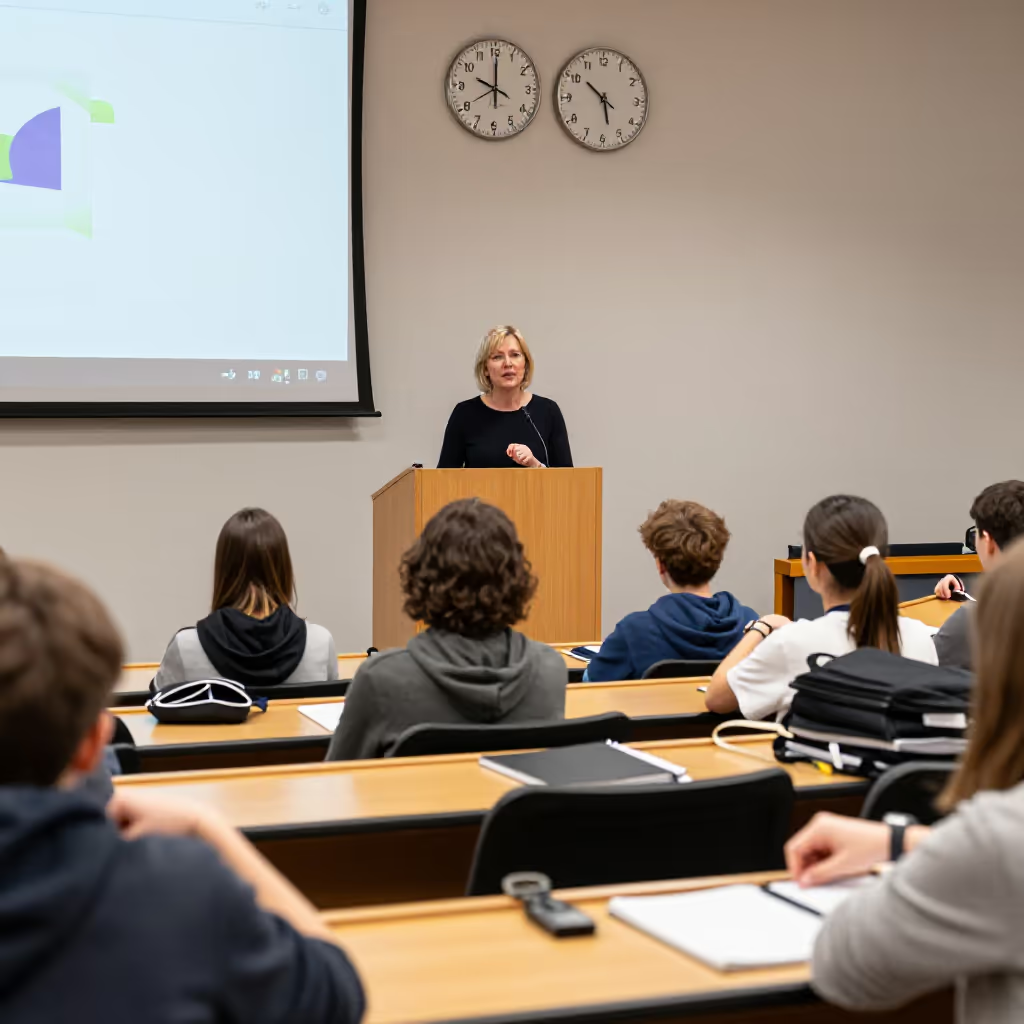
Der Redner übertrieb es und sprach viel länger als vereinbart.
The speaker overdid it and talked much longer than agreed.
Der Redner überzog seinen Vortrag um zwanzig Minuten.
The speaker ran twenty minutes over with his talk.